Mossman Jim A, Tross Jennifer G, Jourjine Nick A, Li Nan, Wu Zhijin, Rand David M
Department of Ecology and Evolutionary Biology, Box G, Brown University, Providence, RI.
Department of Medical Oncology, Dana-Farber Cancer Institute, Boston, MA.
Mol Biol Evol. 2017 Feb 1;34(2):447-466. doi: 10.1093/molbev/msw246.
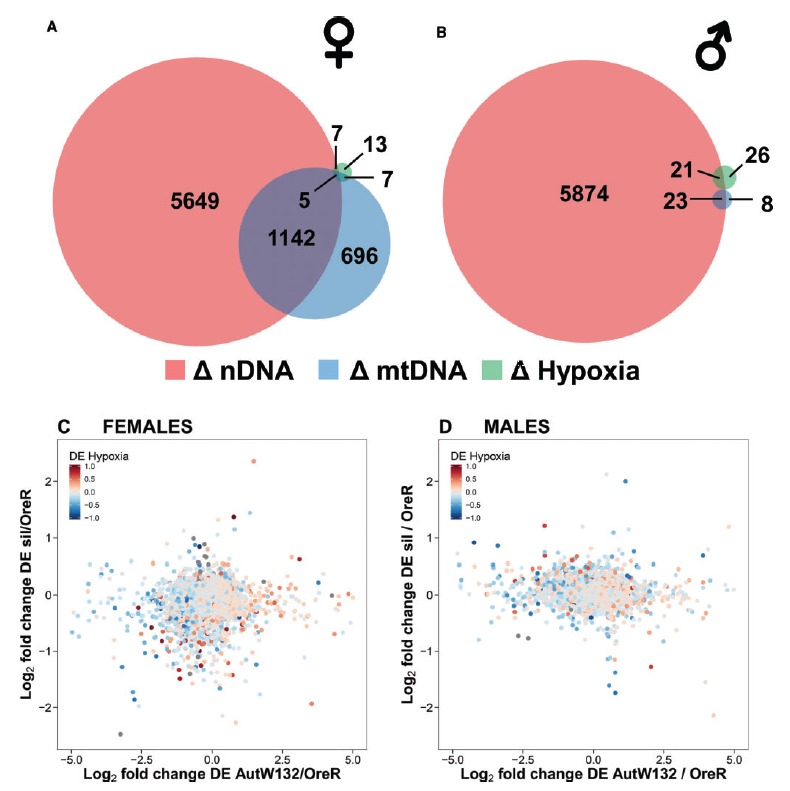
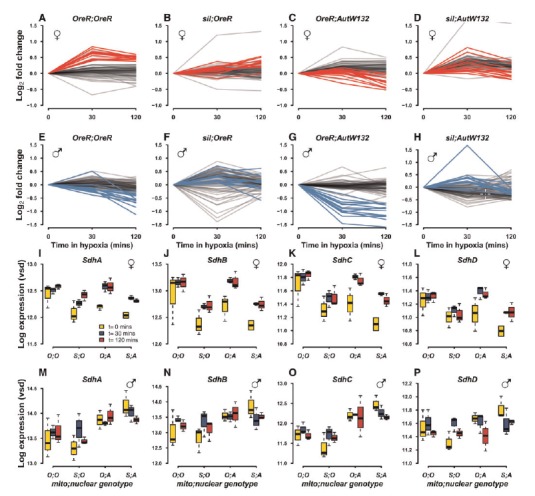
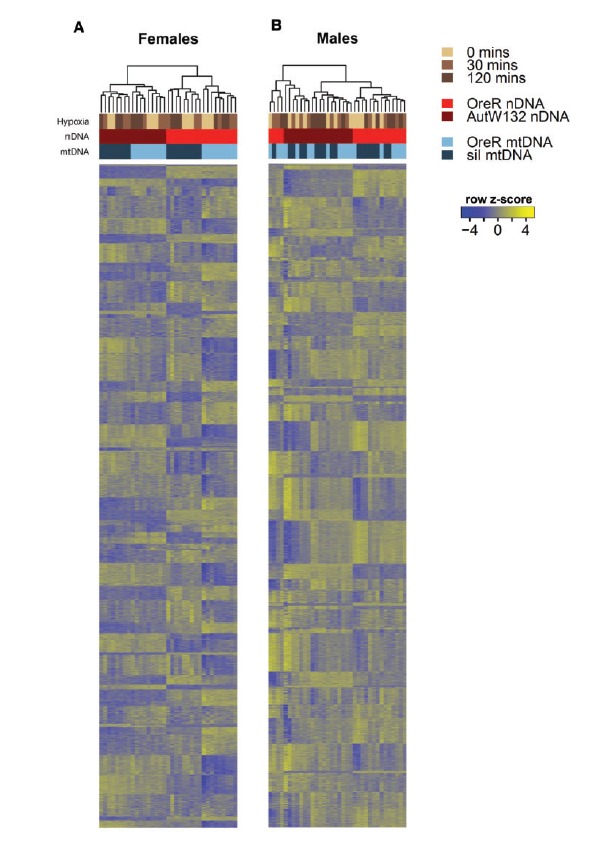
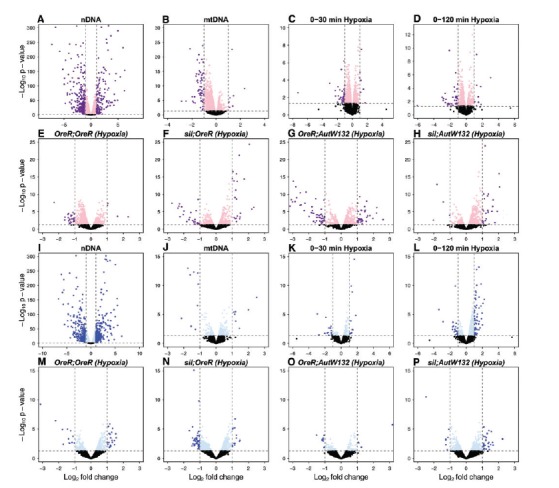
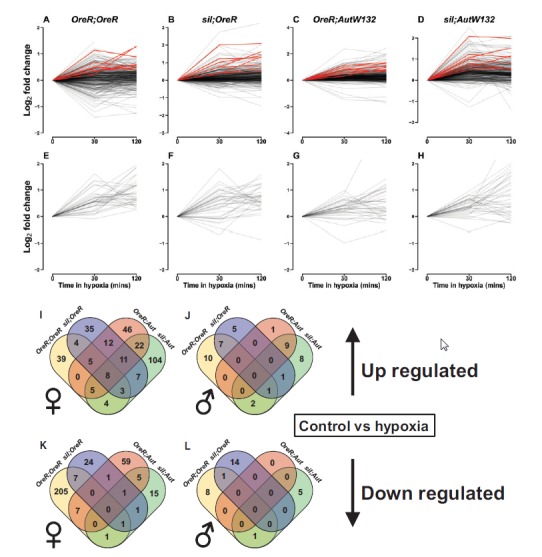
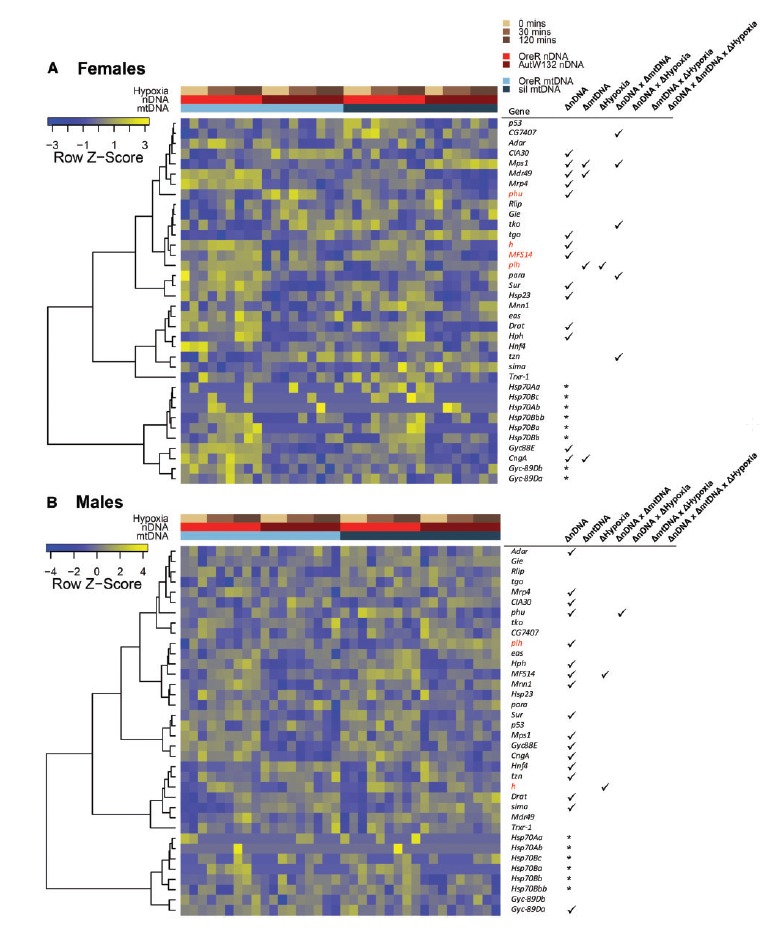
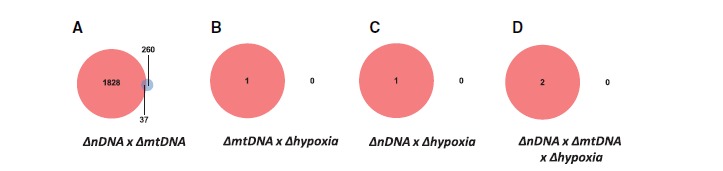
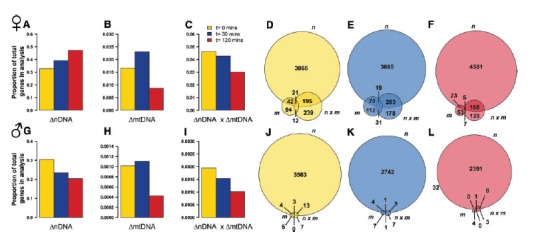
Among the major challenges in quantitative genetics and personalized medicine is to understand how gene × gene interactions (G × G: epistasis) and gene × environment interactions (G × E) underlie phenotypic variation. Here, we use the intimate relationship between mitochondria and oxygen availability to dissect the roles of nuclear DNA (nDNA) variation, mitochondrial DNA (mtDNA) variation, hypoxia, and their interactions on gene expression in Drosophila melanogaster. Mitochondria provide an important evolutionary and medical context for understanding G × G and G × E given their central role in integrating cellular signals. We hypothesized that hypoxia would alter mitonuclear communication and gene expression patterns. We show that first order nDNA, mtDNA, and hypoxia effects vary between the sexes, along with mitonuclear epistasis and G × G × E effects. Females were generally more sensitive to genetic and environmental perturbation. While dozens to hundreds of genes are altered by hypoxia in individual genotypes, we found very little overlap among mitonuclear genotypes for genes that were significantly differentially expressed as a consequence of hypoxia; excluding the gene hairy. Oxidative phosphorylation genes were among the most influenced by hypoxia and mtDNA, and exposure to hypoxia increased the signature of mtDNA effects, suggesting retrograde signaling between mtDNA and nDNA. We identified nDNA-encoded genes in the electron transport chain (succinate dehydrogenase) that exhibit female-specific mtDNA effects. Our findings have important implications for personalized medicine, the sex-specific nature of mitonuclear communication, and gene × gene coevolution under variable or changing environments.
数量遗传学和个性化医疗面临的主要挑战之一,是理解基因×基因相互作用(G×G:上位性)和基因×环境相互作用(G×E)如何构成表型变异的基础。在此,我们利用线粒体与氧可用性之间的密切关系,剖析核DNA(nDNA)变异、线粒体DNA(mtDNA)变异、低氧及其相互作用对黑腹果蝇基因表达的作用。鉴于线粒体在整合细胞信号中的核心作用,它们为理解G×G和G×E提供了重要的进化和医学背景。我们假设低氧会改变线粒体-核通信和基因表达模式。我们发现,一级nDNA、mtDNA和低氧效应在两性之间存在差异,同时存在线粒体-核上位性和G×G×E效应。雌性通常对遗传和环境扰动更为敏感。虽然在个体基因型中,低氧会改变数十到数百个基因,但我们发现,因低氧而显著差异表达的基因,在线粒体-核基因型之间几乎没有重叠;不包括毛状基因。氧化磷酸化基因是受低氧和mtDNA影响最大的基因之一,暴露于低氧会增加mtDNA效应的特征,表明mtDNA与nDNA之间存在逆行信号传导。我们在电子传递链中鉴定出了具有雌性特异性mtDNA效应的nDNA编码基因(琥珀酸脱氢酶)。我们的发现对个性化医疗、线粒体-核通信的性别特异性本质以及可变或变化环境下的基因×基因共同进化具有重要意义。