Regional Centre of Advanced Technologies and Materials, Department of Physical Chemistry, Faculty of Science, Palacký University in Olomouc , 17. listopadu 1192/12, 771 46 Olomouc, Czech Republic.
Department of Inorganic Chemistry, University of Chemistry and Technology Prague , Technická 5, 166 28 Prague 6, Czech Republic.
J Am Chem Soc. 2017 Mar 1;139(8):3171-3180. doi: 10.1021/jacs.6b12934. Epub 2017 Feb 16.
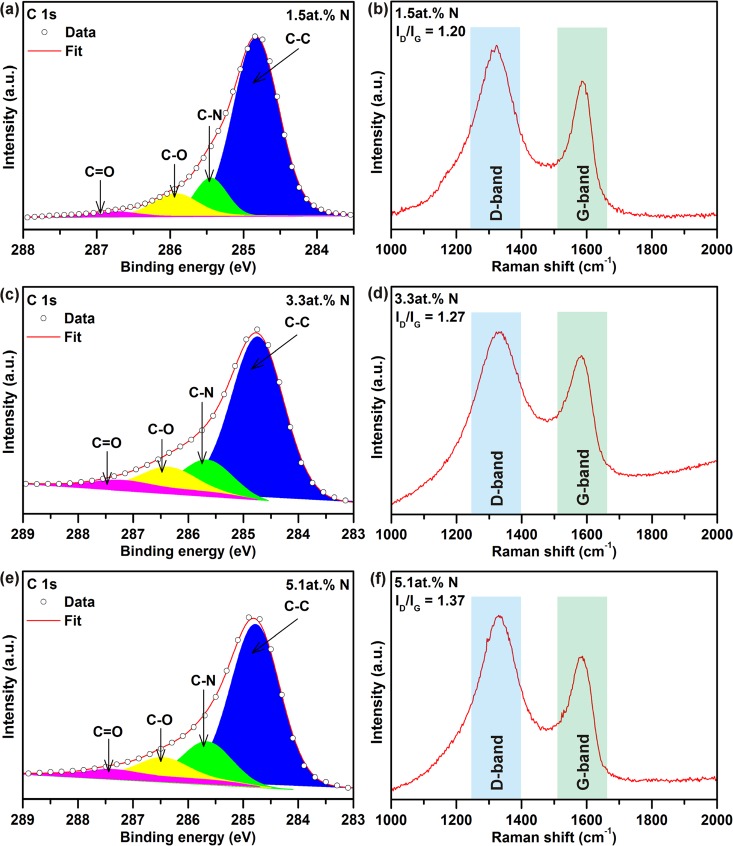
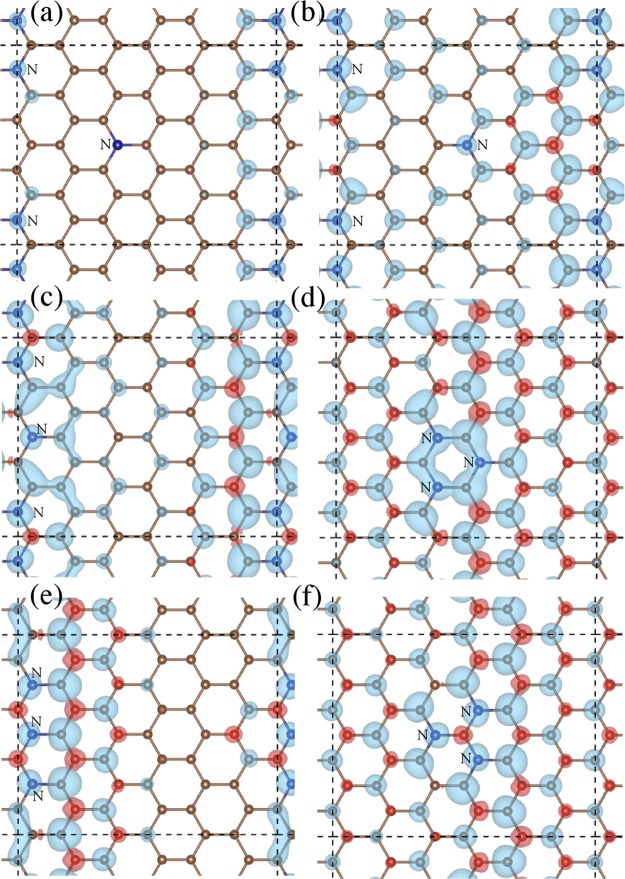
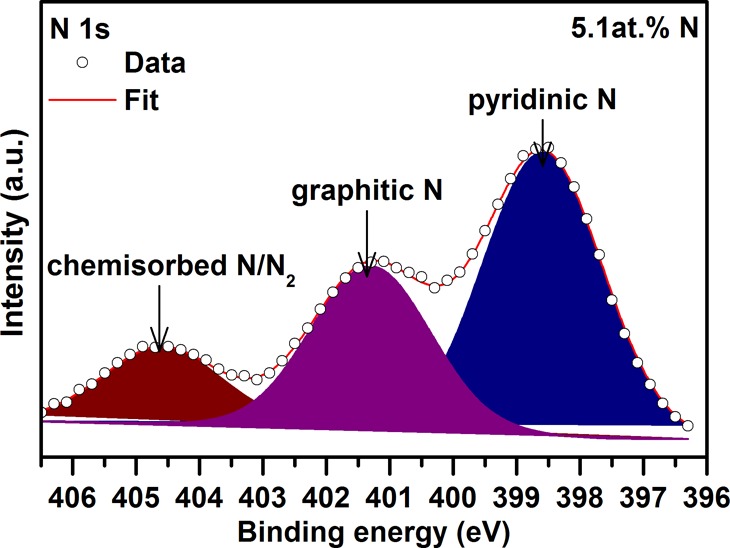
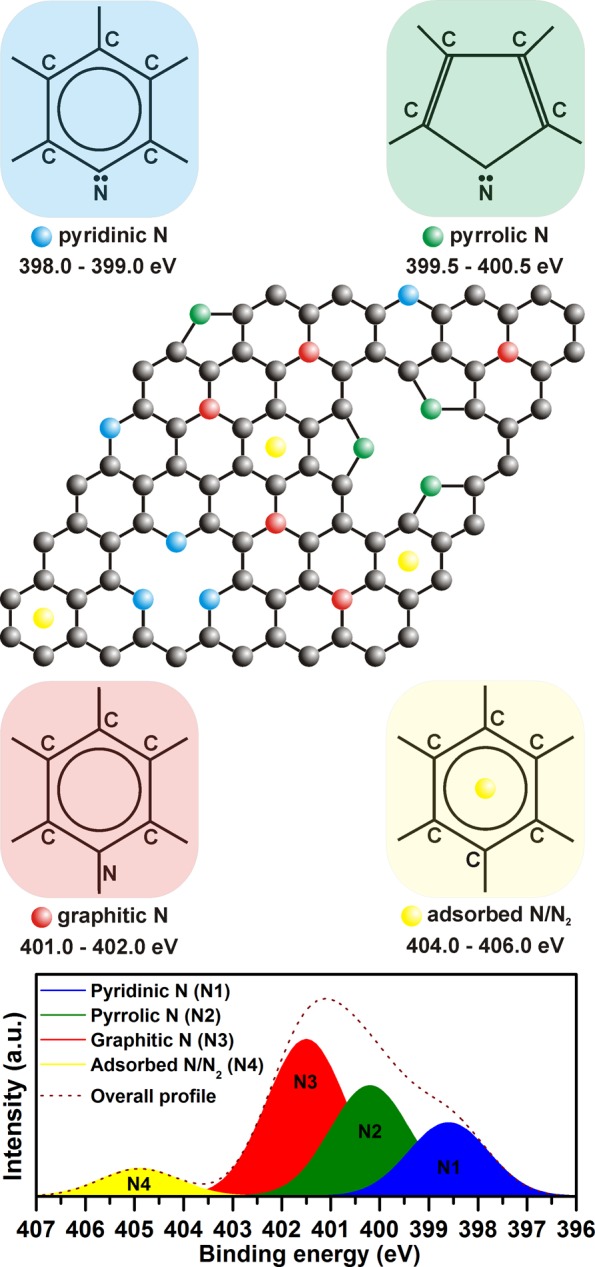
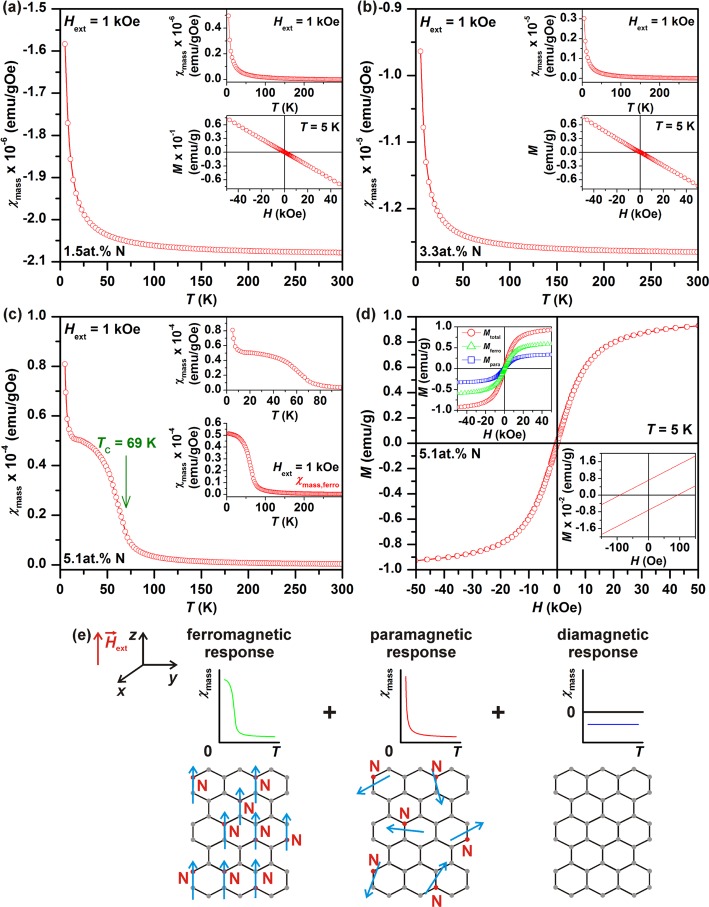
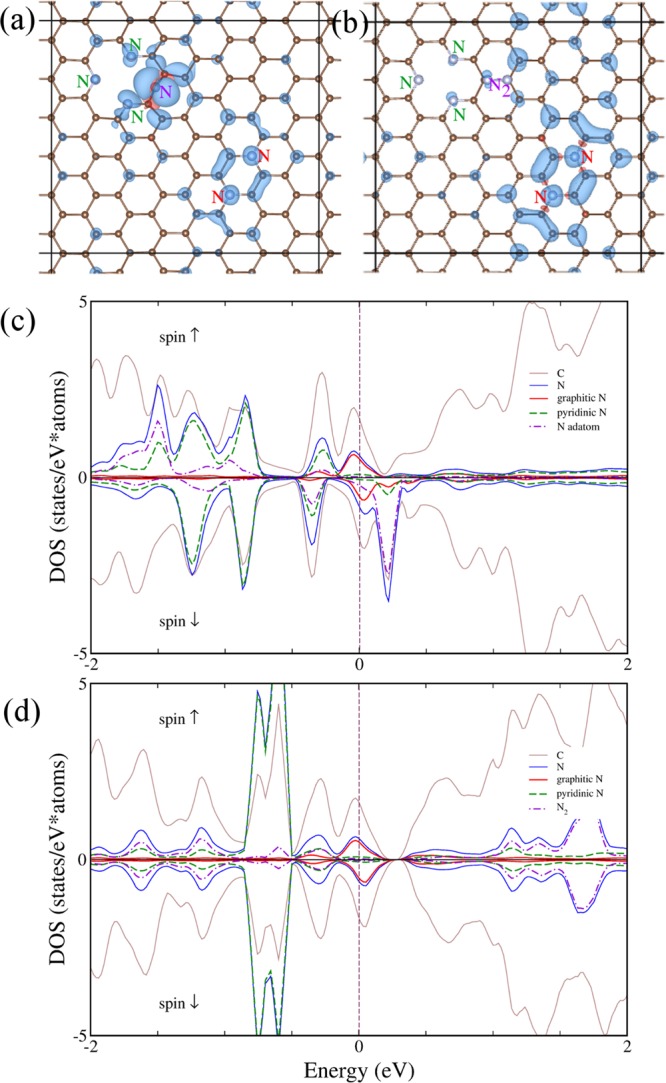
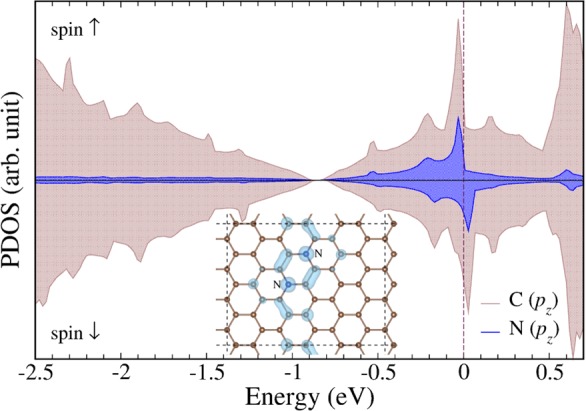
Nitrogen doping opens possibilities for tailoring the electronic properties and band gap of graphene toward its applications, e.g., in spintronics and optoelectronics. One major obstacle is development of magnetically active N-doped graphene with spin-polarized conductive behavior. However, the effect of nitrogen on the magnetic properties of graphene has so far only been addressed theoretically, and triggering of magnetism through N-doping has not yet been proved experimentally, except for systems containing a high amount of oxygen and thus decreased conductivity. Here, we report the first example of ferromagnetic graphene achieved by controlled doping with graphitic, pyridinic, and chemisorbed nitrogen. The magnetic properties were found to depend strongly on both the nitrogen concentration and type of structural N-motifs generated in the host lattice. Graphenes doped below 5 at. % of nitrogen were nonmagnetic; however, once doped at 5.1 at. % of nitrogen, N-doped graphene exhibited transition to a ferromagnetic state at ∼69 K and displayed a saturation magnetization reaching 1.09 emu/g. Theoretical calculations were used to elucidate the effects of individual chemical forms of nitrogen on magnetic properties. Results showed that magnetic effects were triggered by graphitic nitrogen, whereas pyridinic and chemisorbed nitrogen contributed much less to the overall ferromagnetic ground state. Calculations further proved the existence of exchange coupling among the paramagnetic centers mediated by the conduction electrons.
氮掺杂为调整石墨烯的电子性质和带隙以满足其在自旋电子学和光电学等领域的应用提供了可能性。一个主要障碍是开发具有自旋极化导电行为的磁性活性氮掺杂石墨烯。然而,到目前为止,氮对石墨烯磁性性质的影响仅在理论上得到了研究,除了含有大量氧因而导电性降低的系统之外,通过氮掺杂触发磁性的情况尚未在实验中得到证明。在这里,我们报告了通过石墨、吡啶和化学吸附氮的受控掺杂首次实现铁磁石墨烯的实例。研究发现,磁性性质强烈依赖于氮在宿主晶格中生成的结构 N 基元的浓度和类型。氮掺杂浓度低于 5 原子%的石墨烯是非磁性的;然而,一旦氮掺杂浓度达到 5.1 原子%,N 掺杂石墨烯在约 69 K 时转变为铁磁态,并显示出达到 1.09 emu/g 的饱和磁化强度。理论计算用于阐明单个氮化学形式对磁性性质的影响。结果表明,磁性效应是由石墨氮引发的,而吡啶氮和化学吸附氮对整体铁磁基态的贡献要小得多。计算进一步证明了通过传导电子介导的顺磁中心之间的交换耦合的存在。