Institut Européen de Chimie et Biologie, INSERM U1218, Université de Bordeaux, 2 Rue Robert Escarpit, Pessac 33607, France.
Institut Bergonié, INSERM U1218, 229 Cours de l'Argonne, Bordeaux 33076, France.
Nat Commun. 2017 Jan 23;8:14124. doi: 10.1038/ncomms14124.
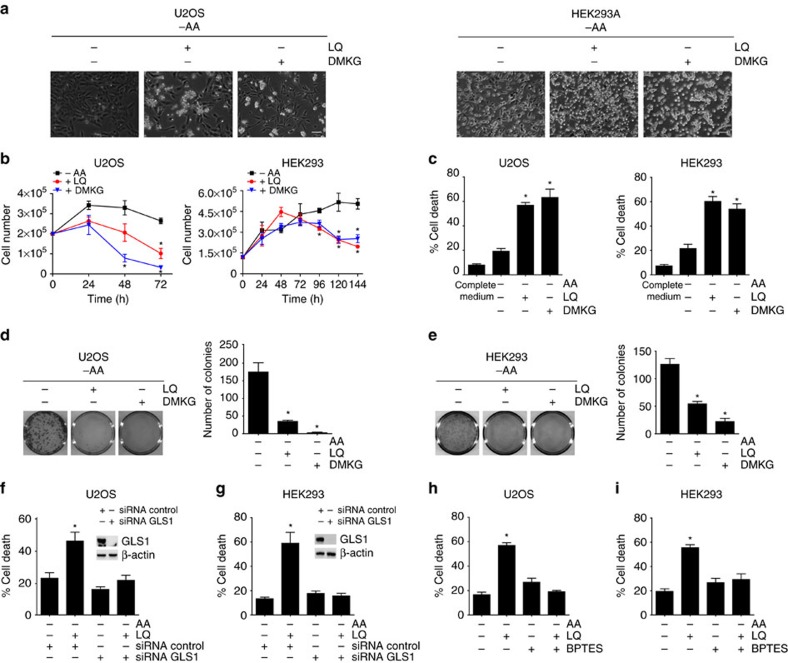
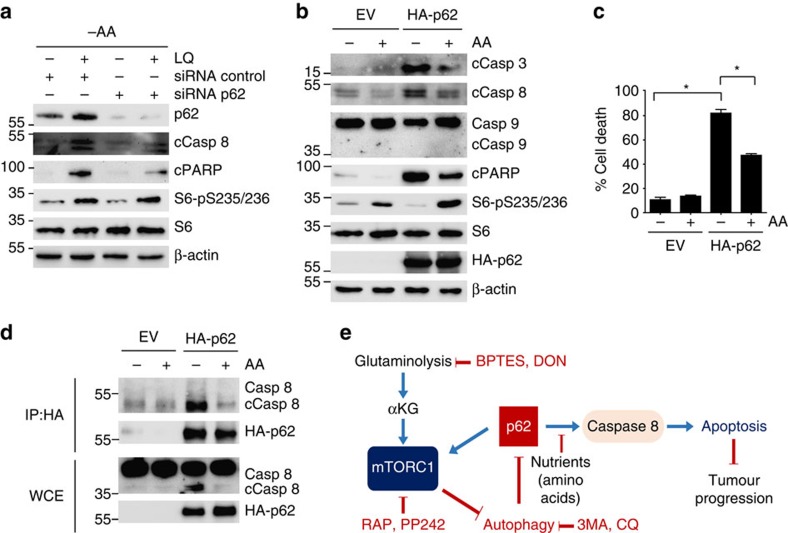
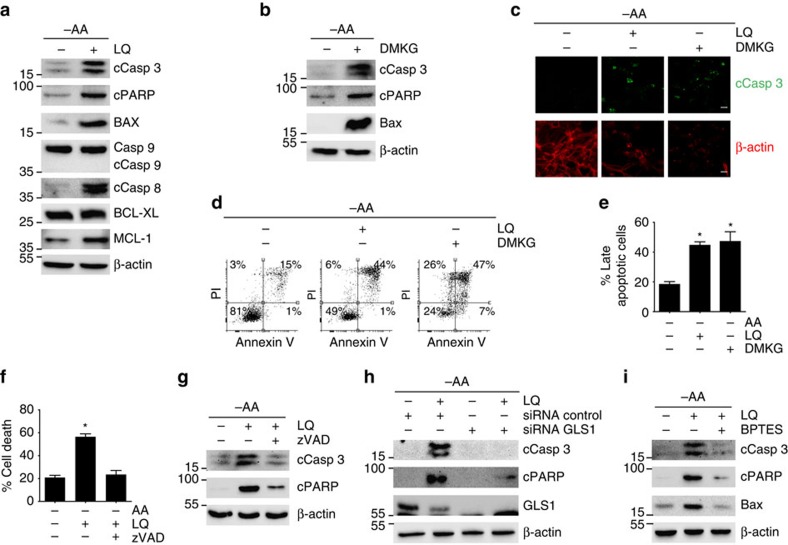
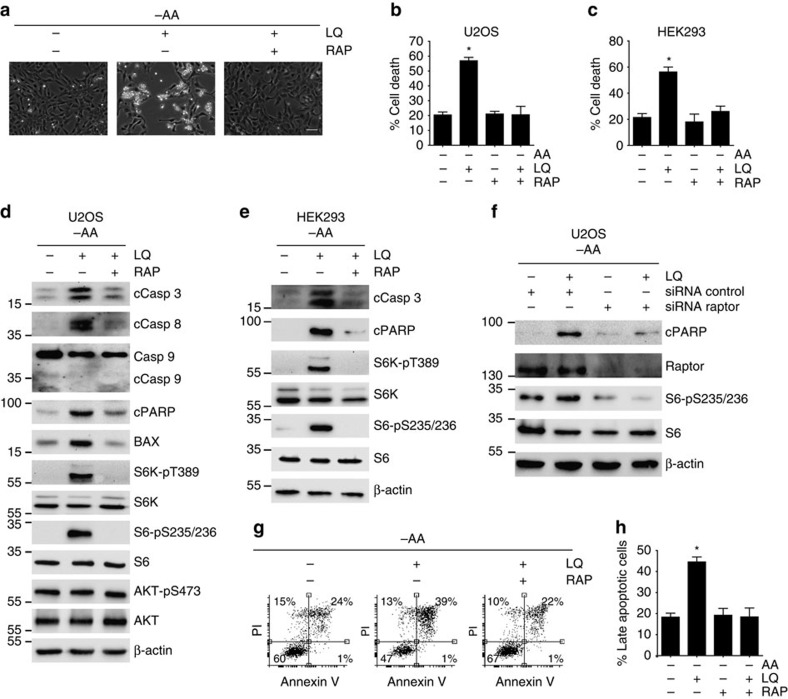
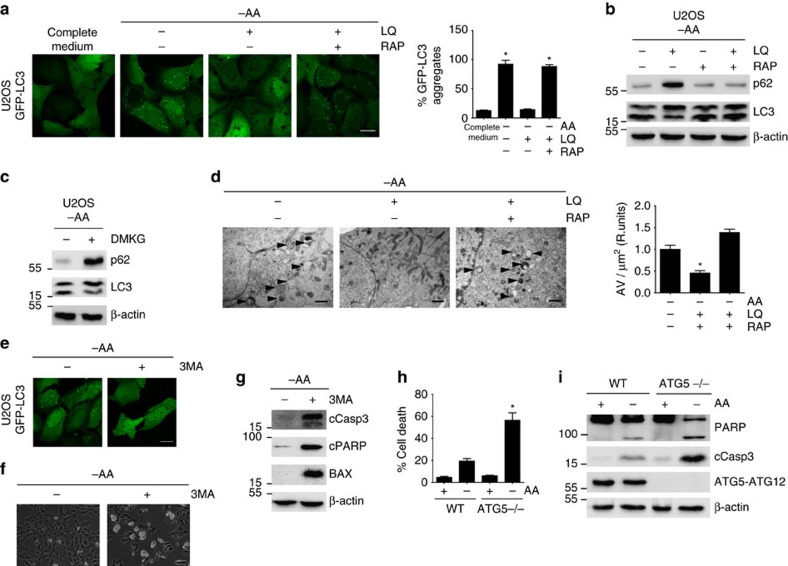
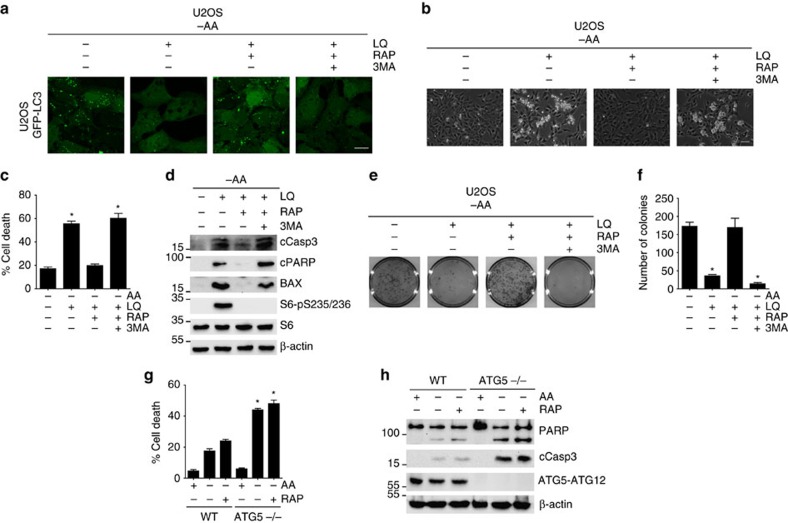
A master coordinator of cell growth, mTORC1 is activated by different metabolic inputs, particularly the metabolism of glutamine (glutaminolysis), to control a vast range of cellular processes, including autophagy. As a well-recognized tumour promoter, inhibitors of mTORC1 such as rapamycin have been approved as anti-cancer agents, but their overall outcome in patients is rather poor. Here we show that mTORC1 also presents tumour suppressor features in conditions of nutrient restrictions. Thus, the activation of mTORC1 by glutaminolysis during nutritional imbalance inhibits autophagy and induces apoptosis in cancer cells. Importantly, rapamycin treatment reactivates autophagy and prevents the mTORC1-mediated apoptosis. We also observe that the ability of mTORC1 to activate apoptosis is mediated by the adaptor protein p62. Thus, the mTORC1-mediated upregulation of p62 during nutrient imbalance induces the binding of p62 to caspase 8 and the subsequent activation of the caspase pathway. Our data highlight the role of autophagy as a survival mechanism upon rapamycin treatment.
细胞生长的主要协调者 mTORC1 可被不同的代谢物激活,尤其是谷氨酰胺(谷氨酰胺分解)的代谢物,以控制包括自噬在内的大量细胞过程。作为一种公认的肿瘤促进剂,mTORC1 的抑制剂如雷帕霉素已被批准为抗癌药物,但它们在患者中的总体效果相当差。在这里,我们表明,在营养物质限制的情况下,mTORC1 也具有肿瘤抑制特征。因此,在营养失衡期间,谷氨酰胺分解激活 mTORC1 会抑制自噬并诱导癌细胞凋亡。重要的是,雷帕霉素治疗可重新激活自噬并阻止 mTORC1 介导的细胞凋亡。我们还观察到,mTORC1 激活细胞凋亡的能力是由衔接蛋白 p62 介导的。因此,在营养物质失衡期间,mTORC1 对 p62 的上调诱导 p62 与半胱天冬酶 8 的结合,随后激活半胱天冬酶途径。我们的数据强调了自噬作为雷帕霉素治疗时的一种生存机制的作用。