Chen Lu, Xiang Bingyu, Wang Xiaojun, Xiang Charlie
State Key Laboratory for Diagnosis and Treatment of Infectious Diseases, and Collaborative Innovation Center for Diagnosis and Treatment of Infectious Diseases, School of Medicine, Zhejiang University, Hangzhou, 310003, China.
Stem Cell Res Ther. 2017 Jan 23;8(1):9. doi: 10.1186/s13287-016-0453-6.
Human menstrual blood-derived stem cells (MenSCs) are a novel source of MSCs that provide the advantage of being easy to collect and isolate. Exosomes contain some mRNAs and adhesion molecules that can potentially impact cellular and animal physiology. This study aimed to investigate the therapeutic potential of MenSC-derived exosomes (MenSC-Ex) on AML12 cells (in vitro) and D-GalN/LPS-induced FHF mice (in vivo).
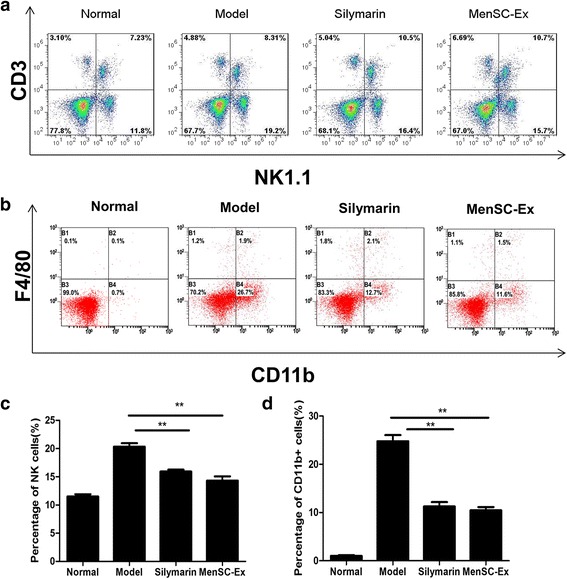
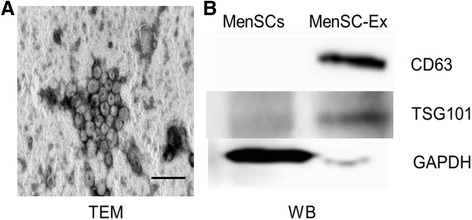
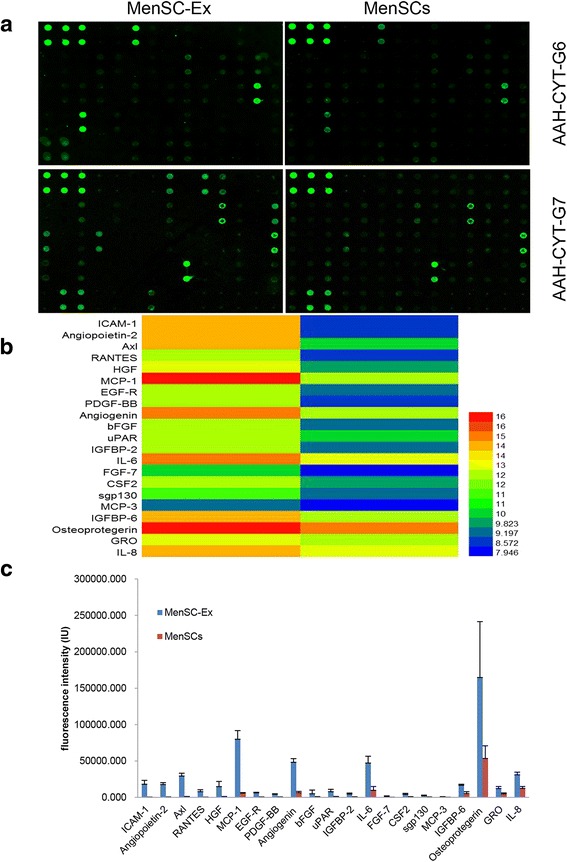
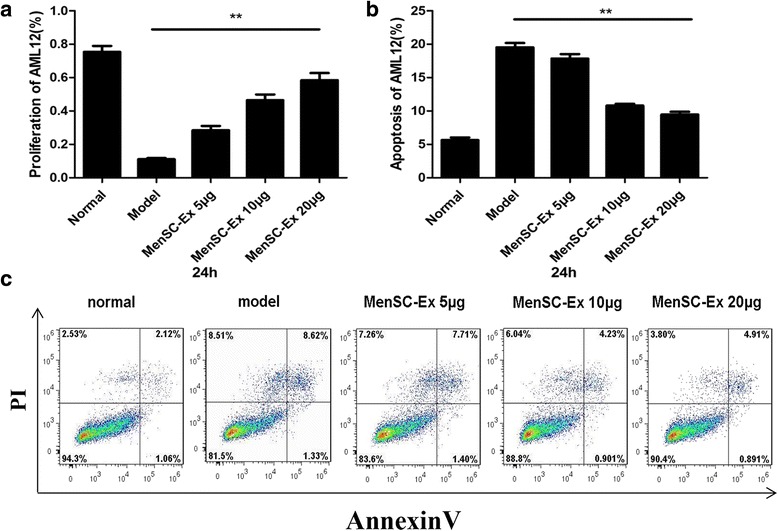
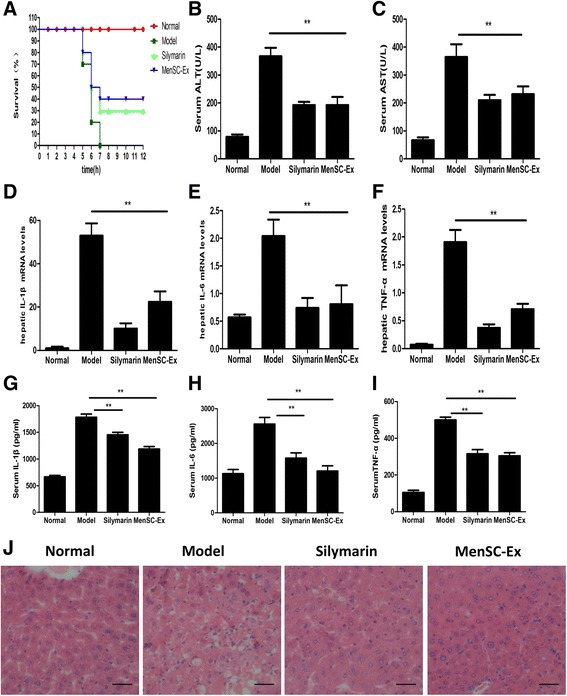
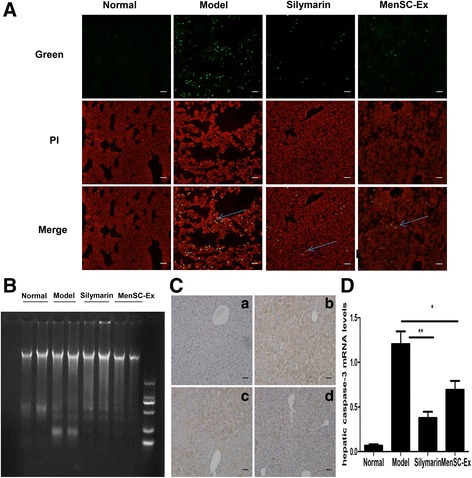
Transmission electron microscopy and Western blot were used to identify MenSC-Ex. Antibody array was used to examine cytokine levels on MenSC-Ex. MenSC-Ex were treated in D-GalN/LPS-induced AML12 in vitro. Cell proliferation and apoptosis were measured. MenSC-Ex were injected into the tail veins of mice 24 h before treatment with D-GalN/LPS. Blood and liver tissues served as physiological and biochemical indexes. The number of liver mononuclear cells (MNCs) and the amount of the active apoptotic protein caspase-3 were determined to elaborate the mechanism of hepatoprotective activity.
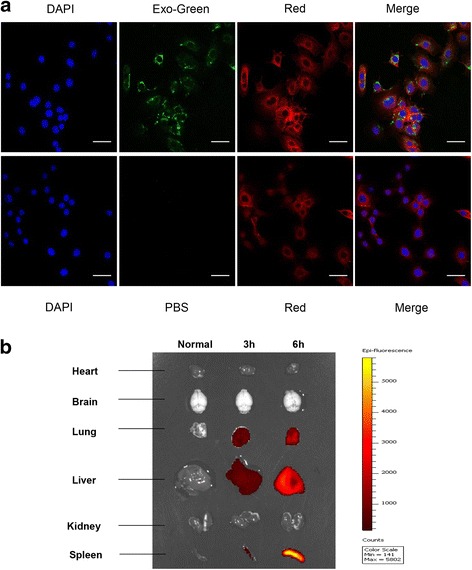
Human menstrual blood-derived stem cell-derived exosomes (MenSC-Ex) are bi-lipid membrane vesicles that have a round, ball-like shape with a diameter of approximately 30-100 nm. Cytokine arrays have shown that MenSC-Ex expressed cytokines, including ICAM-1, angiopoietin-2, Axl, angiogenin, IGFBP-6, osteoprotegerin, IL-6, and IL-8. MenSC-Ex markedly improved liver function, enhanced survival rates, and inhibited liver cell apoptosis at 6 h after transplantation. MenSC-Ex migrated to sites of injury and to AML12 cells (a mouse hepatocyte cell line), respectively. Moreover, MenSC-Ex reduced the number of liver mononuclear cells (MNCs) and the amount of the active apoptotic protein caspase-3 in injured livers.
In conclusion, our results provide preliminary evidence for the anti-apoptotic capacity of MenSC-Ex in FHF and suggest that MenSC-Ex may be an alternative therapeutic approach to treat FHF.
人月经血源性干细胞(MenSCs)是一种新型的间充质干细胞来源,具有易于采集和分离的优势。外泌体含有一些可能影响细胞和动物生理的mRNA和黏附分子。本研究旨在探讨月经血源性干细胞来源的外泌体(MenSC-Ex)对AML12细胞(体外)和D-半乳糖胺/脂多糖诱导的急性肝衰竭(FHF)小鼠(体内)的治疗潜力。
采用透射电子显微镜和蛋白质免疫印迹法鉴定MenSC-Ex。利用抗体芯片检测MenSC-Ex上的细胞因子水平。将MenSC-Ex用于体外D-半乳糖胺/脂多糖诱导的AML12细胞。检测细胞增殖和凋亡情况。在用D-半乳糖胺/脂多糖处理小鼠前24小时,将MenSC-Ex注入小鼠尾静脉。以血液和肝脏组织作为生理生化指标。测定肝脏单个核细胞(MNCs)数量和活性凋亡蛋白caspase-3的含量,以阐述其肝脏保护活性机制。
人月经血源性干细胞来源的外泌体(MenSC-Ex)是双脂质膜囊泡,呈圆形球状,直径约30-100nm。细胞因子芯片显示MenSC-Ex表达细胞因子,包括细胞间黏附分子-1(ICAM-1)、血管生成素-2、Axl、血管生成素、胰岛素样生长因子结合蛋白-6(IGFBP-6)、骨保护素、白细胞介素-6(IL-6)和白细胞介素-8(IL-8)。MenSC-Ex在移植后6小时显著改善肝功能,提高存活率,并抑制肝细胞凋亡。MenSC-Ex分别迁移至损伤部位和AML12细胞(一种小鼠肝细胞系)。此外,MenSC-Ex减少了损伤肝脏中肝脏单个核细胞(MNCs)的数量和活性凋亡蛋白caspase-3的含量。
总之,我们的结果为MenSC-Ex在急性肝衰竭中的抗凋亡能力提供了初步证据,并表明MenSC-Ex可能是治疗急性肝衰竭的一种替代治疗方法。