Instituto de Física Interdisciplinar y Sistemas Complejos IFISC (CSIC-UIB), Campus Universitat de les Illes Balears, 07122 Palma de Mallorca, Spain.
Sci Rep. 2017 Feb 2;7:41627. doi: 10.1038/srep41627.
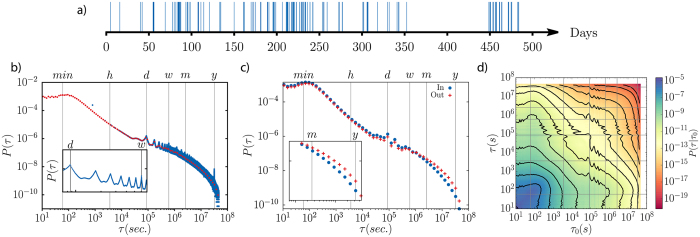
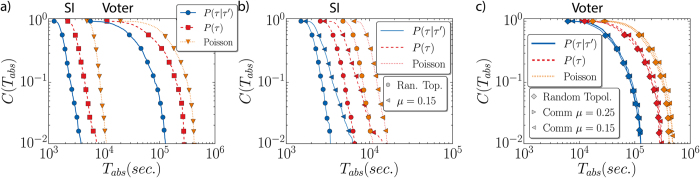
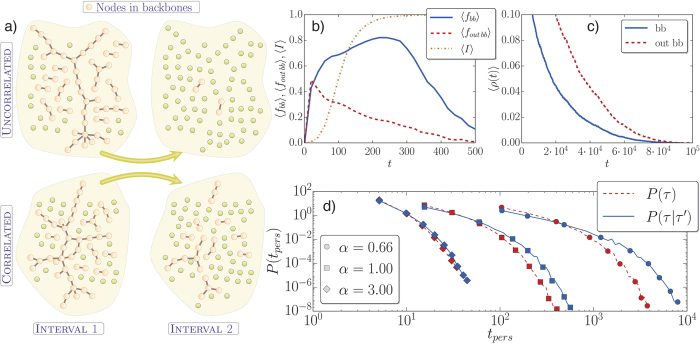
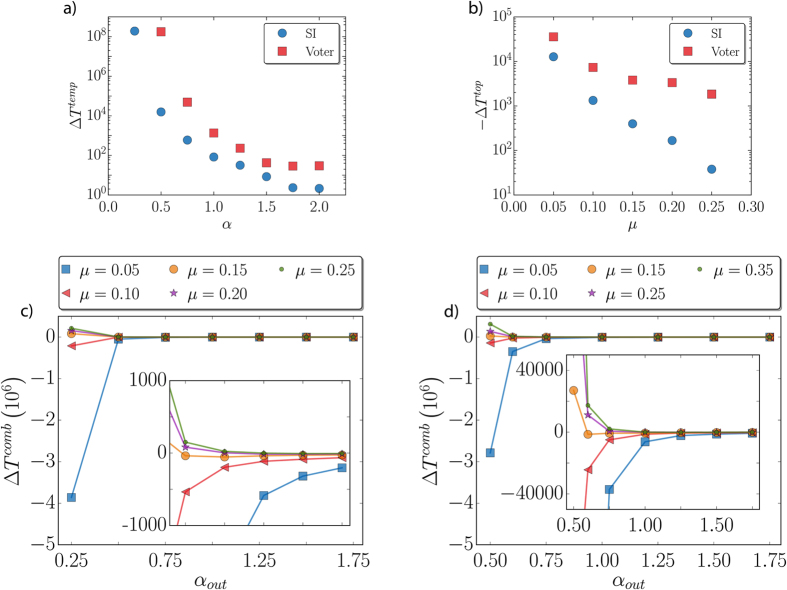
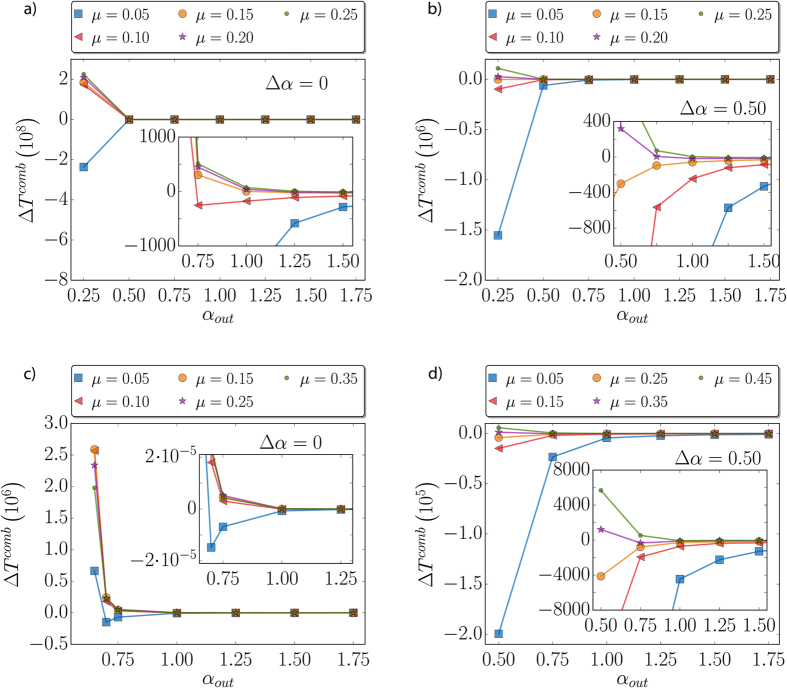
Links in many real-world networks activate and deactivate in correspondence to the sporadic interactions between the elements of the system. The activation patterns may be irregular or bursty and play an important role on the dynamics of processes taking place in the network. Information or disease spreading in networks are paradigmatic examples of this situation. Besides burstiness, several correlations may appear in the process of link activation: memory effects imply temporal correlations, but also the existence of communities in the network may mediate the activation patterns of internal an external links. Here we study the competition of topological and temporal correlations in link activation and how they affect the dynamics of systems running on the network. Interestingly, both types of correlations by separate have opposite effects: one (topological) delays the dynamics of processes on the network, while the other (temporal) accelerates it. When they occur together, our results show that the direction and intensity of the final outcome depends on the competition in a non trivial way.
在许多真实世界的网络中,系统元素之间的偶发相互作用会导致连接的激活和去激活。激活模式可能是不规则的或突发的,在网络中发生的过程的动态中起着重要作用。信息或疾病在网络中的传播就是这种情况的典型例子。除了突发模式外,链接激活过程中还可能出现几种相关性:记忆效应意味着时间相关性,但网络中的社区的存在也可能调节内部和外部链接的激活模式。在这里,我们研究链接激活中拓扑和时间相关性的竞争,以及它们如何影响网络上运行的系统的动态。有趣的是,这两种类型的相关性单独作用时会产生相反的效果:一种(拓扑)会延迟网络上的过程动态,而另一种(时间)则会加速它。当它们同时出现时,我们的结果表明,最终结果的方向和强度以一种非平凡的方式取决于竞争。