State Key Laboratory of Bioreactor Engineering, East China University of Science and Technology, 130 Meilong Road, Shanghai 200237, China.
Shanghai Collaborative Innovation Center for Biomanufacturing, 130 Meilong Road, Shanghai 200237, China.
Sci Rep. 2017 Feb 2;7:41850. doi: 10.1038/srep41850.
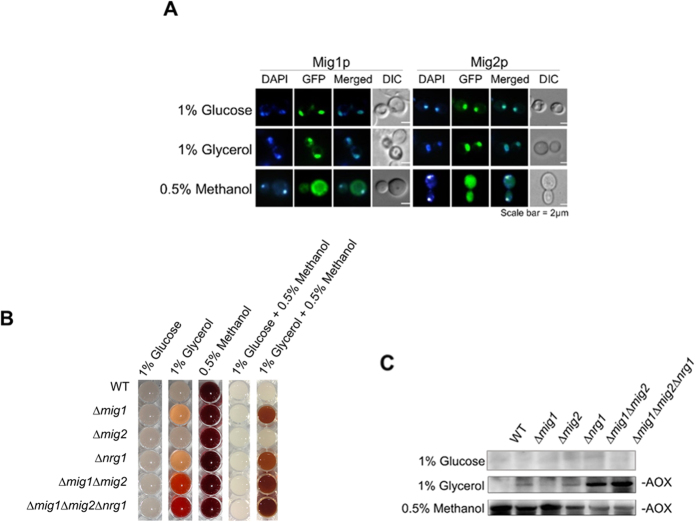
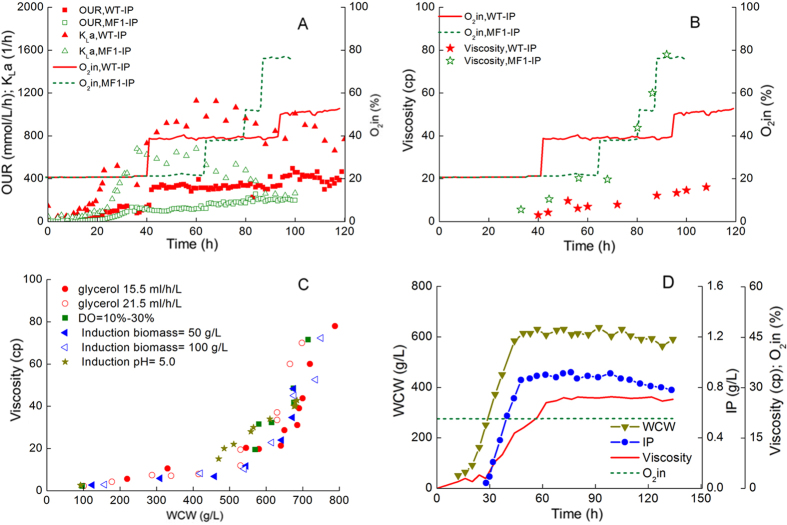
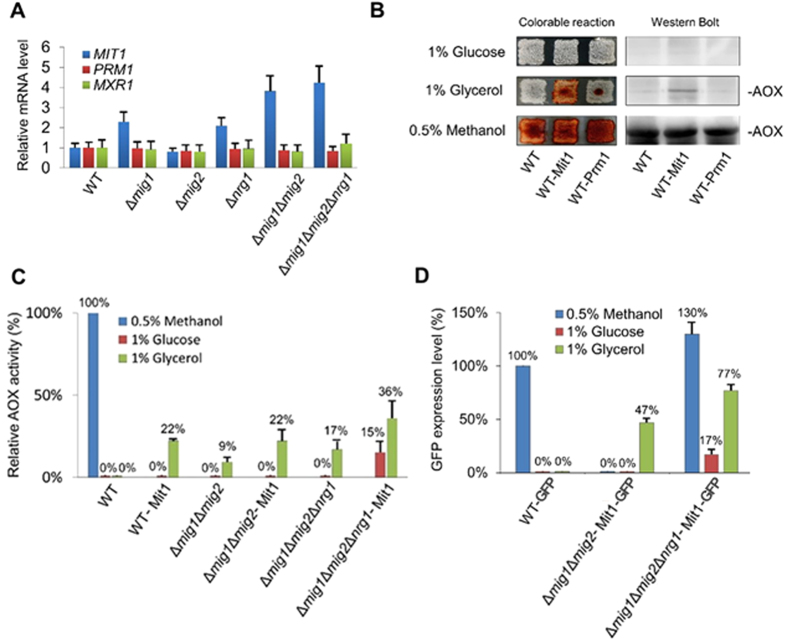
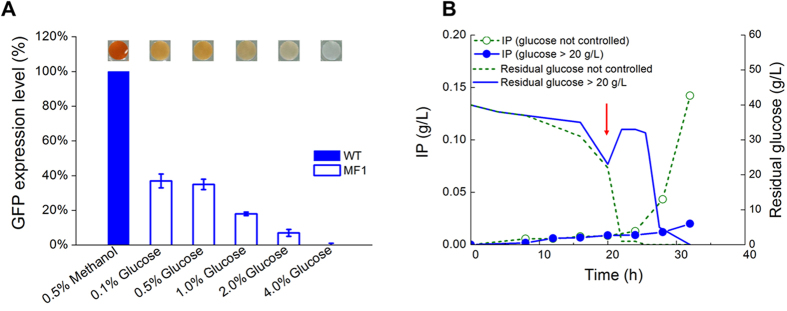
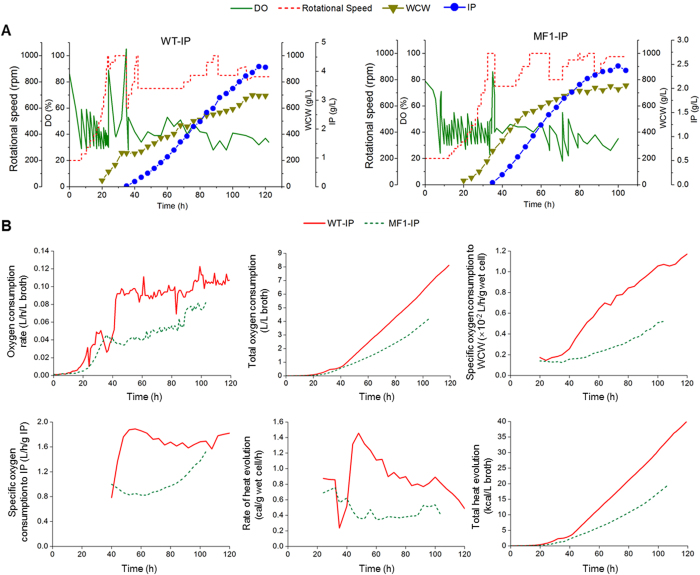
The alcohol oxidase 1 promoter (P) of Pichia pastoris is commonly used for high level expression of recombinant proteins. While the safety risk of methanol and tough process control for methanol induction usually cause problems especially in large-scale fermentation. By testing the functions of trans-acting elements of P and combinatorially engineering of them, we successfully constructed a methanol-free P start-up strain, in which, three transcription repressors were identified and deleted and, one transcription activator were overexpressed. The strain expressed 77% GFP levels in glycerol compared to the wide-type in methanol. Then, insulin precursor (IP) was expressed, taking which as a model, we developed a novel glucose-glycerol-shift induced P start-up for this methanol-free strain. A batch phase with glucose of 40 g/L followed by controlling residual glucose not lower than 20 g/L was compatible for supporting cell growth and suppressing P. Then, glycerol induction was started after glucose used up. Accordingly, an optimal bioprocess was further determined, generating a high IP production of 2.46 g/L in a 5-L bioreactor with dramatical decrease of oxygen consumption and heat evolution comparing with the wild-type in methanol. This mutant and bioprocess represent a safe and efficient alternative to the traditional glycerol-repressed/methanol-induced P system.
毕赤酵母醇氧化酶 1 启动子(P)常用于高水平表达重组蛋白。然而,甲醇的安全风险和严格的甲醇诱导过程控制通常会导致问题,特别是在大规模发酵中。通过测试 P 的反式作用元件的功能并对其进行组合工程改造,我们成功构建了一种无甲醇启动子的酵母菌株,其中鉴定并删除了三个转录阻遏物,并过表达了一个转录激活物。与甲醇相比,该菌株在甘油中的 GFP 表达水平提高了 77%。然后,我们表达了胰岛素前体(IP),并以此为模型,为这种无甲醇的菌株开发了一种新型的葡萄糖-甘油切换诱导的 P 启动子。采用 40g/L 的葡萄糖进行批处理阶段,然后控制残留葡萄糖不低于 20g/L,以支持细胞生长和抑制 P。当葡萄糖耗尽后,开始甘油诱导。因此,进一步确定了最佳的生物工艺,在 5L 生物反应器中产生了 2.46g/L 的高 IP 产量,与甲醇中野生型相比,氧消耗和热释放显著降低。该突变体和生物工艺代表了传统甘油抑制/甲醇诱导 P 系统的安全高效替代方案。