Gibbons Chris J
Cambridge Centre for Health Services Research, University of CambridgeCambridge, UK; The Psychometrics Centre, Judge Business School, University of CambridgeCambridge, UK.
Front Psychol. 2017 Jan 19;7:1933. doi: 10.3389/fpsyg.2016.01933. eCollection 2016.
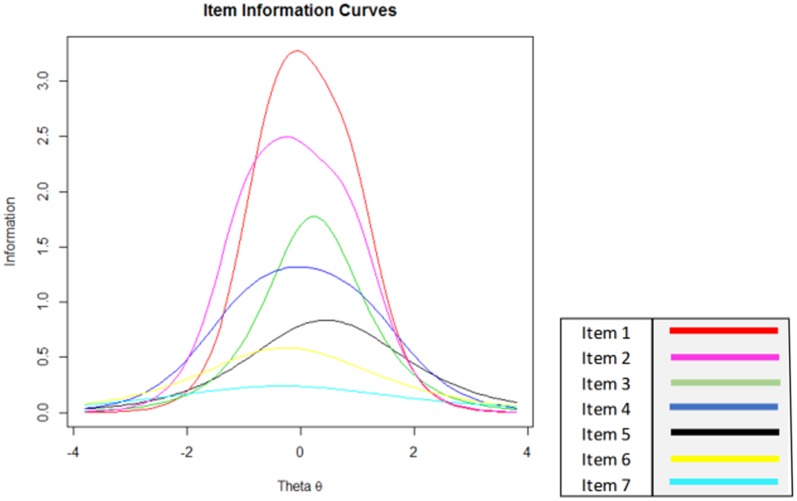
The current paper describes new opportunities for patient-centred assessment methods which have come about by the increased adoption of affordable smart technologies in biopsychosocial research and medical care. In this commentary, we review modern assessment methods including item response theory (IRT), computer adaptive testing (CAT), and ecological momentary assessment (EMA) and explain how these methods may be combined to improve psychological assessment. We demonstrate both how a 'naïve' selection of a small group of items in an EMA can lead to unacceptably unreliable assessments and how IRT can provide detailed information on the individual information that each item gives thus allowing short form assessments to be selected with acceptable reliability. The combination of CAT and IRT can ensure assessments are precise, efficient, and well targeted to the individual; allowing EMAs to be both brief and accurate.
本文描述了以患者为中心的评估方法的新机遇,这些机遇源于生物心理社会研究和医疗保健中对经济适用型智能技术的更多采用。在这篇评论中,我们回顾了现代评估方法,包括项目反应理论(IRT)、计算机自适应测试(CAT)和生态瞬时评估(EMA),并解释了如何将这些方法结合起来以改进心理评估。我们展示了在EMA中对一小部分项目进行“简单”选择如何会导致评估可靠性低到不可接受,以及IRT如何能够提供关于每个项目所给出的个体信息的详细信息,从而使能够以可接受的可靠性选择简短形式的评估。CAT和IRT的结合可以确保评估精确、高效且针对个体具有良好的针对性;使EMA既能做到简短又能保证准确。