Liu Cuilian, Zhang Song, Wang Qizhi, Zhang Xiaobo
College of Life Sciences and Laboratory for Marine Biology and Biotechnology of Qingdao National Laboratory for Marine Science and Technology, Zhejiang University, Hangzhou 310058, The People's Republic of China.
Department of Gastroenterology, The First Affiliated Hospital of Bengbu Medical College, Bengbu 233030, The People's Republic of China.
Oncotarget. 2017 Jun 27;8(26):42043-42060. doi: 10.18632/oncotarget.14927.
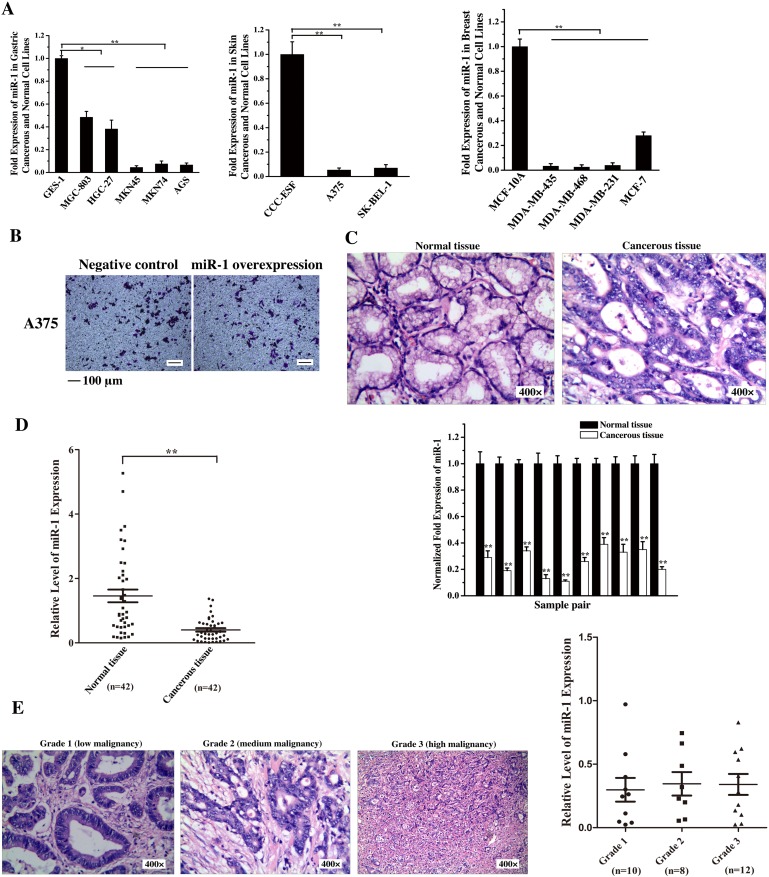
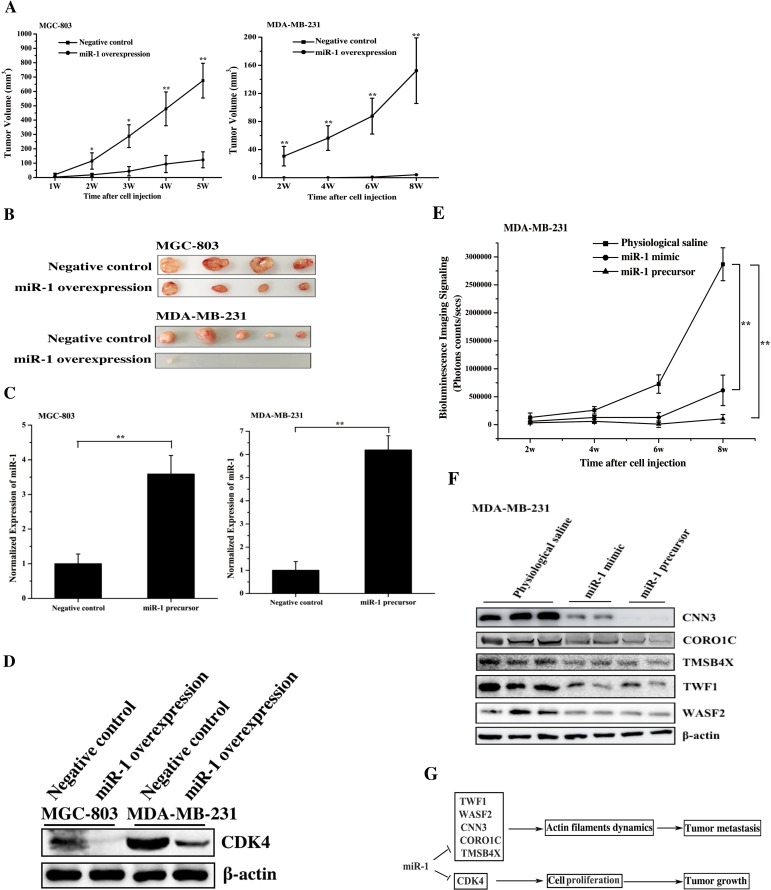
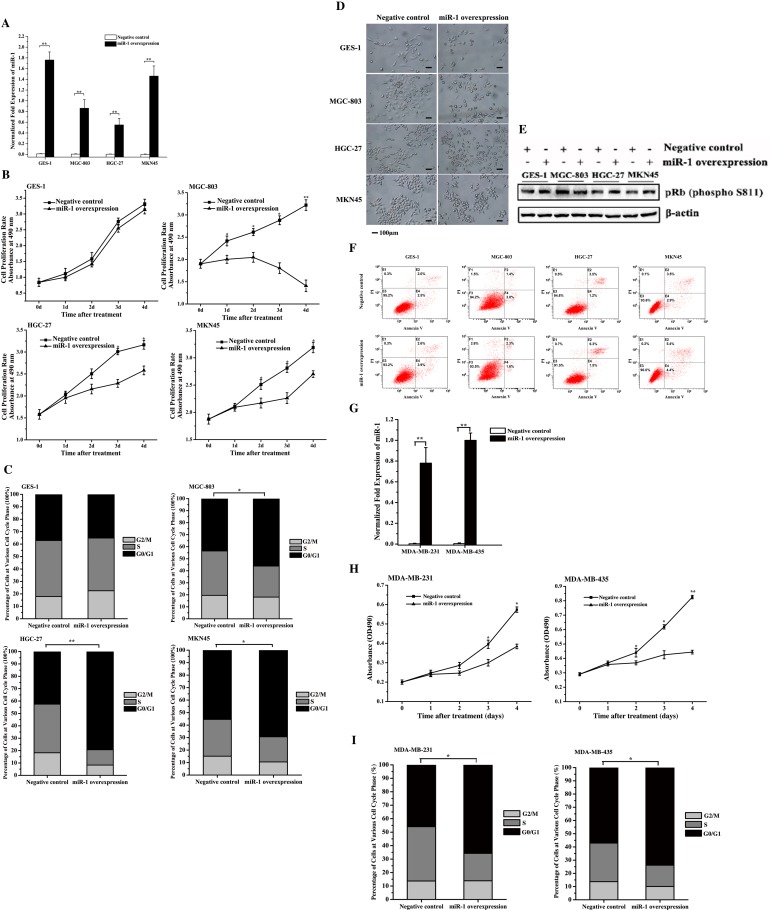
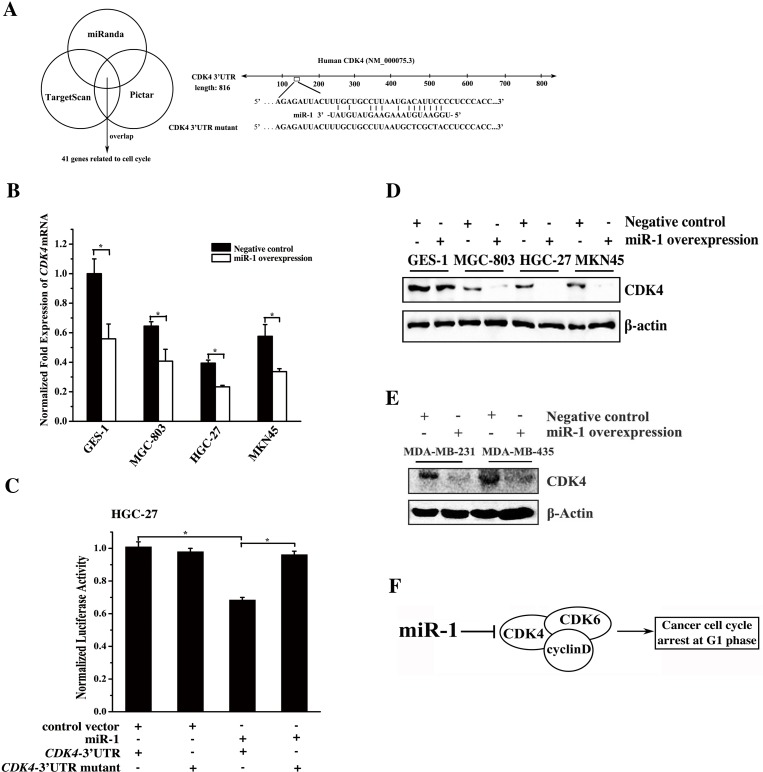
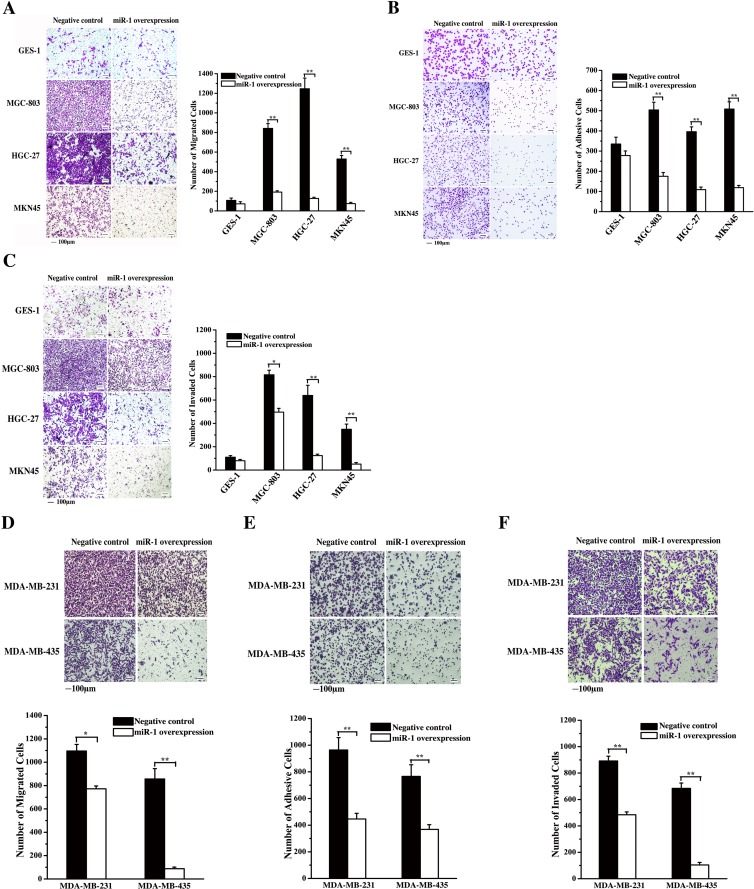
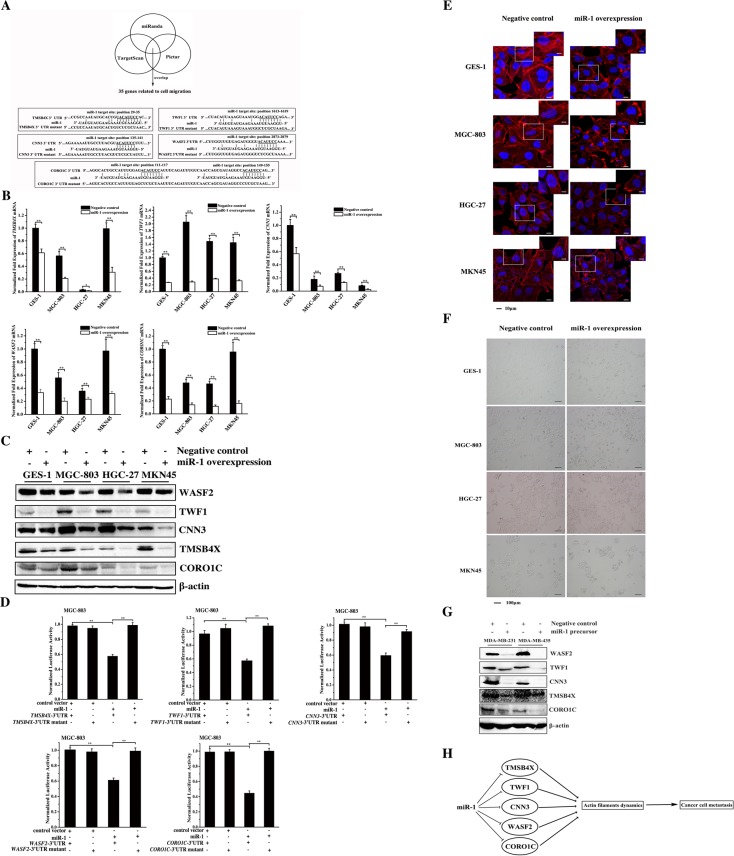
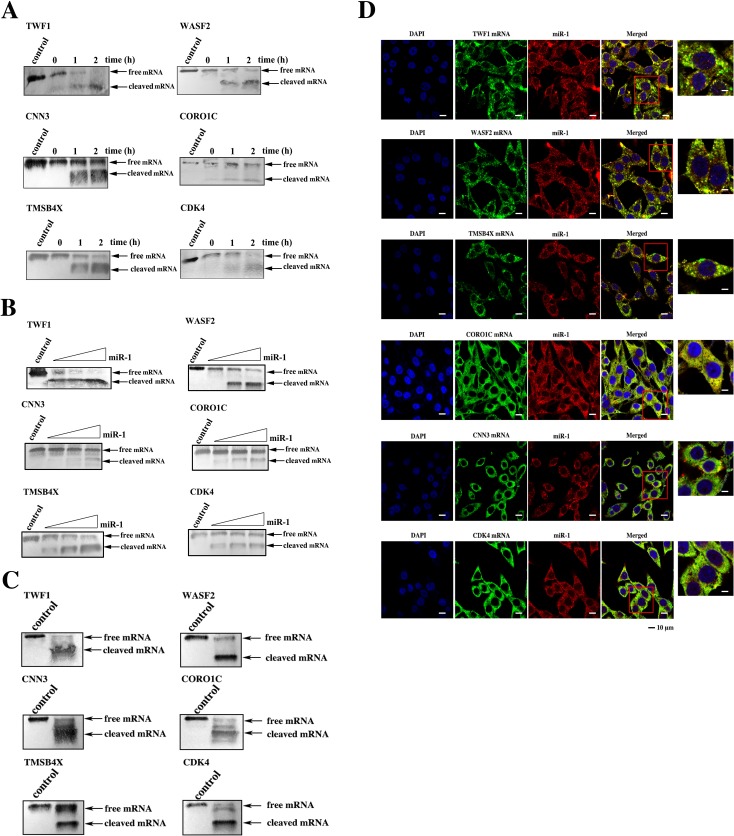
Cancer progression depends on tumor growth and metastasis, which are activated or suppressed by multiple genes. An individual microRNA may target multiple genes, suggesting that a miRNA may suppress tumor growth and metastasis via simultaneously targeting different genes. However, thus far, this issue has not been explored. In the present study, the findings showed that miR-1 could simultaneously inhibit tumor growth and metastasis of gastric and breast cancers by targeting multiple genes. The results indicated that miR-1 was significantly downregulated in cancer tissues compared with normal tissues. The miR-1 overexpression led to cell cycle arrest in the G1 phase in gastric and breast cancer cells but not in normal cells. Furthermore, the miR-1 overexpression significantly inhibited the metastasis of gastric and breast cancer cells. An analysis of the underlying mechanism revealed that the simultaneous inhibition of tumor growth and metastasis mediated by miR-1 was due to the synchronous targeting of 6 miR-1 target genes encoding cyclin dependent kinase 4, twinfilin actin binding protein 1, calponin 3, coronin 1C, WAS protein family member 2 and thymosin beta 4, X-linked. In vivo assays demonstrated that miR-1 efficiently inhibited tumor growth and metastasis of gastric and breast cancers in nude mice. Therefore, our study contributed novel insights into the miR-1's roles in tumorigenesis of gastric and breast cancers.
癌症进展取决于肿瘤生长和转移,而这受到多个基因的激活或抑制。单个微小RNA可能靶向多个基因,这表明一种微小RNA可能通过同时靶向不同基因来抑制肿瘤生长和转移。然而,迄今为止,这个问题尚未得到探索。在本研究中,研究结果表明,miR-1可通过靶向多个基因同时抑制胃癌和乳腺癌的肿瘤生长和转移。结果表明,与正常组织相比,miR-1在癌组织中显著下调。miR-1过表达导致胃癌和乳腺癌细胞的细胞周期停滞在G1期,但在正常细胞中则不然。此外,miR-1过表达显著抑制胃癌和乳腺癌细胞的转移。对潜在机制的分析表明,miR-1介导的对肿瘤生长和转移的同时抑制是由于对6个miR-1靶基因的同步靶向,这些基因编码细胞周期蛋白依赖性激酶4、双丝肌动蛋白结合蛋白1、钙调蛋白3、冠蛋白1C、WAS蛋白家族成员2和X连锁的胸腺素β4。体内实验表明,miR-1能有效抑制裸鼠体内胃癌和乳腺癌的肿瘤生长和转移。因此,我们的研究为miR-1在胃癌和乳腺癌肿瘤发生中的作用提供了新的见解。