Elsner Kelly, Naehrig Diana, Halkett Georgia K B, Dhillon Haryana M
Central Clinical School, Sydney Medical School, University of Sydney, Sydney, Australia.
School of Psychology, Faculty of Science, University of Sydney, Sydney, Australia.
J Med Radiat Sci. 2017 Sep;64(3):220-231. doi: 10.1002/jmrs.208. Epub 2017 Feb 3.
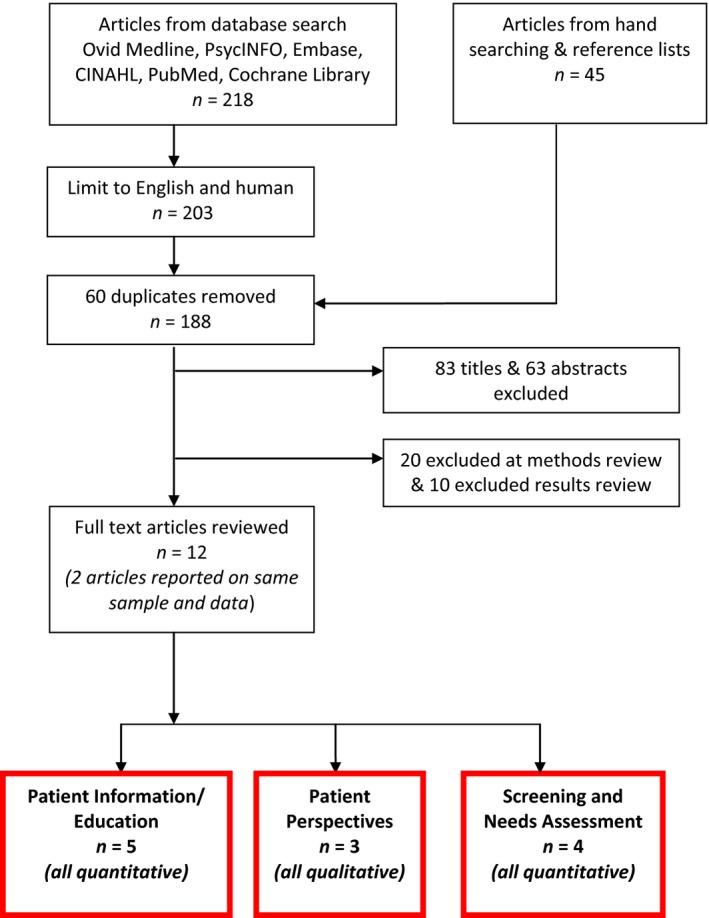
Up to 49% of patients attending radiation therapy appointments may experience anxiety and distress. Anxiety is heightened during the first few visits to radiation oncology. Radiation therapists (RT) are the only health professionals in direct daily contact with patients during treatment, placing them in a unique position to explore patients' psychosocial needs. This review aims to synthesise literature regarding the effect of RT-led psychosocial support on patient anxiety. In May 2015, we searched the following electronic databases: Medline, PsycINFO, Embase, CINAHL, PubMed and Cochrane library. Radiation therapy-specific journals were hand-searched, and reference lists of identified studies searched. This review complies with Preferred Reporting Items for Systematic Reviews and Meta-analyses (PRISMA) guidelines. The search identified 263 articles, of which 251 were excluded based on non-English language, duplicate article or relevance. A total of 12 articles involving 1363 patients were included and categorised into three broad themes: 'Patient Perspectives' 3 articles, 'Patient Information and Education' 5 articles and 'Screening and Needs Assessment' 4 articles. Two publications referred to the same sample and data. Quality ratings were mixed, with one study rated 'high' quality, seven 'moderate' and four 'low'. Methodological weaknesses were identified in relation to workflow, sample size and responder bias. RTs have a role in psychosocial support through increased communication and information sharing, which can benefit both patients and staff. RT-led practices such as relationship building, patient education sessions and screening and needs assessments are feasible and can reduce anxiety.
在接受放射治疗的患者中,高达49%的人可能会感到焦虑和痛苦。在首次前往放射肿瘤科室就诊的最初几次中,焦虑情绪会加剧。放射治疗师(RT)是在治疗期间每天与患者直接接触的唯一医疗专业人员,这使他们处于独特的位置,能够探究患者的心理社会需求。本综述旨在综合有关放射治疗师主导的心理社会支持对患者焦虑影响的文献。2015年5月,我们检索了以下电子数据库:医学期刊数据库(Medline)、心理学文摘数据库(PsycINFO)、荷兰医学文摘数据库(Embase)、护理学与健康领域数据库(CINAHL)、医学期刊数据库(PubMed)和考科蓝图书馆。我们手工检索了特定的放射治疗期刊,并搜索了已识别研究的参考文献列表。本综述符合系统评价和Meta分析的首选报告项目(PRISMA)指南。检索共识别出263篇文章,其中251篇因非英语语言、重复文章或相关性而被排除。总共纳入了12篇涉及1363名患者的文章,并将其分为三大主题:“患者视角”3篇、“患者信息与教育”5篇、“筛查与需求评估”4篇。两篇出版物提及了相同的样本和数据。质量评级参差不齐,一项研究被评为“高质量”,七项为“中等质量”,四项为“低质量”。在工作流程、样本量和应答者偏差方面发现了方法学上的弱点。放射治疗师通过加强沟通和信息共享在心理社会支持方面发挥作用,这对患者和工作人员都有益。放射治疗师主导的实践,如建立关系、患者教育课程以及筛查和需求评估是可行的,并且可以减轻焦虑。