Heydenreich Juliane, Kayser Bengt, Schutz Yves, Melzer Katarina
Swiss Federal Institute of Sport Magglingen SFISM, Hauptstrasse 247, 2532, Magglingen, Switzerland.
Faculty of Biology and Medicine, University of Lausanne, Lausanne, 1015, Switzerland.
Sports Med Open. 2017 Dec;3(1):8. doi: 10.1186/s40798-017-0076-1. Epub 2017 Feb 4.
Endurance athletes perform periodized training in order to prepare for main competitions and maximize performance. However, the coupling between alterations of total energy expenditure (TEE), energy intake, and body composition during different seasonal training phases is unclear. So far, no systematic review has assessed fluctuations in TEE, energy intake, and/or body composition in endurance athletes across the training season. The purpose of this study was to (1) systematically analyze TEE, energy intake, and body composition in highly trained athletes of various endurance disciplines and of both sexes and (2) analyze fluctuations in these parameters across the training season.
An electronic database search was conducted on the SPORTDiscus and MEDLINE (January 1990-31 January 2015) databases using a combination of relevant keywords. Two independent reviewers identified potentially relevant studies. Where a consensus was not reached, a third reviewer was consulted. Original research articles that examined TEE, energy intake, and/or body composition in 18-40-year-old endurance athletes and reported the seasonal training phases of data assessment were included in the review. Articles were excluded if body composition was assessed by skinfold measurements, TEE was assessed by questionnaires, or data could not be split between the sexes. Two reviewers assessed the quality of studies independently. Data on subject characteristics, TEE, energy intake, and/or body composition were extracted from the included studies. Subjects were categorized according to their sex and endurance discipline and each study allocated a weight within categories based on the number of subjects assessed. Extracted data were used to calculate weighted means and standard deviations for parameters of TEE, energy intake, and/or body composition.
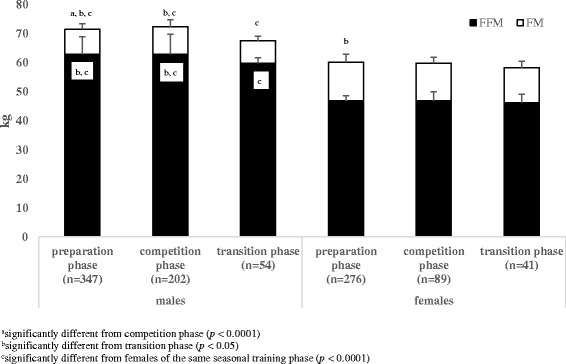
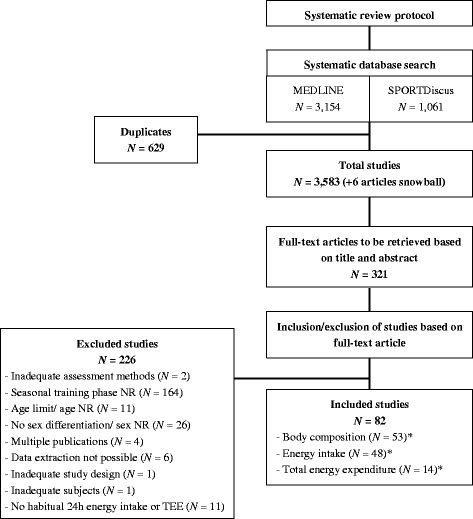
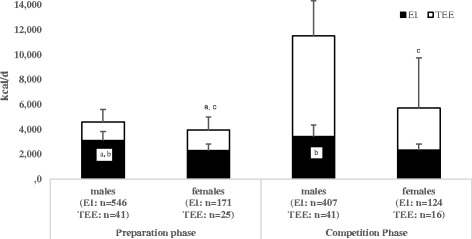
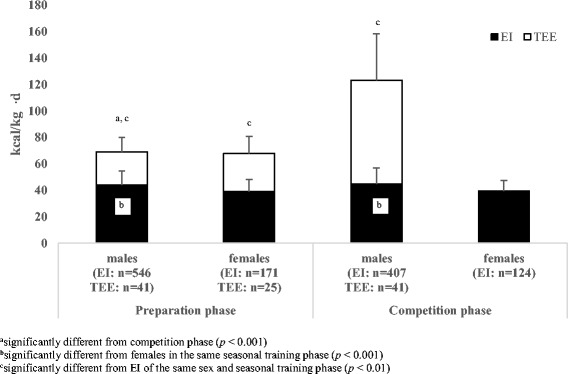
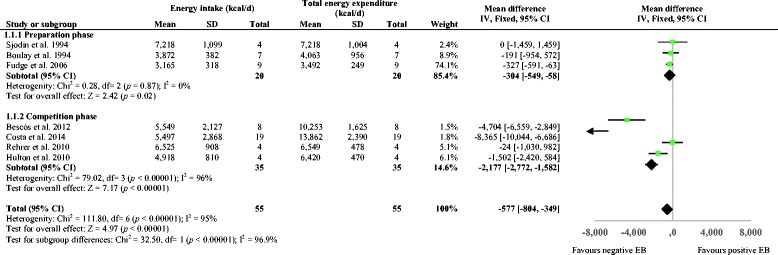
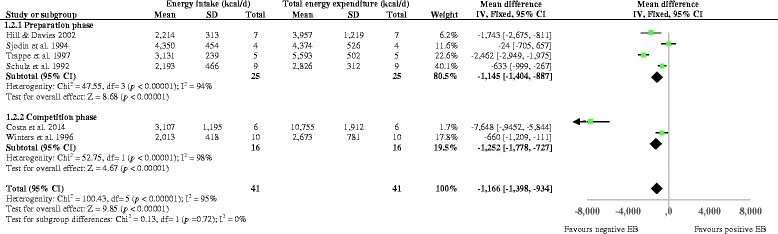
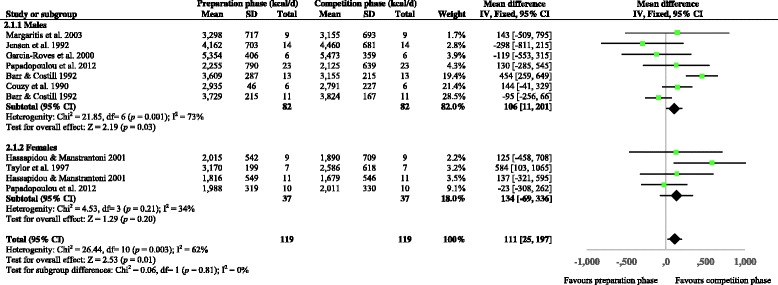
From 3589 citations, 321 articles were identified as potentially relevant, with 82 meeting all of the inclusion criteria. TEE of endurance athletes was significantly higher during the competition phase than during the preparation phase (p < 0.001) and significantly higher than energy intake in both phases (p < 0.001). During the competition phase, both body mass and fat-free mass were significantly higher compared to other seasonal training phases (p < 0.05).
Limitations of the present study included insufficient data being available for all seasonal training phases and thus low explanatory power of single parameters. Additionally, the classification of the different seasonal training phases has to be discussed. Male and female endurance athletes show important training seasonal fluctuations in TEE, energy intake, and body composition. Therefore, dietary intake recommendations should take into consideration other factors including the actual training load, TEE, and body composition goals of the athlete.
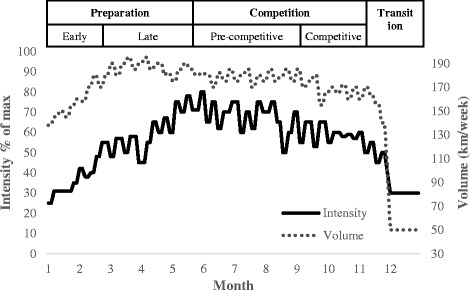
耐力运动员进行周期性训练以备战主要赛事并使成绩最大化。然而,不同季节训练阶段总能量消耗(TEE)、能量摄入和身体成分变化之间的关联尚不清楚。迄今为止,尚无系统评价评估耐力运动员在整个训练赛季中TEE、能量摄入和/或身体成分的波动情况。本研究的目的是:(1)系统分析不同耐力项目、不同性别的高水平运动员的TEE、能量摄入和身体成分;(2)分析这些参数在整个训练赛季中的波动情况。
在SPORTDiscus和MEDLINE数据库(1990年1月至2015年1月31日)中进行电子数据库检索,使用相关关键词组合。两名独立评审员确定潜在相关研究。若未达成共识,则咨询第三位评审员。纳入本综述的原始研究文章需满足:研究18至40岁耐力运动员的TEE、能量摄入和/或身体成分,并报告数据评估的季节训练阶段。若身体成分通过皮褶测量评估、TEE通过问卷评估或数据无法按性别拆分,则排除相关文章。两名评审员独立评估研究质量。从纳入研究中提取受试者特征、TEE、能量摄入和/或身体成分的数据。根据受试者的性别和耐力项目进行分类,每项研究根据评估的受试者数量在类别内分配权重。提取的数据用于计算TEE、能量摄入和/或身体成分参数的加权均值和标准差。
从3589条引用中,确定321篇文章可能相关,其中82篇符合所有纳入标准。耐力运动员在比赛阶段的TEE显著高于准备阶段(p<0.001),且在两个阶段均显著高于能量摄入(p<0.001)。在比赛阶段,体重和去脂体重均显著高于其他季节训练阶段(p<0.05)。
本研究的局限性包括所有季节训练阶段的数据不足,因此单个参数的解释力较低。此外,不同季节训练阶段的分类有待讨论。男性和女性耐力运动员在TEE、能量摄入和身体成分方面表现出重要的训练季节波动。因此,饮食摄入建议应考虑其他因素,包括运动员的实际训练负荷、TEE和身体成分目标。