Department of Immunology and Microbiology, Shanghai University of Traditional Chinese Medicine, Shanghai 201203, China.
School of Clinical Medicine, Shaanxi University of Chinese Medicine, Xi xian New District, Shaanxi 712046, China.
Sci Rep. 2017 Feb 6;7:41964. doi: 10.1038/srep41964.
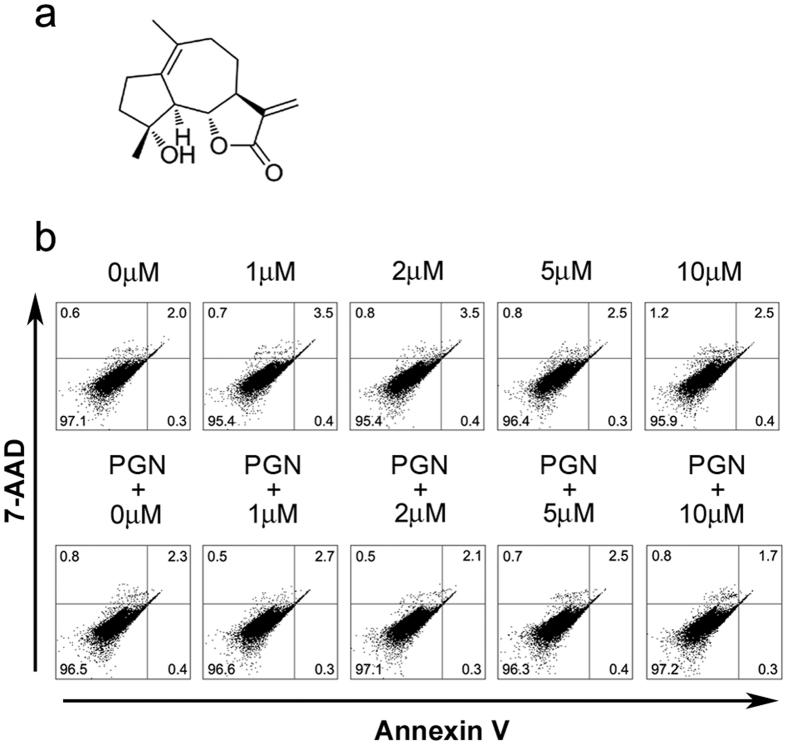
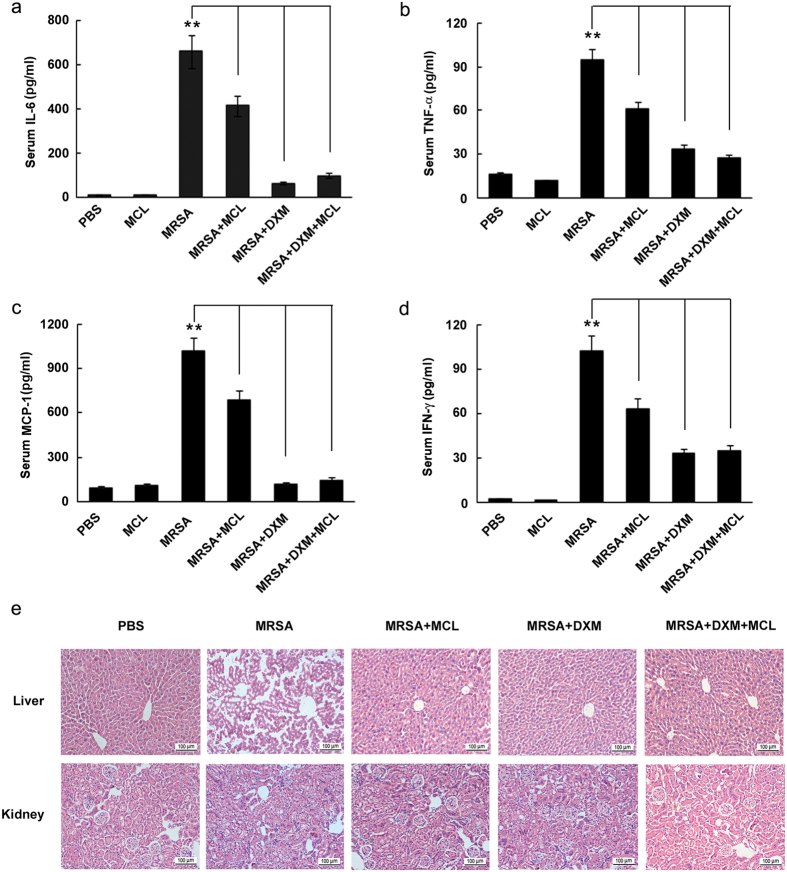
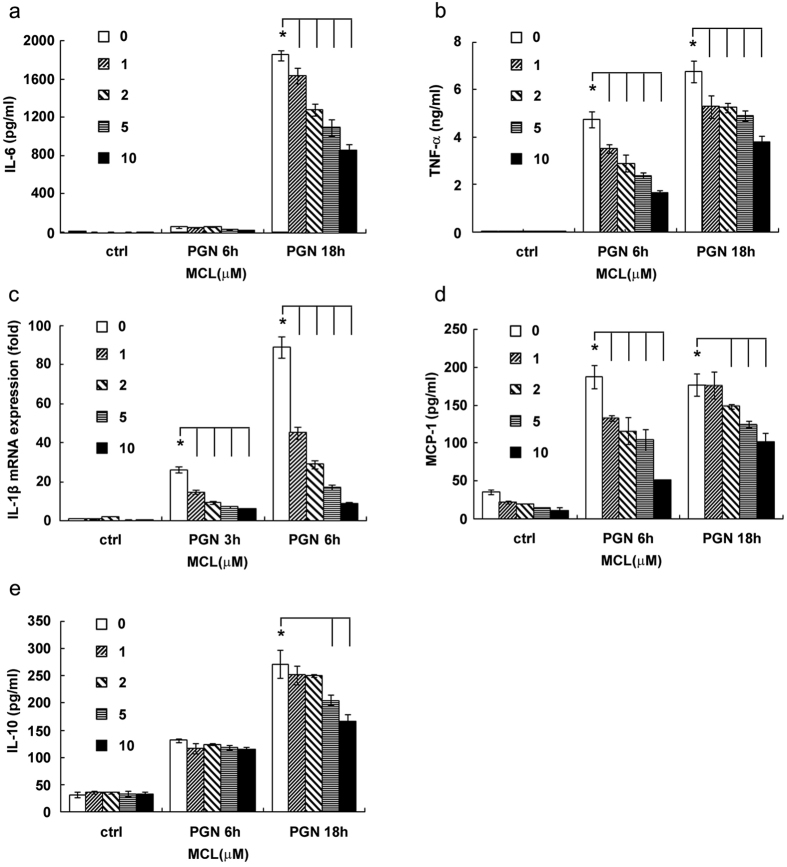
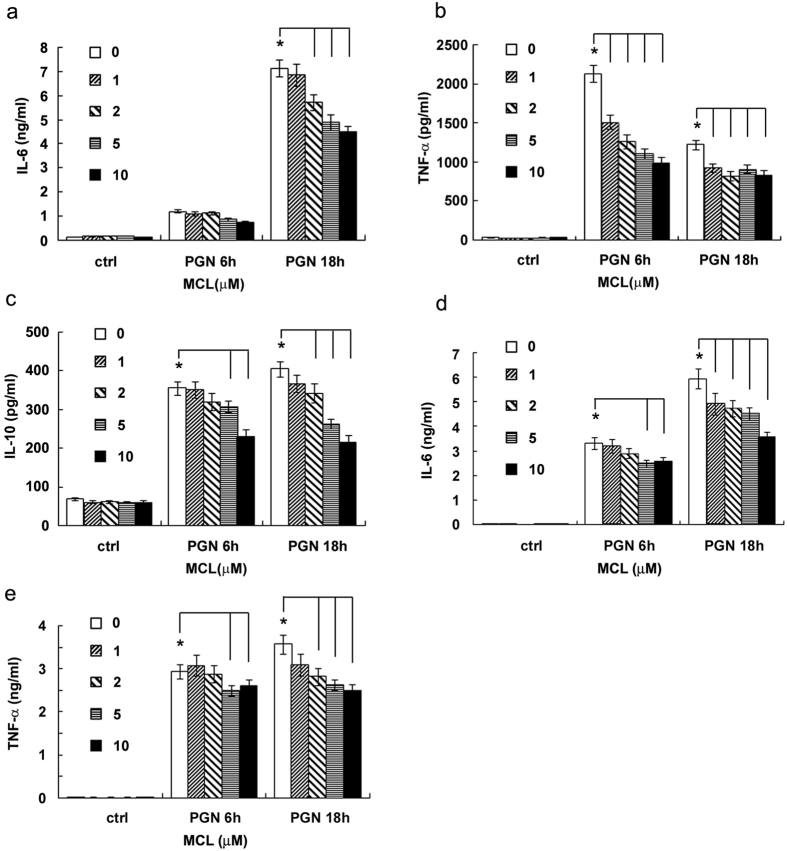
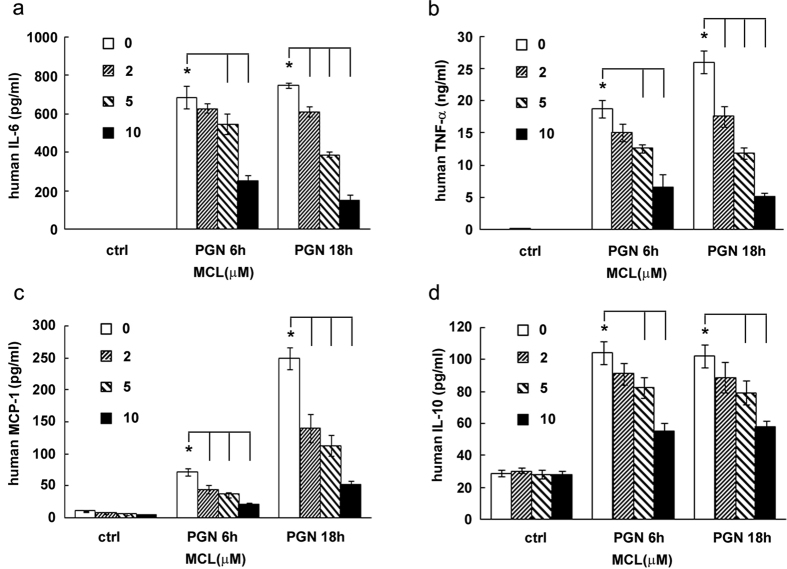
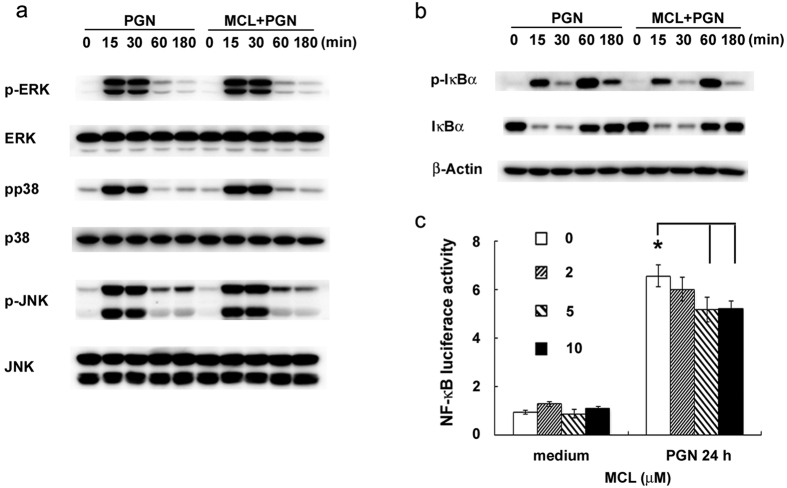
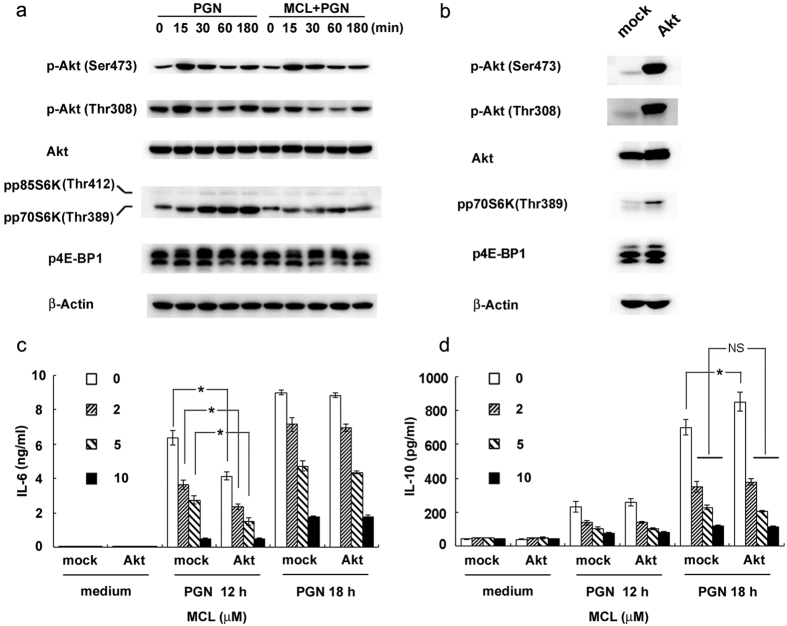
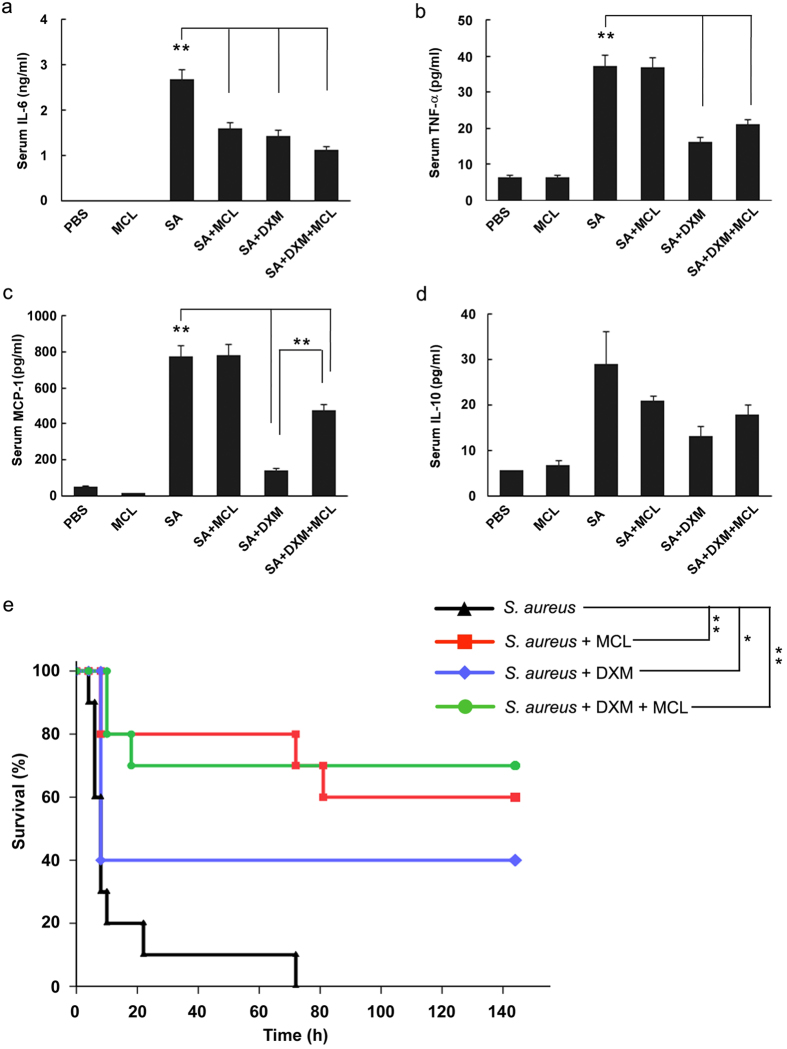
A major obstacle to therapy in intensive care units is sepsis caused by severe infection. In recent years gram-positive (G) bacteria, most commonly staphylococci, are thought to be the main pathogens. Micheliolide (MCL) was demonstrated to provide a therapeutic role in rheumatoid arthritis, inflammatory intestinal disease, colitis-associated cancer, and lipopolysaccharide (LPS, the main component of G bacterial cell wall) induced septic shock. We proved here that MCL played an anti-inflammatory role in Staphylococcus aureus (S. aureus) and methicillin-resistant S. aureus (MRSA) induced peritonitis. It inhibited the expression of inflammatory cytokines and chemokines in macrophages and dendritic cells upon stimulation with peptidoglycan (PGN, the main cell wall composition of G bacteria). PI3K/Akt and NF-κB pathways account for the anti-inflammatory role of MCL after PGN stimulation. MCL reduced IL-6 secretion through down-regulating NF-κB activation and improved the survival status in mice challenged with a lethal dose of S. aureus. In MRSA infection mouse model, MCL down-regulated the expression of IL-6, TNF-α, MCP-1/CCL2 and IFN-γ in sera, and ameliorated the organ damage of liver and kidney. In conclusion, MCL can help maintain immune equilibrium and decrease PGN, S. aureus and MRSA-triggered inflammatory response. These provide the rationality for the potential usage of MCL in sepsis caused by G bacteria (e.g., S. aureus) and antibiotic-resistant bacteria (e.g., MRSA).
重症监护病房治疗的主要障碍是由严重感染引起的败血症。近年来,革兰氏阳性(G)细菌,最常见的葡萄球菌,被认为是主要的病原体。米切利内酯(MCL)已被证明在类风湿性关节炎、炎症性肠病、结肠炎相关癌症和脂多糖(LPS,G 细菌细胞壁的主要成分)诱导的败血症休克中具有治疗作用。我们在这里证明 MCL 在金黄色葡萄球菌(S. aureus)和耐甲氧西林金黄色葡萄球菌(MRSA)诱导的腹膜炎中发挥抗炎作用。它抑制了巨噬细胞和树突状细胞在肽聚糖(PGN,G 细菌细胞壁的主要成分)刺激下炎症细胞因子和趋化因子的表达。PI3K/Akt 和 NF-κB 途径解释了 MCL 在 PGN 刺激后的抗炎作用。MCL 通过下调 NF-κB 激活减少了 IL-6 的分泌,并改善了用致死剂量 S. aureus 攻击的小鼠的存活状态。在 MRSA 感染小鼠模型中,MCL 下调了血清中 IL-6、TNF-α、MCP-1/CCL2 和 IFN-γ 的表达,并改善了肝和肾的器官损伤。总之,MCL 可以帮助维持免疫平衡,减少 PGN、S. aureus 和 MRSA 引发的炎症反应。这为 MCL 在 G 细菌(如 S. aureus)和抗生素耐药菌(如 MRSA)引起的败血症中的潜在应用提供了合理性。