Lladó Salvador, Baldrian Petr
Laboratory of Environmental Microbiology, Institute of Microbiology of the CAS, Prague, Czech Republic.
PLoS One. 2017 Feb 7;12(2):e0171638. doi: 10.1371/journal.pone.0171638. eCollection 2017.
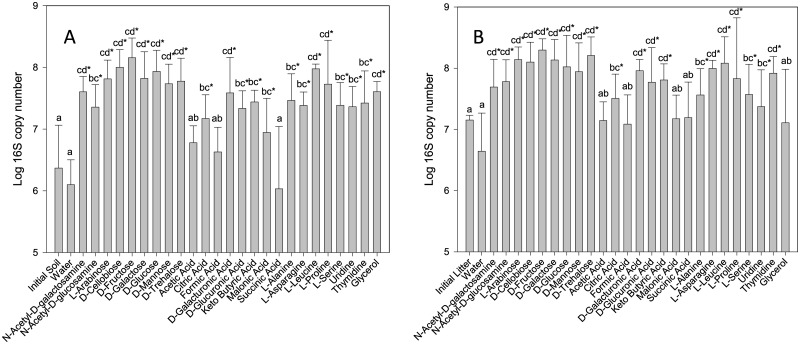
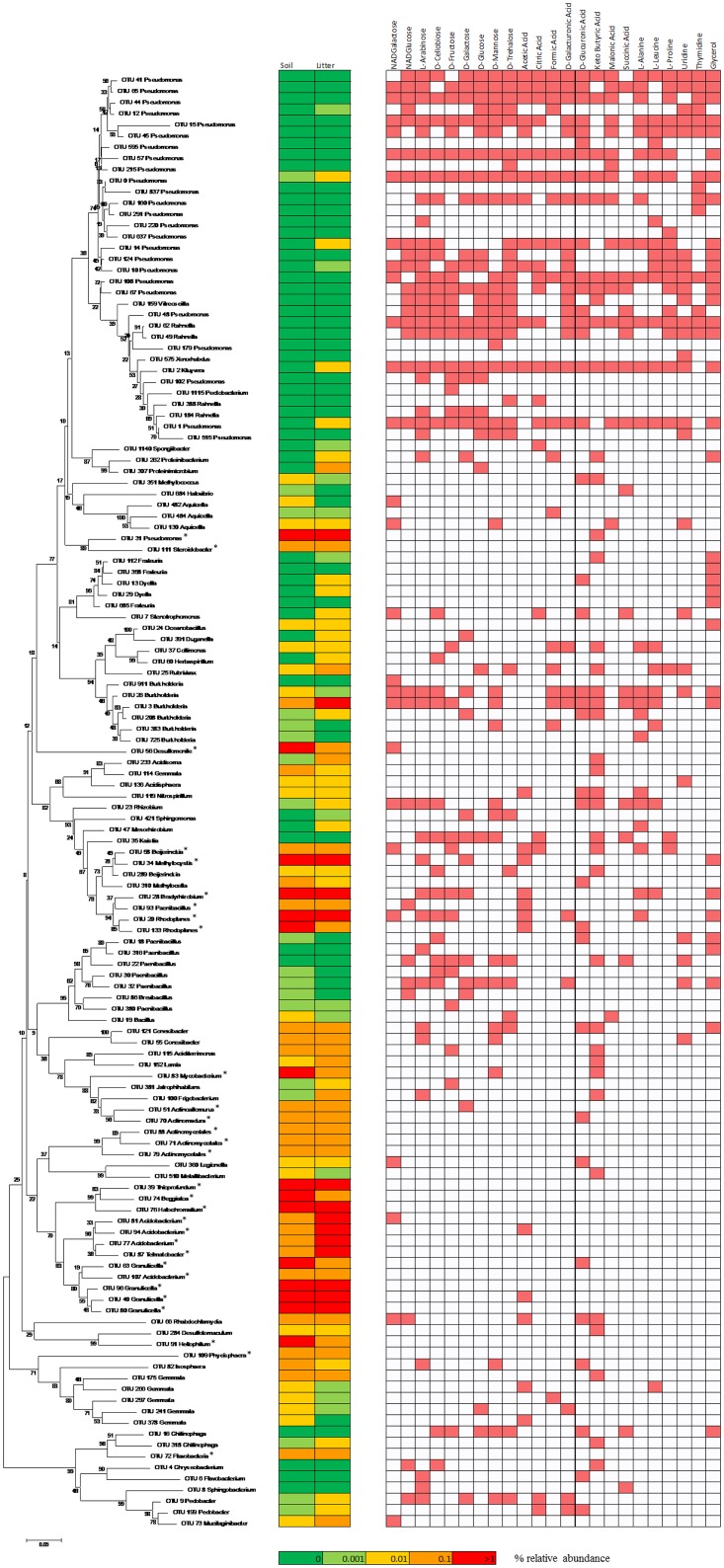
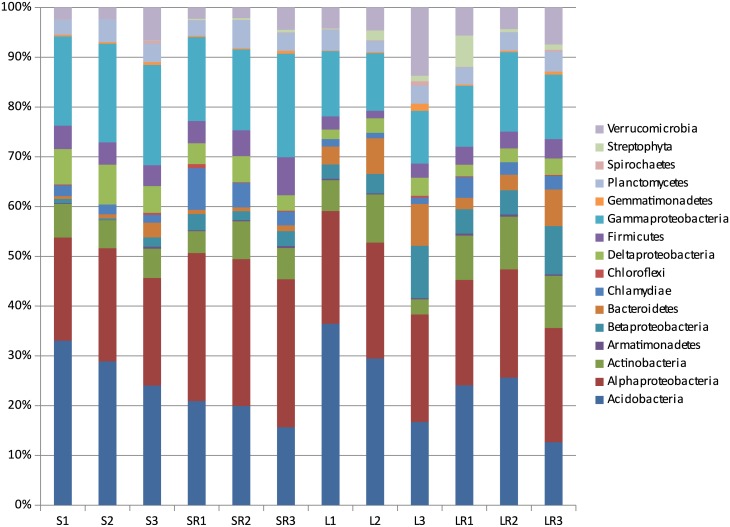
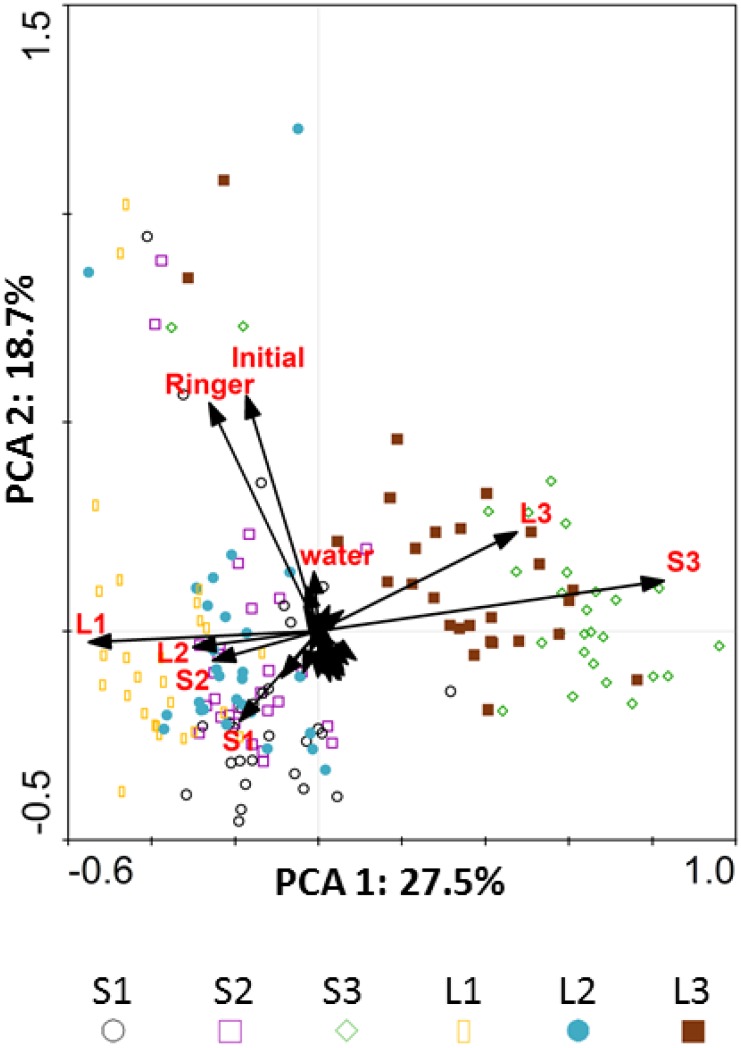
Community-level physiological profiling (CLPP) analyses from very diverse environments are frequently used with the aim of characterizing the metabolic versatility of whole environmental bacterial communities. While the limitations of the methodology for the characterization of whole communities are well known, we propose that CLPP combined with high-throughput sequencing and qPCR can be utilized to identify the copiotrophic, fast-growing fraction of the bacterial community of soil environments, where oligotrophic taxa are usually dominant. In the present work we have used this approach to analyze samples of litter and soil from a coniferous forest in the Czech Republic using BIOLOG GN2 plates. Monosaccharides and amino acids were utilized significantly faster than other C substrates, such as organic acids, in both litter and soil samples. Bacterial biodiversity in CLPP wells was significantly lower than in the original community, independently of the carbon source. Bacterial communities became highly enriched in taxa that typically showed low abundance in the original soil, belonging mostly to the Gammaproteobacteria and the genus Pseudomonas, indicating that the copiotrophic strains, favoured by the high nutrient content, are rare in forest litter and soil. In contrast, taxa abundant in the original samples were rarely found to grow at sufficient rates under the CLPP conditions. Our results show that CLPP is useful to detect copiotrophic bacteria from the soil environments and that bacterial growth is substrate specific.
来自非常多样环境的群落水平生理特征分析(CLPP)经常被用于表征整个环境细菌群落的代谢多样性。虽然用于表征整个群落的方法的局限性是众所周知的,但我们提出CLPP与高通量测序和定量PCR相结合可用于识别土壤环境细菌群落中富养、快速生长的部分,在这些土壤环境中贫养类群通常占主导地位。在本研究中,我们使用这种方法,利用BIOLOG GN2平板分析了捷克共和国一个针叶林的凋落物和土壤样本。在凋落物和土壤样本中,单糖和氨基酸的利用速度明显快于其他碳底物,如有机酸。CLPP孔中的细菌生物多样性明显低于原始群落,与碳源无关。细菌群落高度富集了在原始土壤中通常低丰度的类群,主要属于γ-变形菌纲和假单胞菌属,这表明受高营养含量青睐的富养菌株在森林凋落物和土壤中很少见。相反,在原始样本中丰度高的类群在CLPP条件下很少能以足够的速率生长。我们的结果表明,CLPP有助于从土壤环境中检测富养细菌,并且细菌生长具有底物特异性。