Kim So Young, Kang Dongxu, Choi Hye Jin, Joo Yeonsoo, Kim Joo-Hang, Song Jae J
Institute for Cancer Research, Yonsei University College of Medicine, Seoul, Korea.
Department of Oncology, Affiliated Hospital of Yanbian University, Yanji, Jilin Province, P.R. China.
Oncotarget. 2017 Feb 28;8(9):15858-15877. doi: 10.18632/oncotarget.15008.
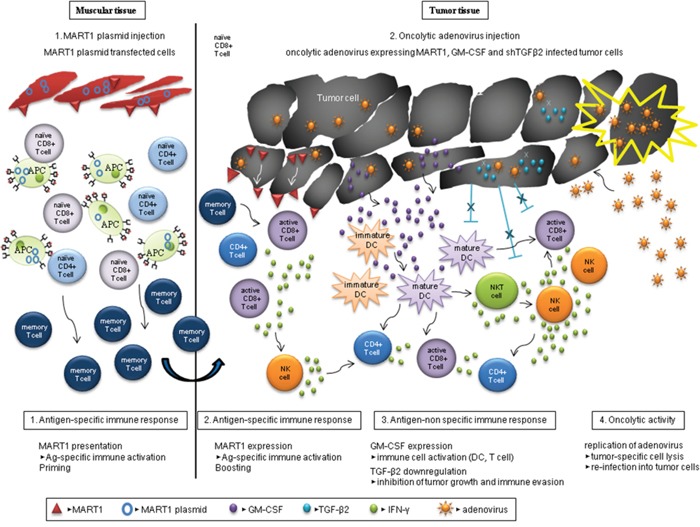
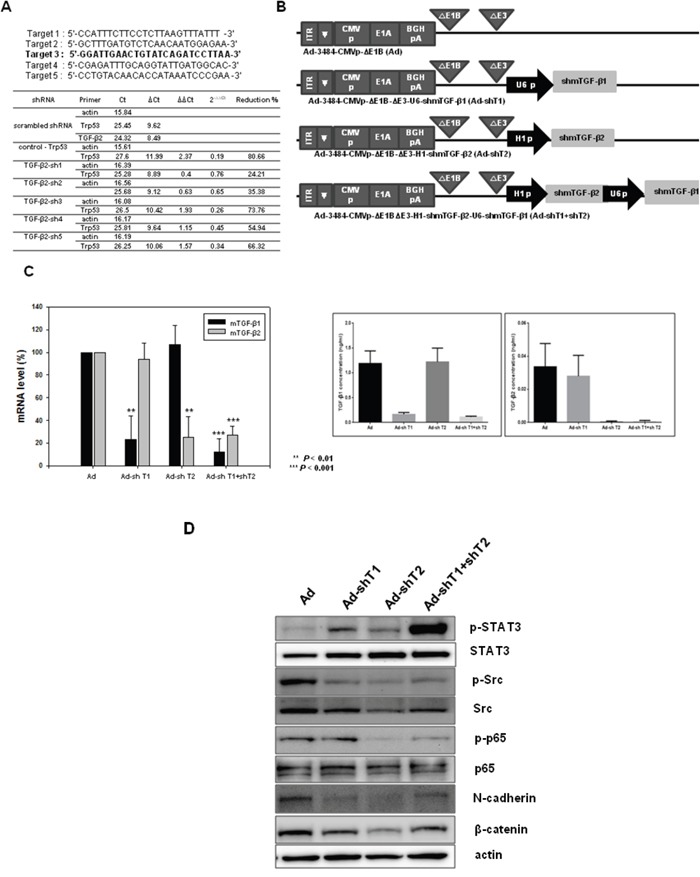
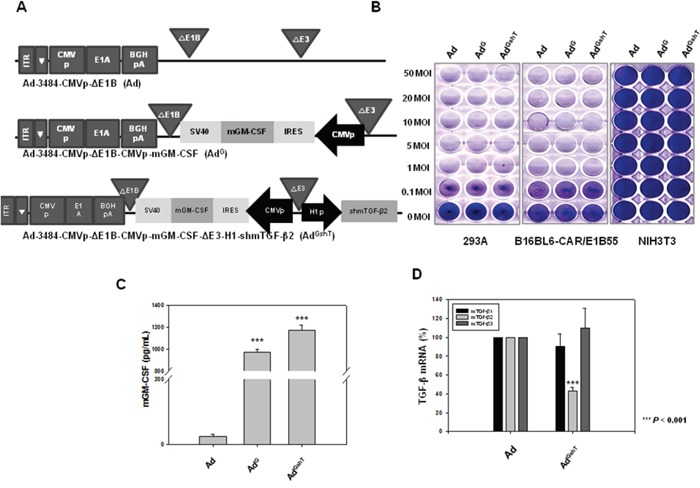
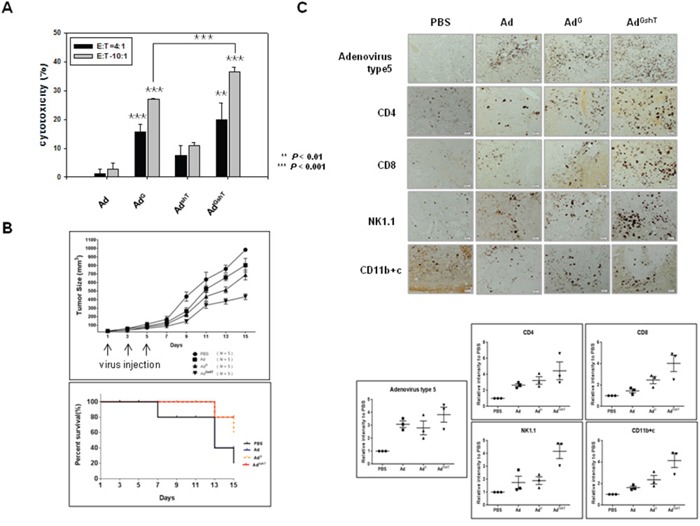
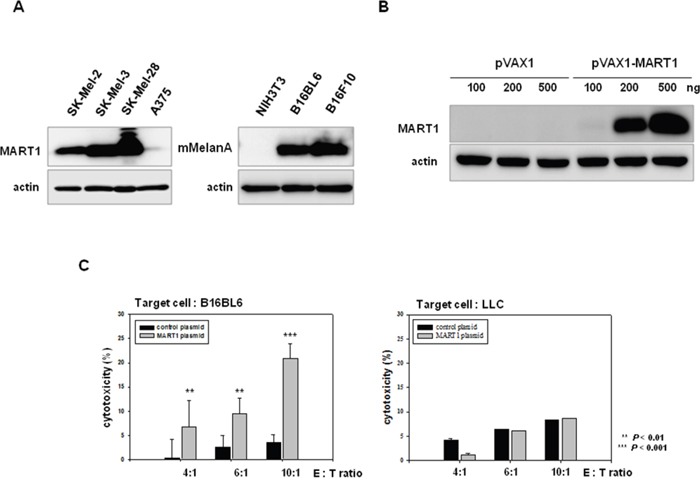
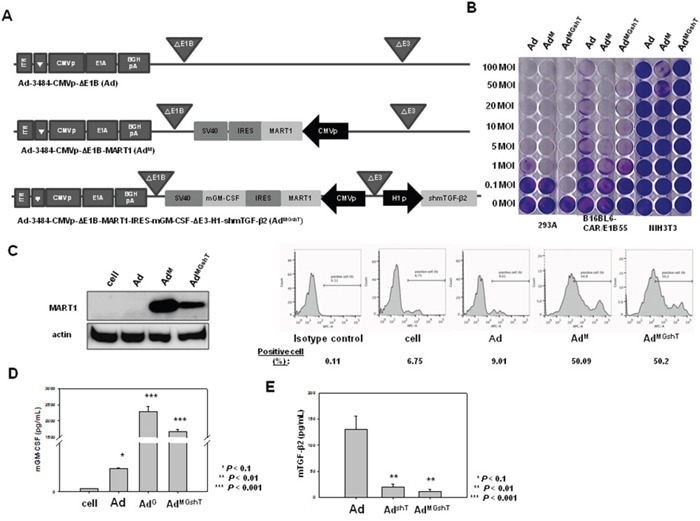
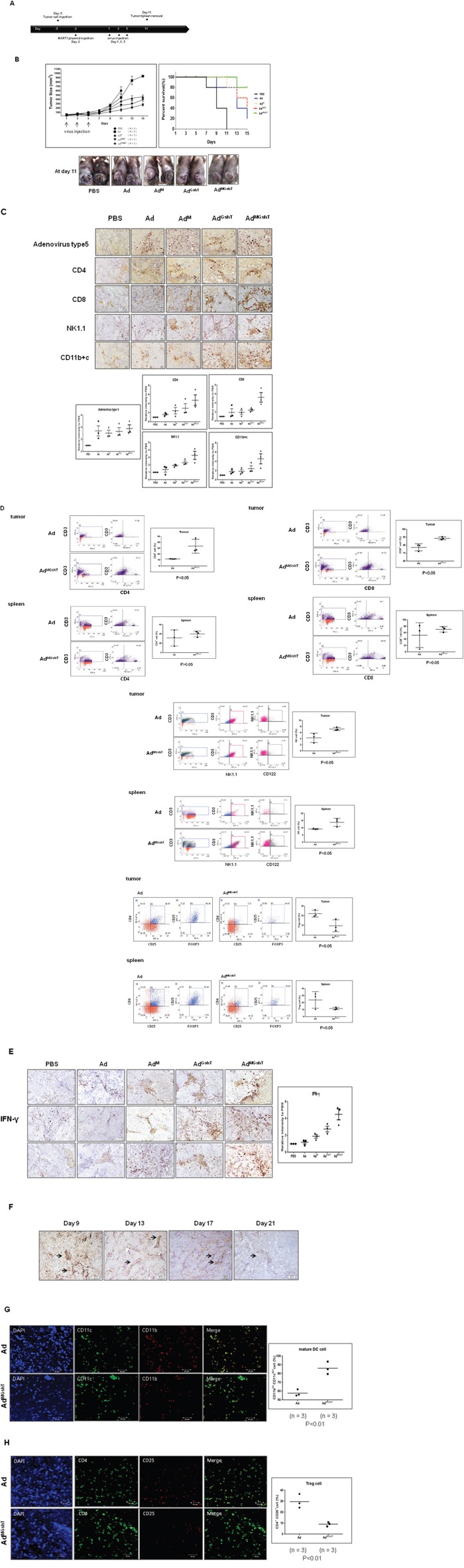
A successful DNA vaccine for the treatment of tumors should break established immune tolerance to tumor antigen. However, due to the relatively low immunogenicity of DNA vaccines, compared to other kinds of vaccines using live virus or protein, a recombinant viral vector was used to enhance humoral and cellular immunity. In the current study, we sought to develop a novel anti-cancer agent as a complex of DNA and oncolytic adenovirus for the treatment of malignant melanoma in the C57BL/6 mouse model. MART1, a human melanoma-specific tumor antigen, was used to induce an increased immune reaction, since a MART1-protective response is required to overcome immune tolerance to the melanoma antigen MelanA. Because GM-CSF is a potent inducer of anti-tumor immunity and TGF-β2 is involved in tumor survival and host immune suppression, mouse GM-CSF (mGM-CSF) and shRNA of mouse TGF-β2 (shmTGF-β2) genes were delivered together with MART1 via oncolytic adenovirus. MART1 plasmid was also used for antigen-priming. To compare the anti-tumor effect of oncolytic adenovirus expressing both mGM-CSF and shmTGF-β2 (AdGshT) with that of oncolytic adenovirus expressing mGM-CSF only (AdG), each virus was intratumorally injected into melanoma-bearing C57BL/6 mice. As a result, mice that received AdGshT showed delayed tumor growth than those that received AdG. Heterologous prime-boost immunization was combined with oncolytic AdGshT and MART1 expression to result in further delayed tumor growth. This regression is likely due to the following 4 combinations: MART1-derived mouse melanoma antigen-specific immune reaction, immune stimulation by mGM-CSF/shmTGF-β2, tumor growth inhibition by shmTGF-β2, and tumor cell-specific lysis via an oncolytic adenovirus. Immune activation was mainly induced by mature tumor-infiltrating dendritic cell (TIDC) and lowered regulatory T cells in tumor-infiltrating lymphocytes (TIL). Taken together, these findings demonstrate that human MART1 induces a mouse melanoma antigen-specific immune reaction. In addition, the results also indicate that combination therapy of MART1 plasmid, together with an oncolytic adenovirus expressing MART1, mGM-CSF, and shmTGF-β2, is a promising candidate for the treatment of malignant melanoma.
一种成功用于治疗肿瘤的DNA疫苗应打破对肿瘤抗原已建立的免疫耐受。然而,与使用活病毒或蛋白质的其他类型疫苗相比,DNA疫苗的免疫原性相对较低,因此使用重组病毒载体来增强体液免疫和细胞免疫。在本研究中,我们试图开发一种新型抗癌剂,它是DNA与溶瘤腺病毒的复合物,用于治疗C57BL/6小鼠模型中的恶性黑色素瘤。MART1是一种人类黑色素瘤特异性肿瘤抗原,用于诱导增强的免疫反应,因为需要MART1保护性反应来克服对黑色素瘤抗原MelanA的免疫耐受。由于GM-CSF是抗肿瘤免疫的有效诱导剂,而TGF-β2参与肿瘤存活和宿主免疫抑制,因此小鼠GM-CSF(mGM-CSF)和小鼠TGF-β2基因的短发夹RNA(shmTGF-β2)通过溶瘤腺病毒与MART1一起递送。MART1质粒也用于抗原致敏。为了比较表达mGM-CSF和shmTGF-β2的溶瘤腺病毒(AdGshT)与仅表达mGM-CSF的溶瘤腺病毒(AdG)的抗肿瘤效果,将每种病毒瘤内注射到荷黑色素瘤的C57BL/6小鼠中。结果,接受AdGshT的小鼠比接受AdG的小鼠肿瘤生长延迟。将异源初免-加强免疫与溶瘤AdGshT和MART1表达相结合,导致肿瘤生长进一步延迟。这种消退可能归因于以下4种组合:源自MART1的小鼠黑色素瘤抗原特异性免疫反应、mGM-CSF/shmTGF-β2的免疫刺激、shmTGF-β2对肿瘤生长的抑制以及通过溶瘤腺病毒对肿瘤细胞的特异性裂解。免疫激活主要由成熟的肿瘤浸润树突状细胞(TIDC)诱导,并降低肿瘤浸润淋巴细胞(TIL)中的调节性T细胞。综上所述,这些发现表明人类MART1可诱导小鼠黑色素瘤抗原特异性免疫反应。此外,结果还表明,MART1质粒与表达MART1、mGM-CSF和shmTGF-β2的溶瘤腺病毒联合治疗是治疗恶性黑色素瘤的有前景的候选方案。