Jia Pingping, Chastain Megan, Zou Ying, Her Chengtao, Chai Weihang
Department of Biomedical Sciences, Elson S. Floyd College of Medicine, Washington State University, Spokane, WA, USA.
Cytogenetics Laboratory, Department of Pathology, the University of Maryland School of Medicine, Baltimore, MD, USA.
Nucleic Acids Res. 2017 Feb 17;45(3):1219-1232. doi: 10.1093/nar/gkw1170.
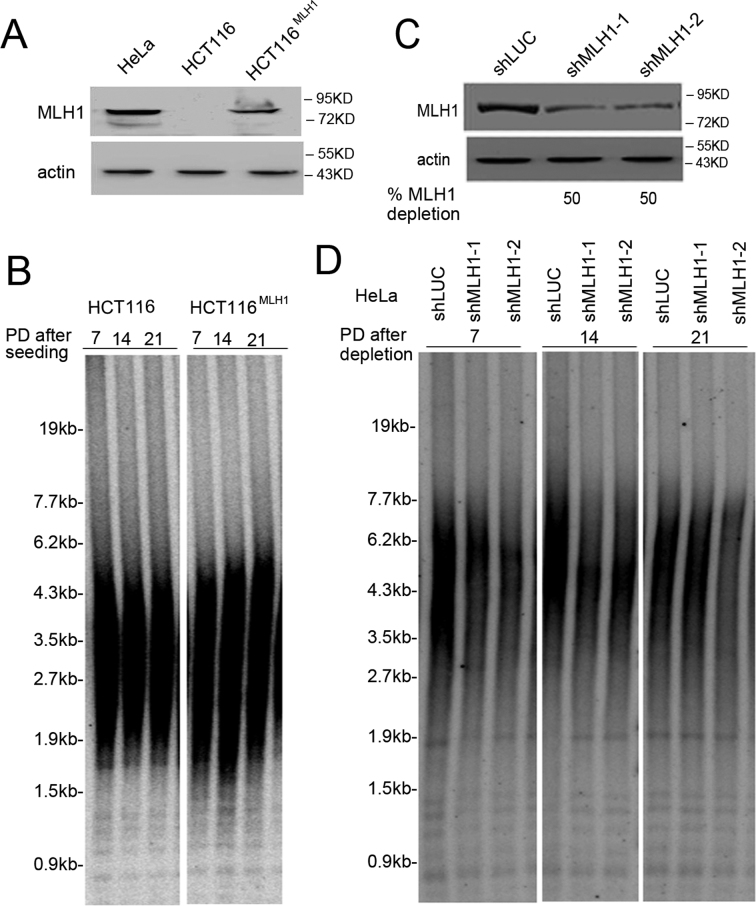
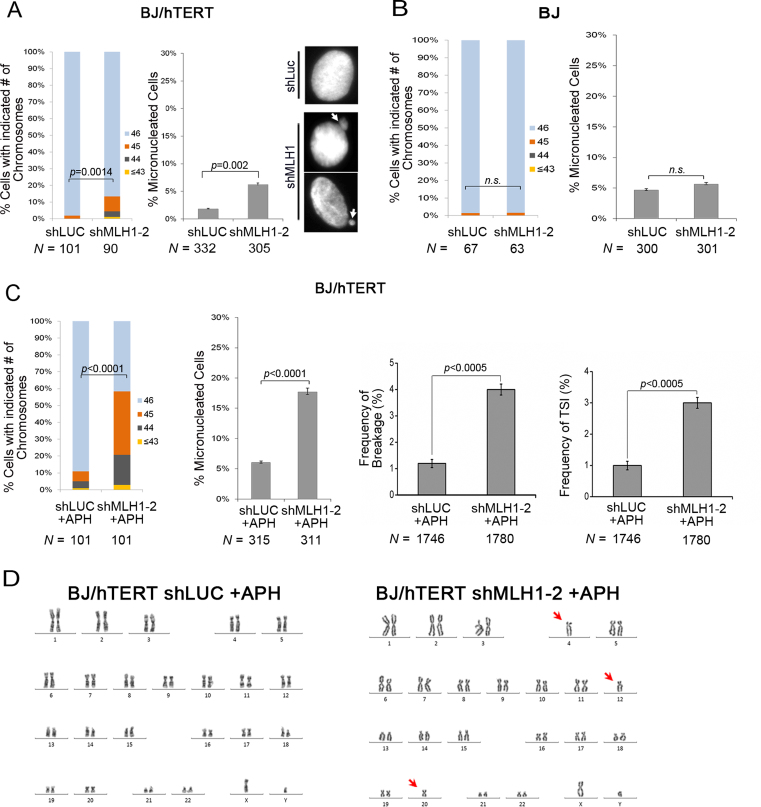
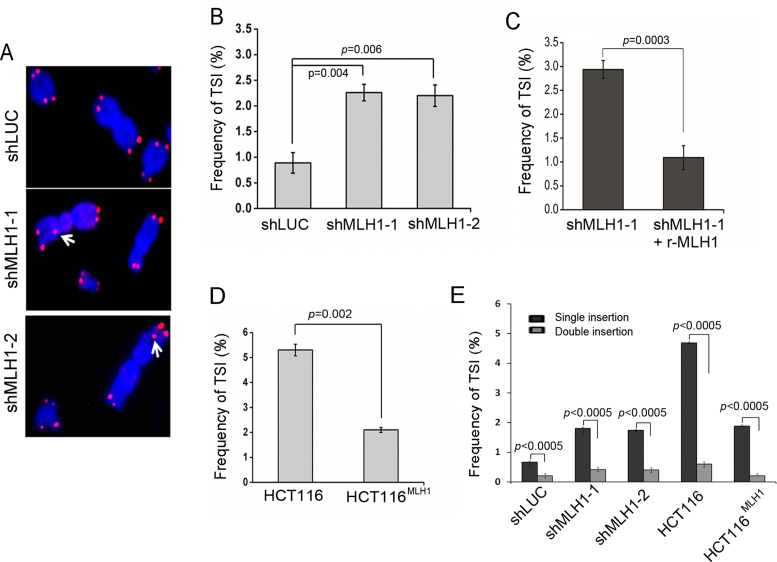
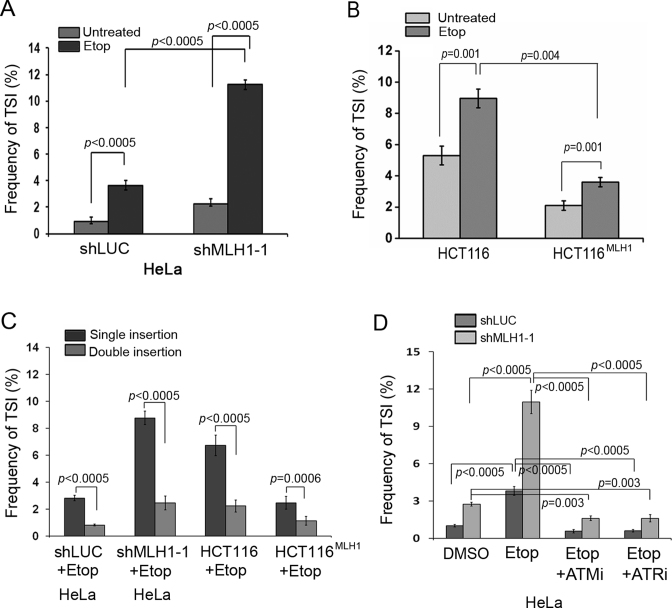
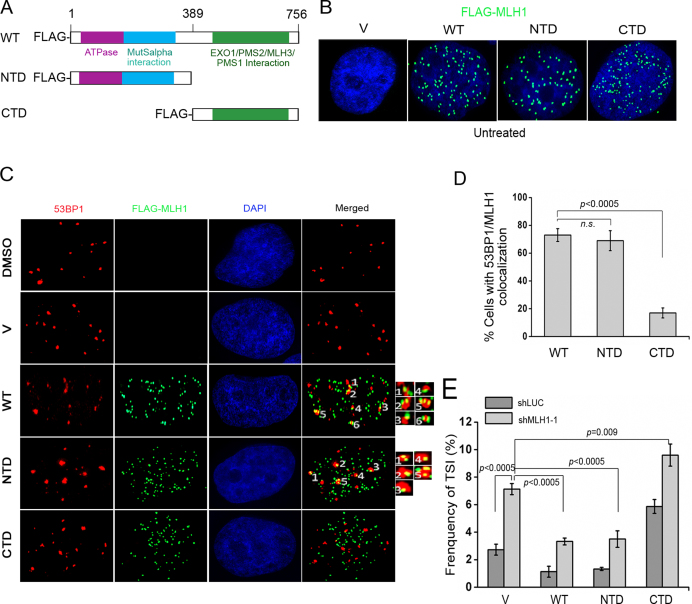
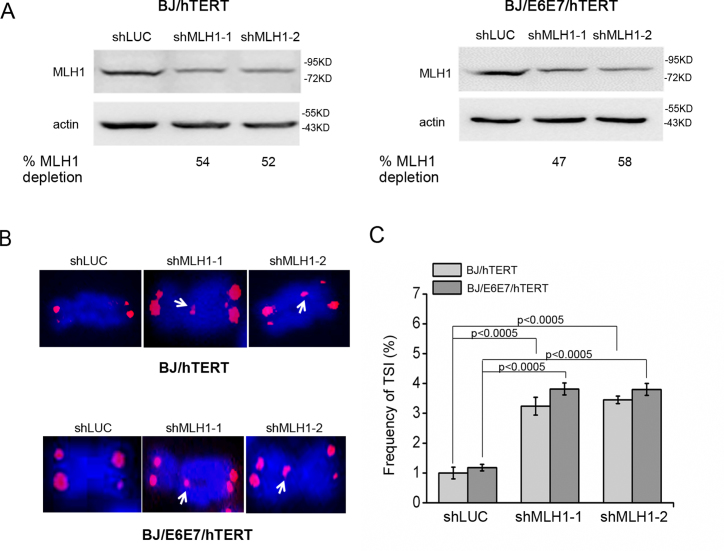
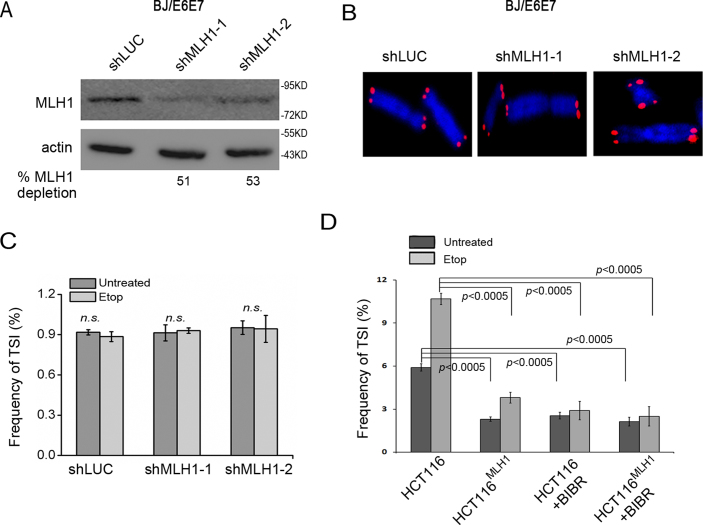
Aberrant formation of interstitial telomeric sequences (ITSs) promotes genome instabilities. However, it is unclear how aberrant ITS formation is suppressed in human cells. Here, we report that MLH1, a key protein involved in mismatch repair (MMR), suppresses telomeric sequence insertion (TSI) at intra-chromosomal regions. The frequency of TSI can be elevated by double-strand break (DSB) inducer and abolished by ATM/ATR inhibition. Suppression of TSI requires MLH1 recruitment to DSBs, indicating that MLH1's role in DSB response/repair is important for suppressing TSI. Moreover, TSI requires telomerase activity but is independent of the functional status of p53 and Rb. Lastly, we show that TSI is associated with chromosome instabilities including chromosome loss, micronuclei formation and chromosome breakage that are further elevated by replication stress. Our studies uncover a novel link between MLH1, telomerase, telomere and genome stability.
间质端粒序列(ITSs)的异常形成会促进基因组不稳定。然而,目前尚不清楚在人类细胞中异常的ITS形成是如何被抑制的。在此,我们报告称,错配修复(MMR)中的关键蛋白MLH1可抑制染色体内部区域的端粒序列插入(TSI)。TSI的频率可被双链断裂(DSB)诱导剂提高,并可被ATM/ATR抑制所消除。抑制TSI需要将MLH1募集到DSB处,这表明MLH1在DSB反应/修复中的作用对于抑制TSI很重要。此外,TSI需要端粒酶活性,但与p53和Rb的功能状态无关。最后,我们表明TSI与染色体不稳定有关,包括染色体丢失、微核形成和染色体断裂,而复制应激会进一步加剧这些情况。我们的研究揭示了MLH1、端粒酶、端粒和基因组稳定性之间的新联系。