Herz Corinna, Tran Hoai Thi Thu, Márton Melinda-Rita, Maul Ronald, Baldermann Susanne, Schreiner Monika, Lamy Evelyn
Molecular Preventive Medicine, Institute of Prevention and Cancer Epidemiology, University Medical Center Freiburg, Elsässer Strasse 2, 79110 Freiburg, Germany.
Department of Plant Quality, Leibniz Institute of Vegetable and Ornamental Crops Grossbeeren/Erfurt e.V., Echtermeyer-Weg 1, 14979 Grossbeeren, Germany.
Evid Based Complement Alternat Med. 2017;2017:1950692. doi: 10.1155/2017/1950692. Epub 2017 Jan 15.
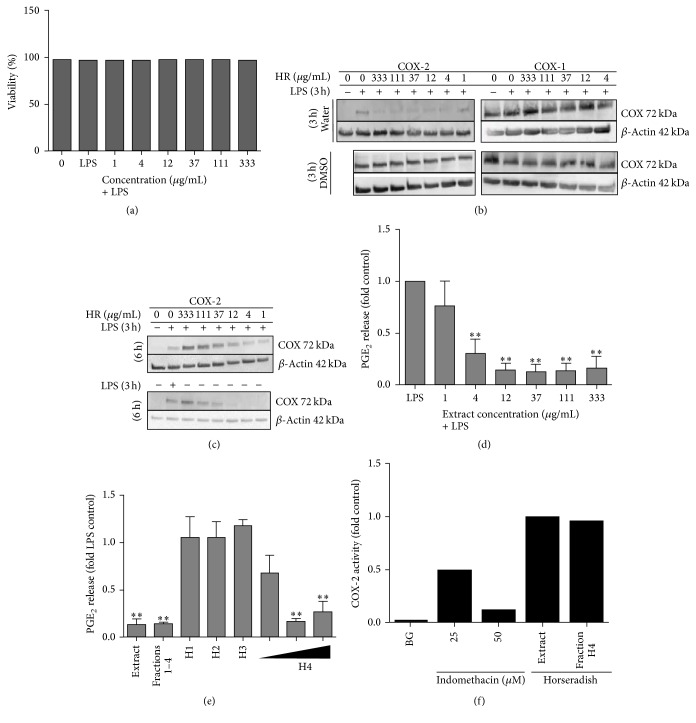
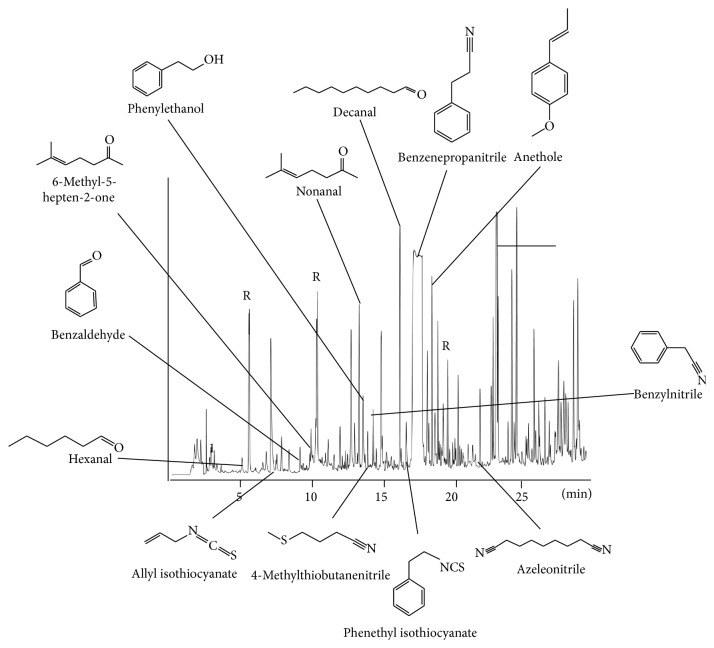
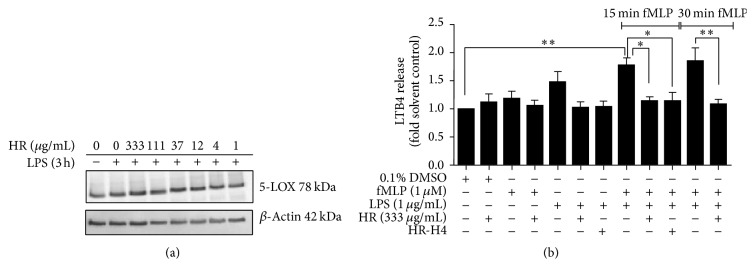
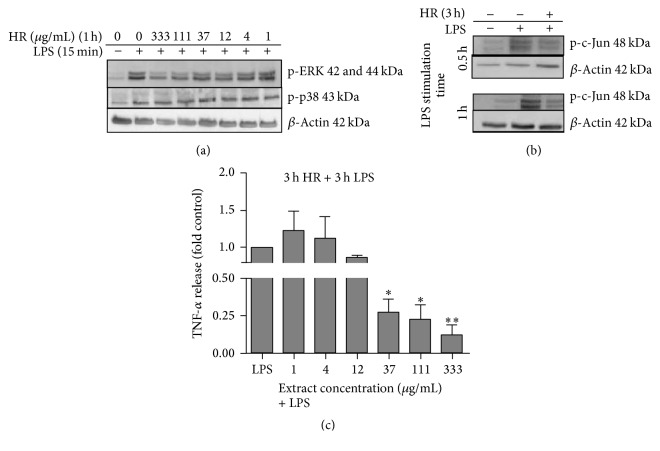
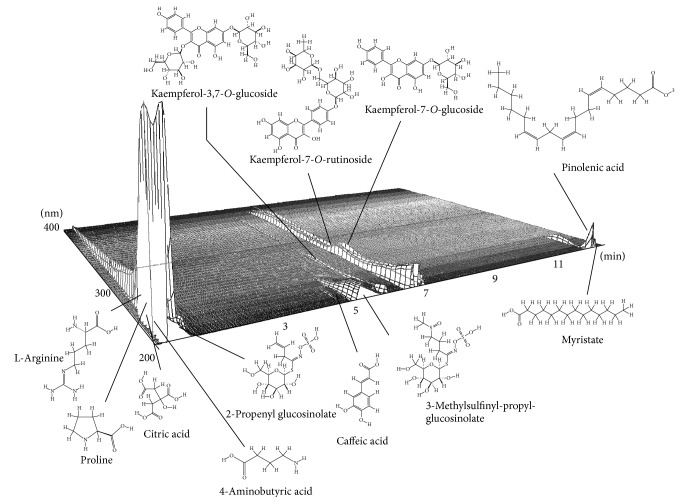
Horseradish () is a perennial crop and its root is used in condiments. Traditionally, horseradish root is used to treat bacterial infections of the respiratory tract and urinary bladder. The antiphlogistic activity, determined in activated primary human peripheral blood mononuclear cells (PBMC), was evaluated for an aqueous extract and its subfractions, separated by HPLC. Compound analysis was done by UHPLC-QToF/MS and GC-MS. The aqueous extract concentration-dependently inhibited the anti-inflammatory response to lipopolysaccharide (LPS) in terms of TNF- release at ≥37 g/mL. Further, the cyclooxygenase as well as lipoxygenase pathway was blocked by the extract as demonstrated by inhibition of COX-2 protein expression and PGE synthesis at ≥4 g/mL and leukotriene LTB4 release. Mechanistic studies revealed that inhibition of ERK1/2 and c-Jun activation preceded COX-2 suppression upon plant extract treatment in the presence of LPS. Chemical analysis identified target compounds with a medium polarity as relevant for the observed bioactivity. Importantly, allyl isothiocyanate, which is quite well known for its anti-inflammatory capacity and as the principal pungent constituent in horseradish roots, was not relevant for the observations. The results suggest that horseradish root exerts an antiphlogistic activity in human immune cells by regulation of the COX and LOX pathway MAPK signalling.
辣根是一种多年生作物,其根可用于制作调味品。传统上,辣根根用于治疗呼吸道和膀胱的细菌感染。在活化的原代人外周血单核细胞(PBMC)中测定了其抗炎活性,对水提取物及其通过高效液相色谱分离的亚组分进行了评估。通过超高效液相色谱-四极杆飞行时间质谱联用仪(UHPLC-QToF/MS)和气相色谱-质谱联用仪(GC-MS)进行化合物分析。水提取物在≥37μg/mL时,以浓度依赖的方式抑制了对脂多糖(LPS)的抗炎反应,即肿瘤坏死因子(TNF)的释放。此外,提取物阻断了环氧化酶以及脂氧合酶途径,这在≥4μg/mL时对COX-2蛋白表达和前列腺素E(PGE)合成的抑制以及白三烯LTB4释放中得到了证明。机制研究表明,在LPS存在下,植物提取物处理后,ERK1/2和c-Jun激活的抑制先于COX-2的抑制。化学分析确定了具有中等极性的目标化合物与观察到的生物活性相关。重要的是,异硫氰酸烯丙酯,因其抗炎能力和作为辣根根中的主要辛辣成分而广为人知,但与这些观察结果无关。结果表明,辣根根通过调节COX和LOX途径以及丝裂原活化蛋白激酶(MAPK)信号传导,在人免疫细胞中发挥抗炎活性。