Mileski Michael, Topinka Joseph Baar, Lee Kimberly, Brooks Matthew, McNeil Christopher, Jackson Jenna
School of Health Administration, Texas State University, San Marcos, TX, USA.
Clin Interv Aging. 2017 Jan 25;12:213-222. doi: 10.2147/CIA.S123362. eCollection 2017.
The main objective was to investigate the applicability and effectiveness of quality improvement initiatives in decreasing the rate of avoidable 30-day, skilled nursing facility (SNF)-to-hospital readmissions.
The rate of rehospitalizations from SNF within 30 days of original discharge has increased within the last decade.
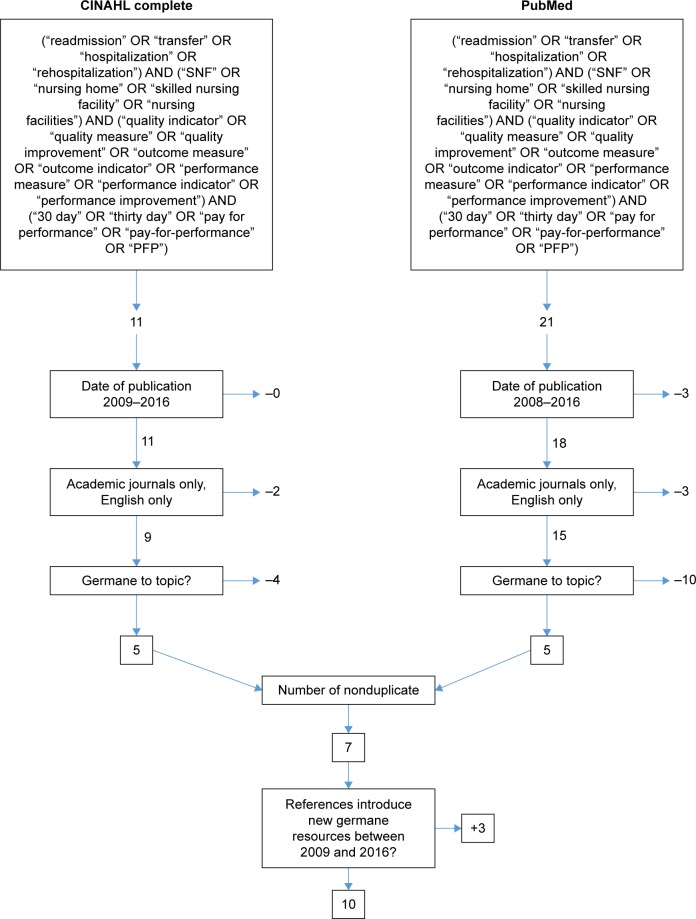
The research team participants conducted a literature review via Cumulative Index of Nursing and Allied Health Literature and PubMed to collect data about quality improvement implemented in SNFs.
The most common facilitator was the incorporation of specialized staff. The most cited barriers were quality improvement tracking and implementation.
These strategy examples can be useful to acute care hospitals attempting to lower bounce back from subacute care providers and long-term care facilities seeking quality improvement initiatives to reduce hospital readmissions.
主要目标是调查质量改进措施在降低可避免的30天内从熟练护理机构(SNF)再入院率方面的适用性和有效性。
在过去十年中,SNF出院后30天内再次住院的比率有所上升。
研究团队参与者通过护理及相关健康文献累积索引和PubMed进行了文献综述,以收集有关SNF中实施的质量改进的数据。
最常见的促进因素是纳入专业人员。最常被提及的障碍是质量改进跟踪和实施。
这些策略示例对于试图降低亚急性护理提供者的反弹率的急症护理医院以及寻求质量改进措施以减少医院再入院率的长期护理机构可能有用。