Toffoli Barbara, Gilardi Federica, Winkler Carine, Soderberg Magnus, Kowalczuk Laura, Arsenijevic Yvan, Bamberg Krister, Bonny Olivier, Desvergne Béatrice
Center for Integrative Genomics, Faculty of Biology and Medicine, University of Lausanne, Lausanne, Switzerland.
AstraZeneca R&D, Pepparredsleden 1, Mölndal, Sweden.
PLoS One. 2017 Feb 9;12(2):e0171474. doi: 10.1371/journal.pone.0171474. eCollection 2017.
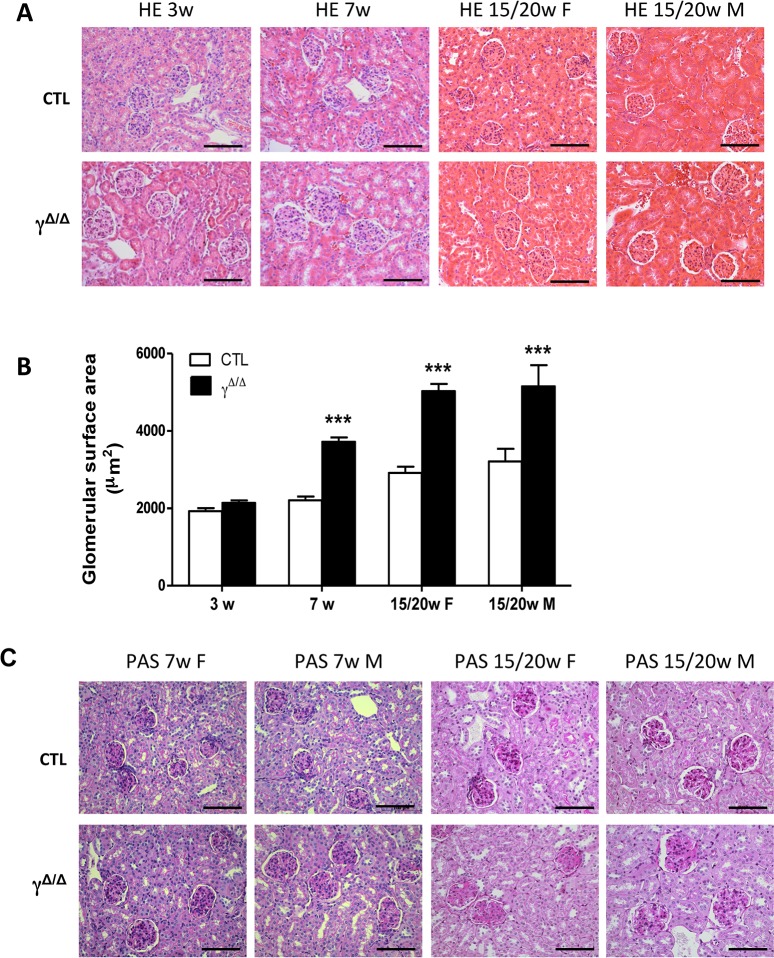
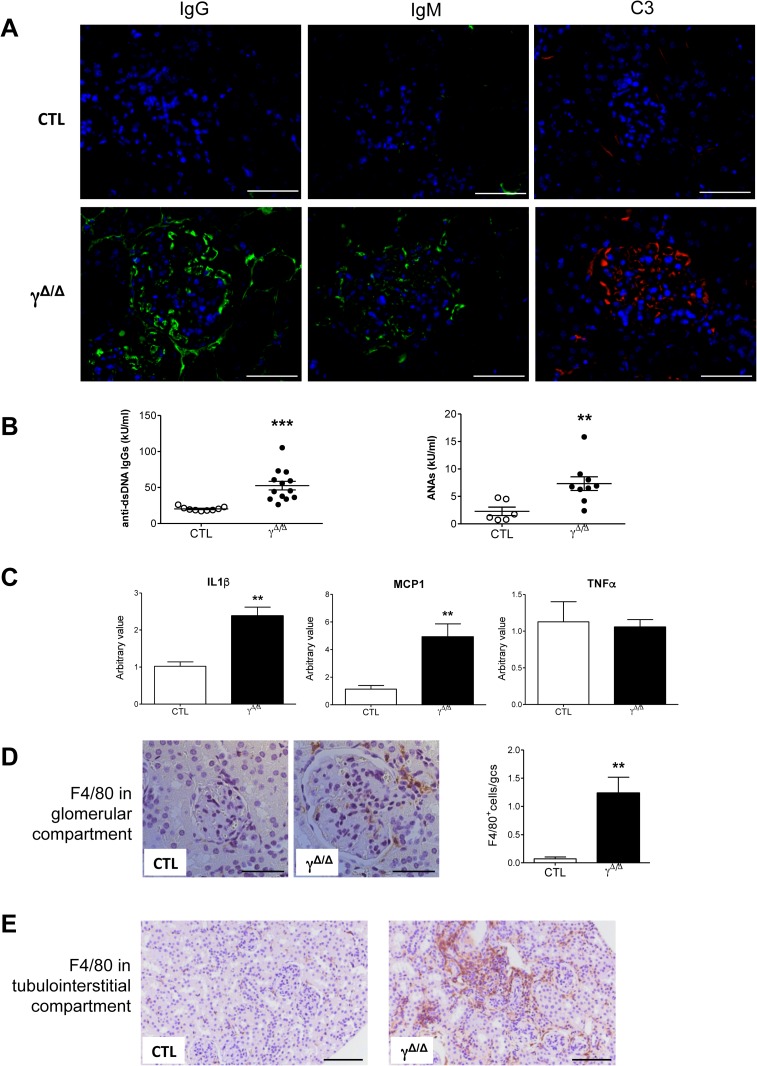
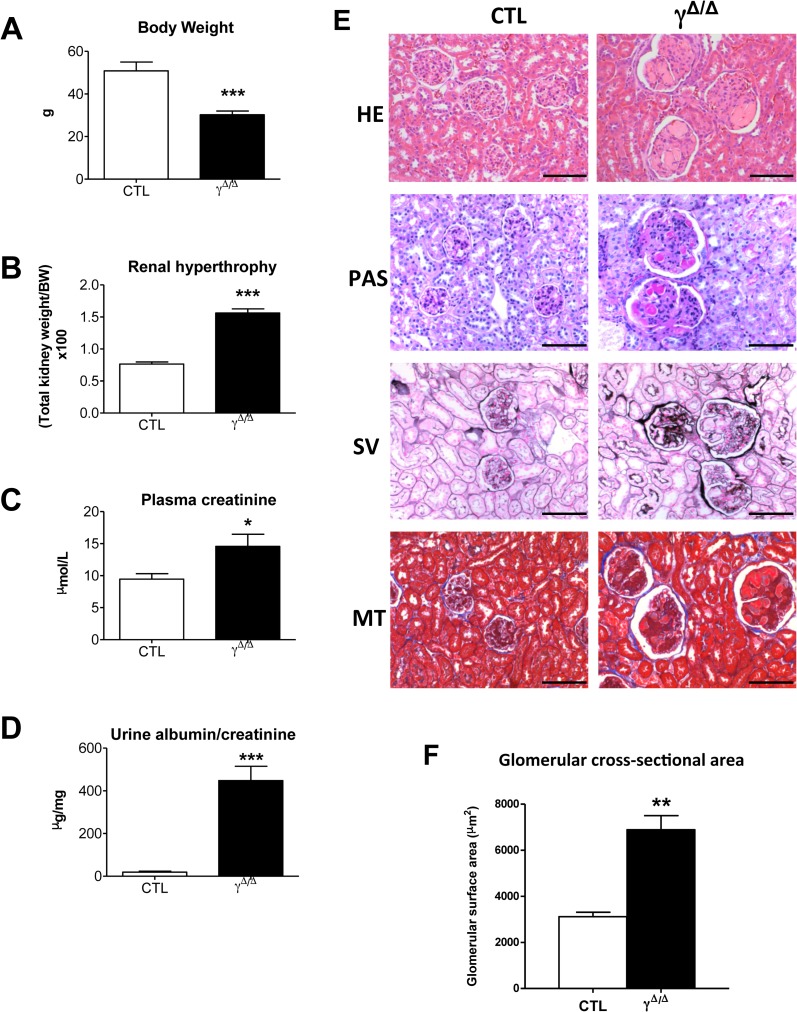
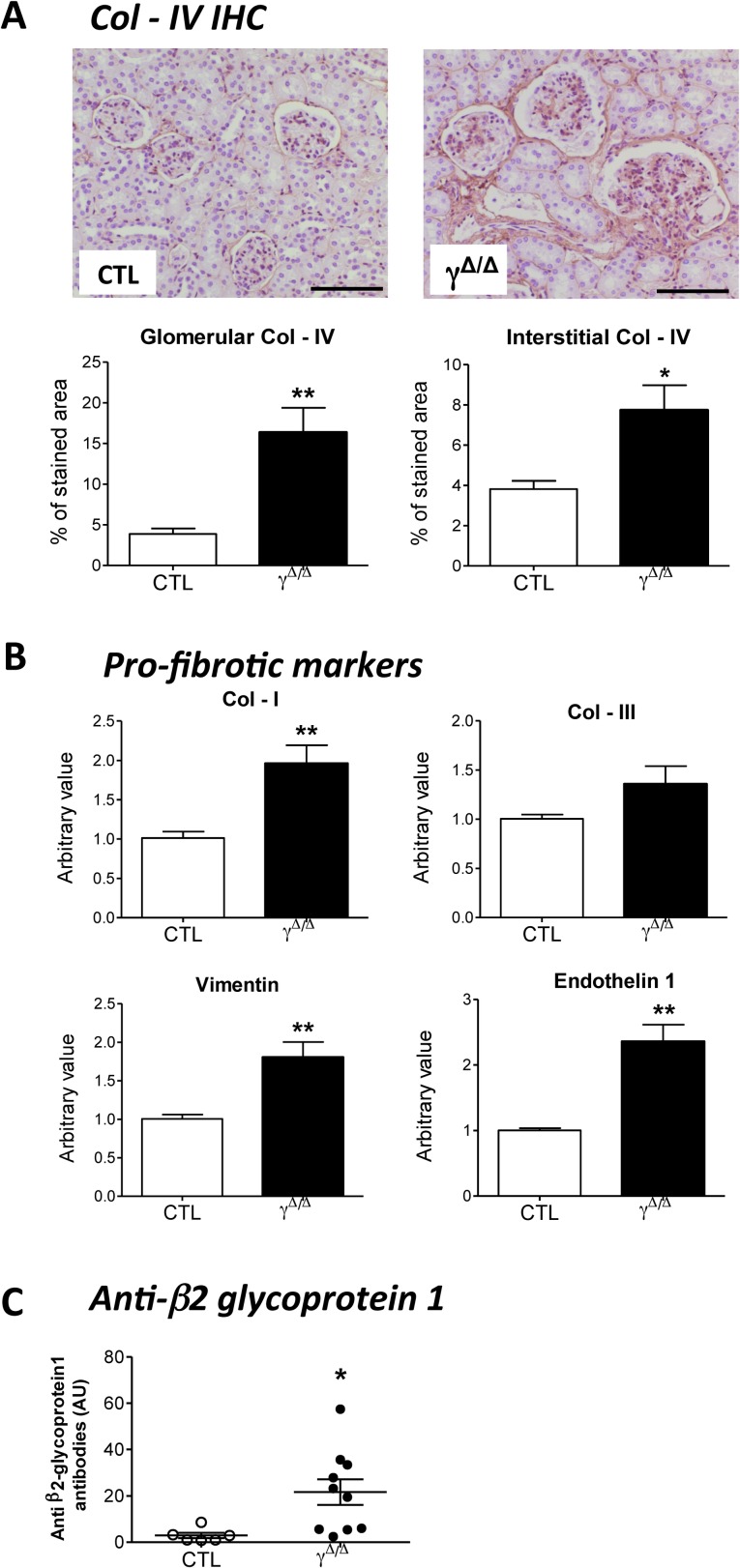
Peroxisome proliferator-activated receptor γ (PPARγ) is a ligand-dependent transcription factor involved in many aspects of metabolism, immune response, and development. Total-body deletion of the two Pparg alleles provoked generalized lipoatrophy along with severe type 2 diabetes. Herein, we explore the appearance and development of structural and functional alterations of the kidney, comparing Pparg null-mice to their littermate controls (carrying Pparg floxed alleles). We show that renal hypertrophy and functional alterations with increased glucosuria and albuminuria are already present in 3 weeks-old Pparg null-mice. Renal insufficiency with decreased creatinine clearance progress at 7 weeks of age, with the advance of the type 2 diabetes. At 52 weeks of age, these alterations are accompanied by signs of fibrosis and mesangial expansion. More intriguingly, aged Pparg null-mice concomitantly present an anti-phospholipid syndrome (APS), characterized by the late appearance of microthrombi and a mesangioproliferative pattern of glomerular injury, associated with significant plasmatic levels of anti-β2- glycoprotein1 antibodies and renal deposition of IgG, IgM, and C3. Thus, in line with the role of PPARγ in metabolic homeostasis, Pparg null-mice first represent a potent model for studying the initiation and the development of diabetic nephropathy. Second, and in relation with the important PPARγ activity in inflammation and in immune system, these mice also highlight a new role for PPARγ signaling in the promotion of APS, a syndrome whose pathogenesis is poorly known and whose current treatment is limited to prevention of thrombosis events.
过氧化物酶体增殖物激活受体γ(PPARγ)是一种依赖配体的转录因子,参与代谢、免疫反应和发育的多个方面。两个Pparg等位基因的全身缺失会引发全身性脂肪萎缩以及严重的2型糖尿病。在此,我们将Pparg基因敲除小鼠与其同窝对照(携带Pparg floxed等位基因)进行比较,探讨肾脏结构和功能改变的出现与发展。我们发现,3周龄的Pparg基因敲除小鼠已出现肾肥大以及伴有糖尿和蛋白尿增加的功能改变。随着2型糖尿病的进展,7周龄时肌酐清除率降低,出现肾功能不全。52周龄时,这些改变伴有纤维化和系膜扩张的迹象。更有趣的是,老年Pparg基因敲除小鼠同时出现抗磷脂综合征(APS),其特征为微血栓形成较晚以及肾小球损伤的系膜增生模式,伴有抗β2-糖蛋白1抗体的血浆水平显著升高以及IgG、IgM和C3在肾脏的沉积。因此,与PPARγ在代谢稳态中的作用一致,Pparg基因敲除小鼠首先是研究糖尿病肾病发生和发展的有力模型。其次,鉴于PPARγ在炎症和免疫系统中的重要活性,这些小鼠还凸显了PPARγ信号在促进APS方面的新作用,APS是一种发病机制尚不清楚且目前治疗仅限于预防血栓形成事件的综合征。