Lim Young-Suk
Department of Gastroenterology, Liver Center, Asan Medical Center, University of Ulsan College of Medicine, Seoul, Korea.
Gut Liver. 2017 Mar 15;11(2):189-195. doi: 10.5009/gnl15562.
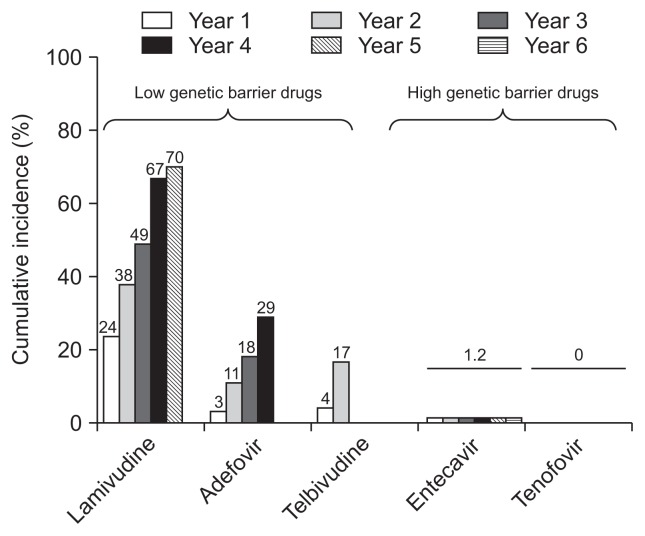
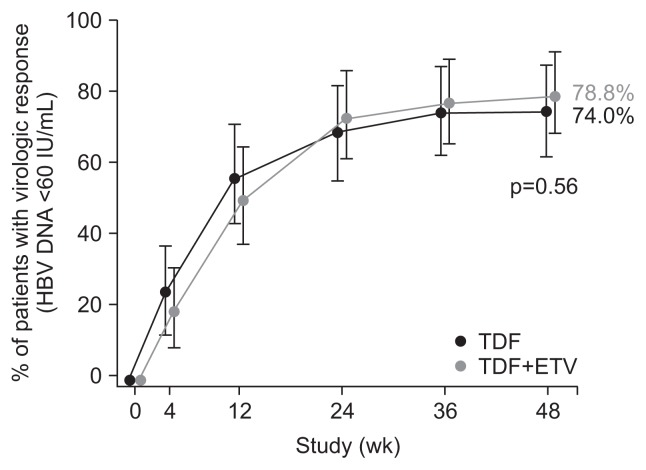
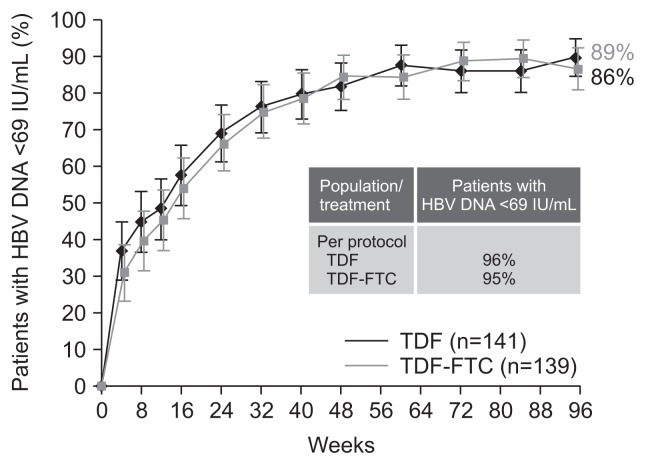
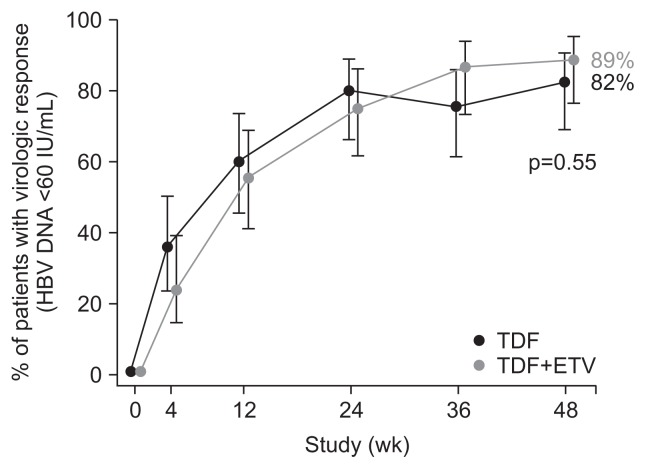
The primary goal of therapy for chronic hepatitis B (CHB) is to prevent liver disease progression. Hepatitis B surface antigen (HBsAg) seroclearance or seroconversion is regarded as an optimal endpoint to discontinue treatment. However, HBsAg seroclearance occurs very rarely with nucleos(t)ide analog (NUC) treatment, and long-term, almost indefinite, NUC treatment is required for the majority of patients. In patients with drug-resistant hepatitis B virus (HBV), a combination of tenofovir disoproxil fumarate (TDF) and entecavir (ETV), which is currently regarded as the strongest combination therapy against HBV, would be potentially safe to prevent the emergence of additional HBV resistance mutations. However, long-term tolerance data are lacking, and cost may be an issue for combination therapies. Several recent, well-designed, randomized controlled trials have shown that TDF monotherapy provides similar antiviral efficacy compared with the combination of TDF and ETV. Furthermore, no additional HBV resistance mutations emerged during TDF monotherapy for up to 96 weeks. Considering a comparable antiviral efficacy, extremely low risk of TDF-resistance, lower cost, and better safety potential, TDF monotherapy would be a reasonable choice for the treatment of drug-resistant patients with CHB.
慢性乙型肝炎(CHB)治疗的主要目标是预防肝脏疾病进展。乙肝表面抗原(HBsAg)血清学清除或血清学转换被视为停止治疗的最佳终点。然而,核苷(酸)类似物(NUC)治疗很少出现HBsAg血清学清除,大多数患者需要长期、几乎无限期的NUC治疗。在乙型肝炎病毒(HBV)耐药患者中,富马酸替诺福韦二吡呋酯(TDF)和恩替卡韦(ETV)联合使用目前被认为是抗HBV最强的联合治疗方案,对于预防额外的HBV耐药突变可能是安全的。然而,缺乏长期耐受性数据,联合治疗的费用可能是一个问题。最近几项设计良好的随机对照试验表明,TDF单药治疗与TDF和ETV联合治疗具有相似的抗病毒疗效。此外,在长达96周的TDF单药治疗期间未出现额外的HBV耐药突变。考虑到抗病毒疗效相当、TDF耐药风险极低、成本较低以及更好的安全性,TDF单药治疗将是治疗CHB耐药患者的合理选择。