WHO Collaborating Center for Tropical Diseases, Key Laboratory of Parasite and Vector Biology, Ministry of Public Health, National Institute of Parasitic Diseases, Chinese Center for Disease Control and Prevention, Shanghai, 200025, China.
Department of Tropical Infectious Disease, Second Military Medical University, Shanghai, 200433, China.
Parasit Vectors. 2017 Feb 10;10(1):75. doi: 10.1186/s13071-017-2013-z.
Anopheles sinensis is a primary vector for Plasmodium vivax malaria in most regions of China. A comprehensive understanding of genetic variation and structure of the mosquito would be of benefit to the vector control and in a further attempt to contribute to malaria elimination in China. However, there is only inadequate population genetic data pertaining to An. sinensis currently.
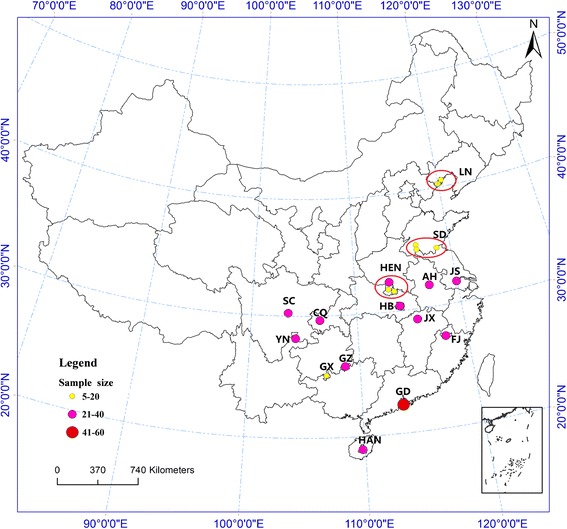
Genetic variations and structure among populations of An. sinensis was examined and analyzed based on the nucleotide sequences of a 662 nt variable region of the mitochondrial cox1 gene among 15 populations from 20 collection sites in China.
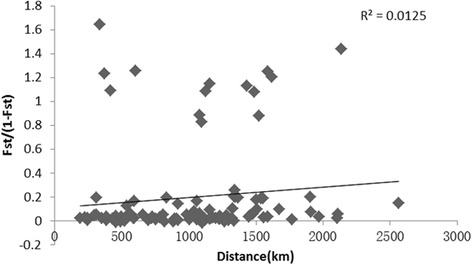
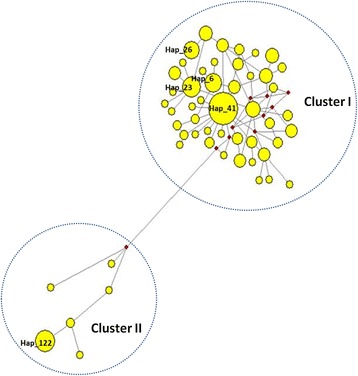
A total of 453 individuals in 15 populations were analyzed. The cox1 gene sequences were aligned, and 247 haplotypes were detected, 41 of these shared between populations. The range of haplotype diversity was from 0.709 (Yunnan) to 0.998 (Anhui). The genealogic network showed that the haplotypes were divided into two clusters, cluster I was at a high level of homoplasy, while cluster II included almost all individuals from the Yunnan population. The Yunnan population displayed a significantly high level of genetic differentiation (0.452-0.622) and a restricted gene flow with other populations. The pairwise F values among other populations were lower. The AMOVA result showed that the percentage of variation within populations (83.83%) was higher than that among populations (16.17%). Mantel test suggested that geographical distance did not significantly contribute to the genetic differentiation (R = 0.0125, P = 0.59). Neutral test and mismatch analysis results showed that the An. sinensis population has undergone demographic expansions.
Anopheles sinensis populations showed high genetic polymorphism by cox1 gene. The weak genetic structure may be a consequence of low genetic differentiation and high gene flow among populations, except the Yunnan samples. The Yunnan population was isolated from the other populations, gene flow limited by geographical distance and barriers. These findings will provide a theoretical basis for vector surveillance and vector control in China.
中华按蚊是中国大部分地区间日疟原虫疟疾的主要传播媒介。全面了解蚊子的遗传变异和结构将有助于控制媒介,并进一步有助于在中国消除疟疾。然而,目前有关中华按蚊的种群遗传数据非常有限。
基于来自中国 20 个采集点的 15 个种群的线粒体 cox1 基因 662nt 可变区的核苷酸序列,研究和分析了中华按蚊种群的遗传变异和结构。
对来自中国 15 个采集点的 15 个种群的 453 只个体进行了分析。cox1 基因序列对齐,共检测到 247 种单倍型,其中 41 种在种群间共享。单倍型多样性范围为 0.709(云南)至 0.998(安徽)。系统发生网络显示,单倍型分为两个聚类,聚类 I 具有较高的同质性,而聚类 II 包含了来自云南种群的几乎所有个体。云南种群显示出显著高水平的遗传分化(0.452-0.622)和与其他种群的受限基因流。其他种群之间的成对 F 值较低。AMOVA 结果表明,种群内的变异百分比(83.83%)高于种群间的变异百分比(16.17%)。Mantel 检验表明,地理距离对遗传分化没有显著贡献(R=0.0125,P=0.59)。中性检验和错配分析结果表明,中华按蚊种群经历了种群扩张。
cox1 基因显示中华按蚊种群具有高度遗传多态性。弱遗传结构可能是种群间遗传分化低和基因流动高的结果,云南样本除外。云南种群与其他种群隔离,地理距离和障碍限制了基因流动。这些发现将为中国的媒介监测和媒介控制提供理论基础。