Robicheau Brent M, Susko Edward, Harrigan Amye M, Snyder Marlene
Department of Biology, Acadia University, Wolfville, Nova Scotia, Canada.
Center for Comparative Genomics and Evolutionary Bioinformatics, Department of Mathematics and Statistics, Dalhousie University, Halifax, Nova Scotia, Canada.
Genome Biol Evol. 2017 Feb 1;9(2):380-397. doi: 10.1093/gbe/evw307.
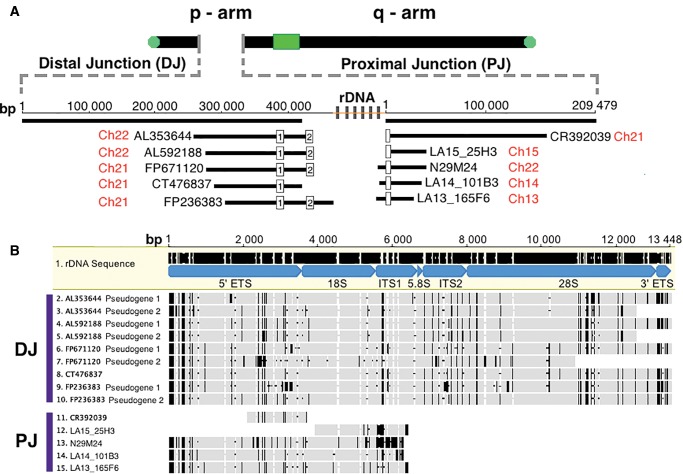
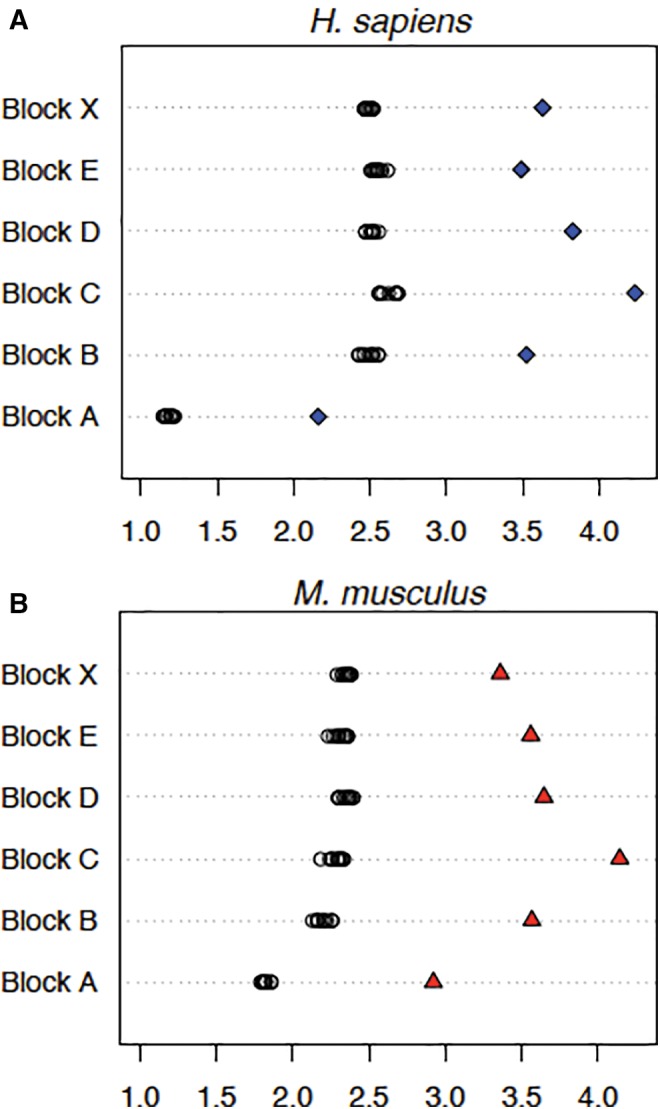
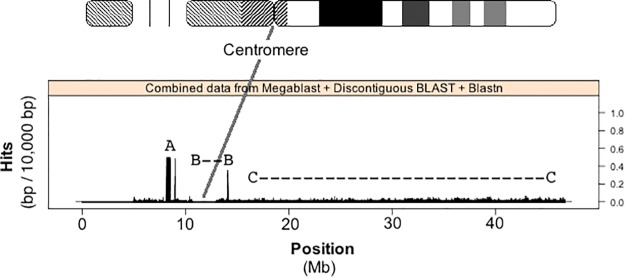
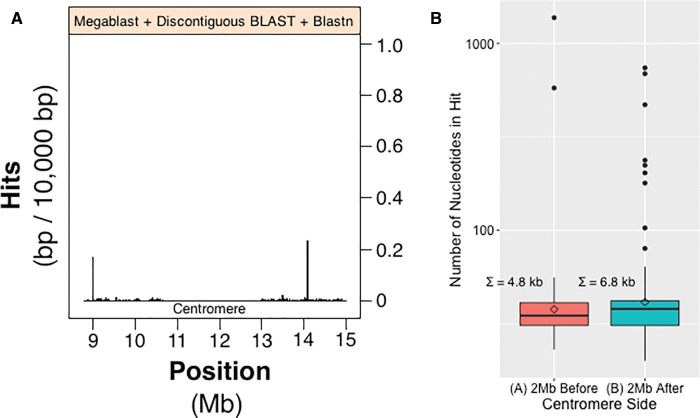
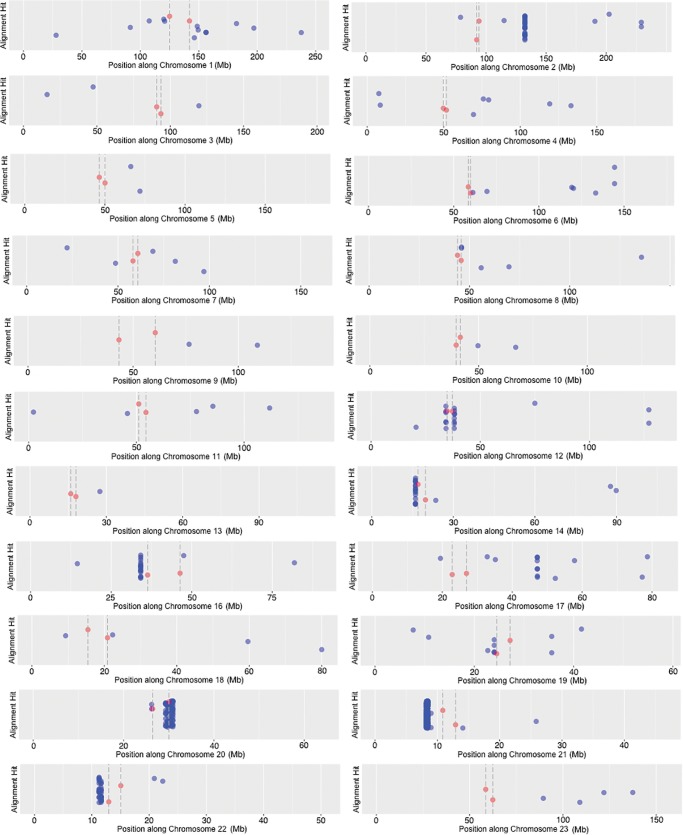
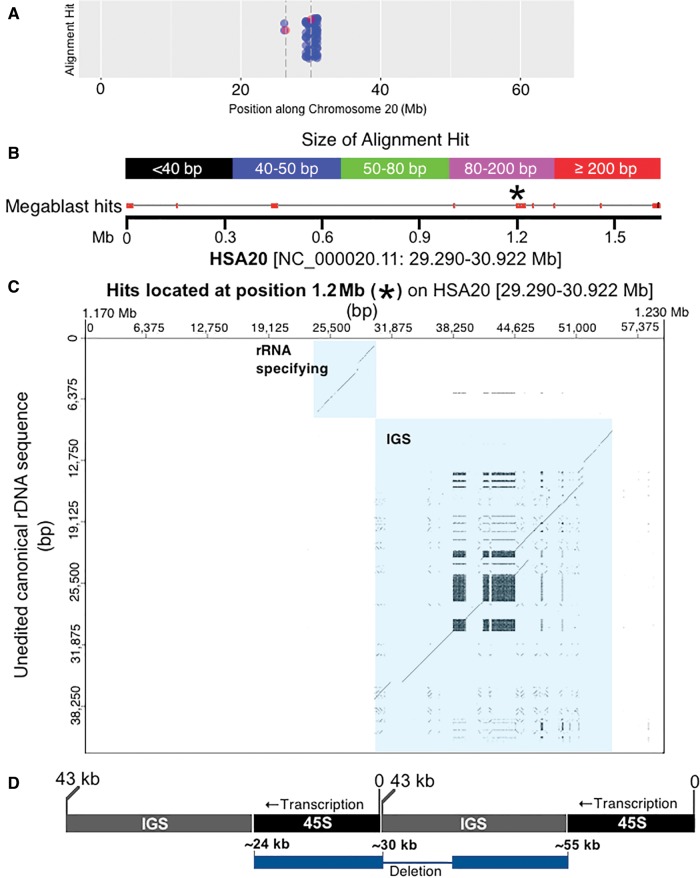
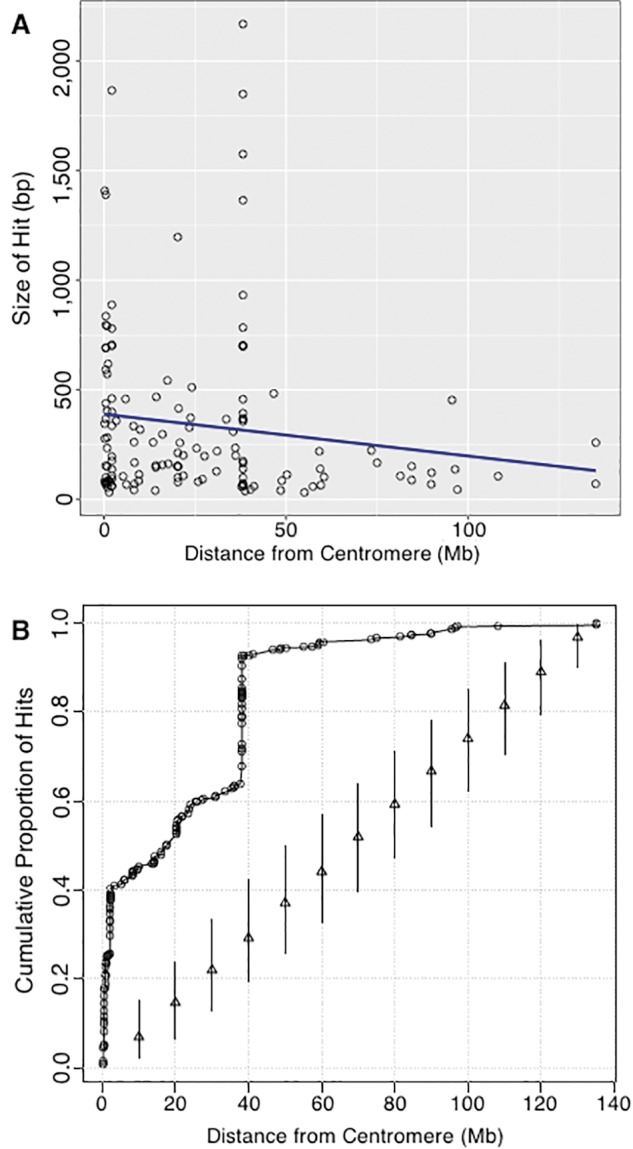
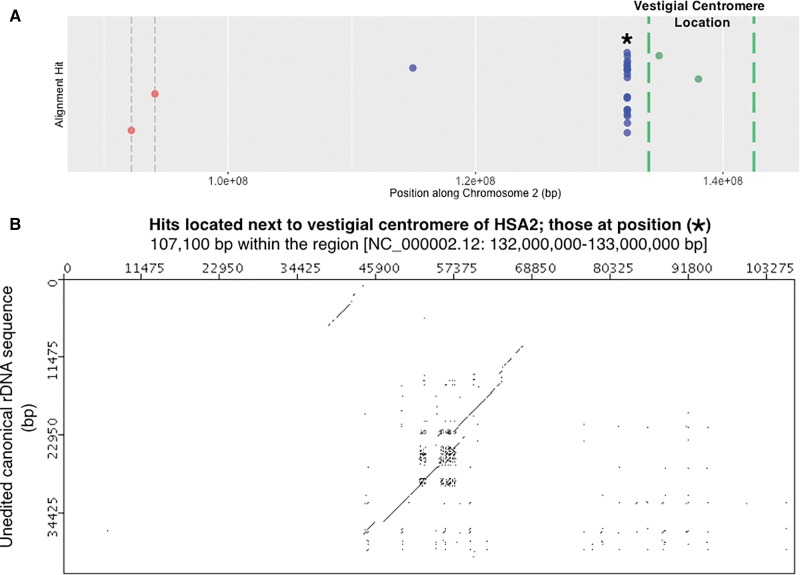
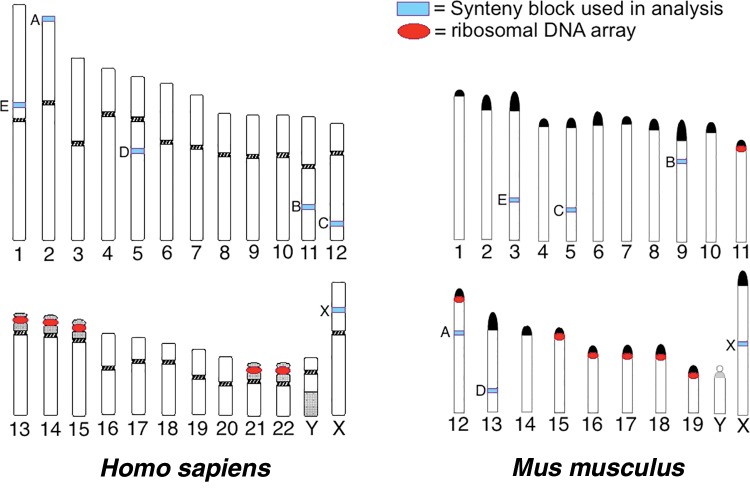
Approximately 35% of the human genome can be identified as sequence devoid of a selected-effect function, and not derived from transposable elements or repeated sequences. We provide evidence supporting a known origin for a fraction of this sequence. We show that: 1) highly degraded, but near full length, ribosomal DNA (rDNA) units, including both 45S and Intergenic Spacer (IGS), can be found at multiple sites in the human genome on chromosomes without rDNA arrays, 2) that these rDNA sequences have a propensity for being centromere proximal, and 3) that sequence at all human functional rDNA array ends is divergent from canonical rDNA to the point that it is pseudogenic. We also show that small sequence strings of rDNA (from 45S + IGS) can be found distributed throughout the genome and are identifiable as an "rDNA-like signal", representing 0.26% of the q-arm of HSA21 and ∼2% of the total sequence of other regions tested. The size of sequence strings found in the rDNA-like signal intergrade into the size of sequence strings that make up the full-length degrading rDNA units found scattered throughout the genome. We conclude that the displaced and degrading rDNA sequences are likely of a similar origin but represent different stages in their evolution towards random sequence. Collectively, our data suggests that over vast evolutionary time, rDNA arrays contribute to the production of junk DNA. The concept that the production of rDNA pseudogenes is a by-product of concerted evolution represents a previously under-appreciated process; we demonstrate here its importance.
大约35%的人类基因组可被鉴定为缺乏选择效应功能的序列,且并非源自转座元件或重复序列。我们提供的证据支持了该部分序列的已知起源。我们发现:1)高度降解但接近全长的核糖体DNA(rDNA)单位,包括45S和基因间隔区(IGS),可在人类基因组中无rDNA阵列的染色体上的多个位点找到;2)这些rDNA序列倾向于靠近着丝粒;3)所有人类功能性rDNA阵列末端的序列与典型rDNA不同,已成为假基因。我们还表明,rDNA的小序列串(来自45S + IGS)可在整个基因组中分布,并可被识别为一种“类rDNA信号”,占HSA21 q臂的0.26%,以及其他测试区域总序列的约2%。在类rDNA信号中发现的序列串大小与构成散布在整个基因组中的全长降解rDNA单位的序列串大小相衔接。我们得出结论,移位和降解的rDNA序列可能起源相似,但代表了它们向随机序列进化的不同阶段。总体而言,我们的数据表明,在漫长的进化时间里,rDNA阵列促成了垃圾DNA的产生。rDNA假基因的产生是协同进化的副产品这一概念代表了一个此前未被充分认识的过程;我们在此证明了其重要性。