Usrey W Martin, Alitto Henry J
Center for Neuroscience and Department of Neurobiology, Physiology & Behavior, University of California, Davis, California 95618.
Annu Rev Vis Sci. 2015 Nov;1:351-371. doi: 10.1146/annurev-vision-082114-035920.
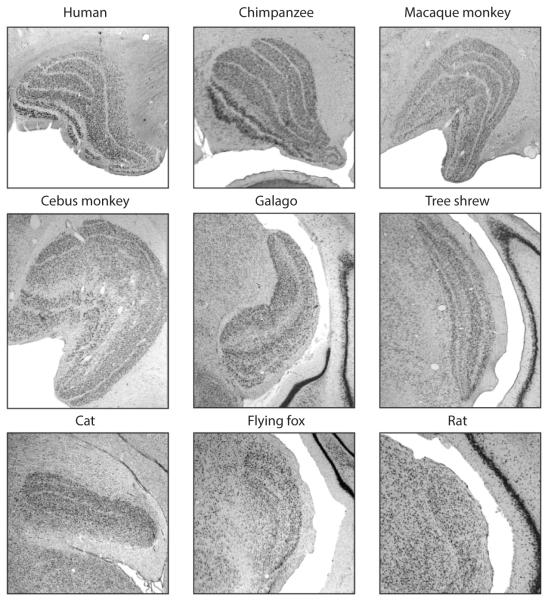
The thalamus is the heavily interconnected partner of the neocortex. All areas of the neocortex receive afferent input from and send efferent projections to specific thalamic nuclei. Through these connections, the thalamus serves to provide the cortex with sensory input, and to facilitate interareal cortical communication and motor and cognitive functions. In the visual system, the lateral geniculate nucleus (LGN) of the dorsal thalamus is the gateway through which visual information reaches the cerebral cortex. Visual processing in the LGN includes spatial and temporal influences on visual signals that serve to adjust response gain, transform the temporal structure of retinal activity patterns, and increase the signal-to-noise ratio of the retinal signal while preserving its basic content. This review examines recent advances in our understanding of LGN function and circuit organization and places these findings in a historical context.
丘脑是与新皮质紧密相连的伙伴。新皮质的所有区域都从特定的丘脑核接收传入输入并向其发送传出投射。通过这些连接,丘脑为皮质提供感觉输入,并促进皮质区域间的交流以及运动和认知功能。在视觉系统中,背侧丘脑的外侧膝状体核(LGN)是视觉信息到达大脑皮质的通道。LGN中的视觉处理包括对视觉信号的空间和时间影响,这些影响用于调整反应增益、转换视网膜活动模式的时间结构,并在保留视网膜信号基本内容的同时提高其信噪比。本综述探讨了我们对LGN功能和神经回路组织理解的最新进展,并将这些发现置于历史背景中。