Kranz Sibylle, Dodd Kevin W, Juan Wen Yen, Johnson LuAnn K, Jahns Lisa
Department of Kinesiology, University of Virginia, Charlottesville, VA 22904, USA.
National Cancer Institute, Bethesda, MD 20892, USA.
Nutrients. 2017 Feb 17;9(2):153. doi: 10.3390/nu9020153.
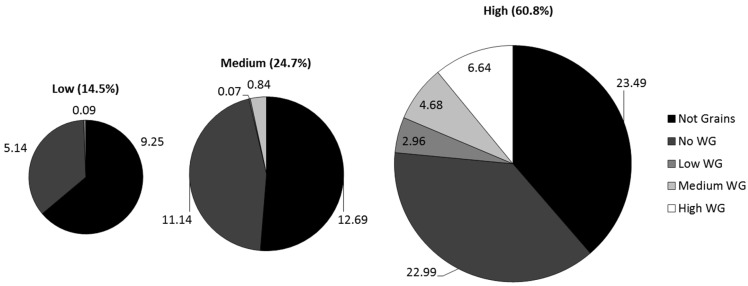
Dietary fiber (DF), found in whole fruits, vegetables, and whole grains (WG), is considered a nutrient of concern in the US diet and increased consumption is recommended. The present study was designed to highlight this critical importance of the difference between WG, high-fiber WG, and sources of fiber that are not from WG. The study is based on the two-day diets reported consumed by the nationally representative sample of Americans participating in What We Eat In America, the dietary component of the National Health and Nutrition Examination Survey from 2003-2010. Foods consumed were classified into tertiles of DF and WG and the contribution of fiber by differing levels of WG content were examined. Foods containing high amounts of WG and DF only contributed about 7% of total fiber intake. Overall, grain-based foods contributed 54.5% of all DF consumed. Approximately 39% of DF came from grain foods that contained no WG, rather these foods contained refined grains, which contain only small amounts of DF but are consumed in large quantities. All WG-containing foods combined contributed a total of 15.3% of DF in the American diet. Thus, public health messaging needs to be changed to specifically encourage consumption of WG foods with high levels of DF to address both recommendations.
膳食纤维(DF)存在于完整水果、蔬菜和全谷物(WG)中,在美国饮食中被视为一种值得关注的营养素,建议增加其摄入量。本研究旨在突出WG、高纤维WG以及非WG来源的纤维之间差异的这一关键重要性。该研究基于参与“我们在美国吃什么”(2003 - 2010年美国国家健康与营养检查调查的饮食部分)的具有全国代表性的美国人样本所报告的两日饮食。所食用的食物被分类为DF和WG的三分位数,并研究了不同WG含量水平对纤维贡献的情况。仅含有大量WG和DF的食物仅占总纤维摄入量的约7%。总体而言,谷物类食物占所有食用DF的54.5%。大约39%的DF来自不含WG的谷物食品,相反,这些食物含有精制谷物,其仅含有少量DF但食用量很大。所有含WG的食物加起来在美国饮食中占DF总量的15.3%。因此,公共卫生宣传信息需要改变,以特别鼓励食用富含高水平DF的WG食物,以满足这两项建议。