Wang Pengfei, Song Hui, Li Changsheng, Li Pengcheng, Li Aiqin, Guan Hongshan, Hou Lei, Wang Xingjun
Biotechnology Research Center, Shandong Academy of Agricultural Sciences, Shandong Provincial Key Laboratory of Crop Genetic Improvement, Ecology and Physiology Jinan, China.
Biotechnology Research Center, Shandong Academy of Agricultural Sciences, Shandong Provincial Key Laboratory of Crop Genetic Improvement, Ecology and PhysiologyJinan, China; College of Life Sciences, Shandong Normal UniversityJinan, China.
Front Plant Sci. 2017 Feb 6;8:106. doi: 10.3389/fpls.2017.00106. eCollection 2017.
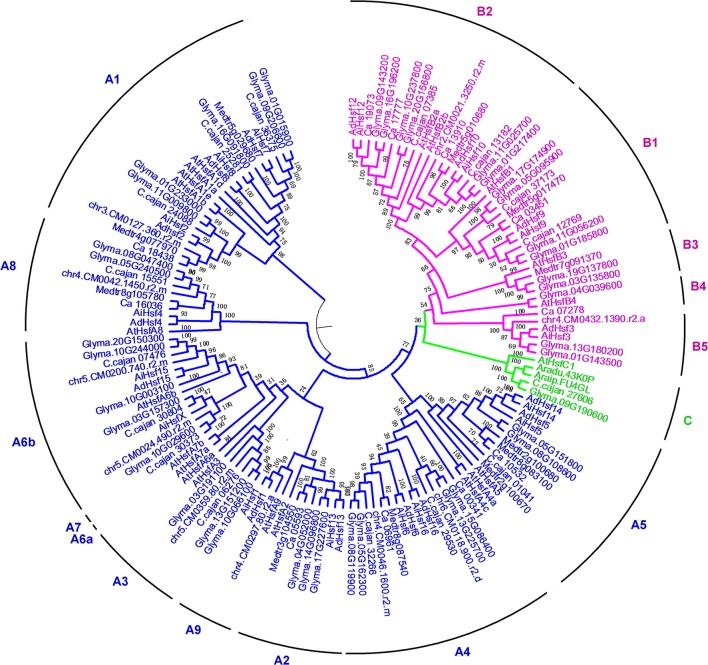
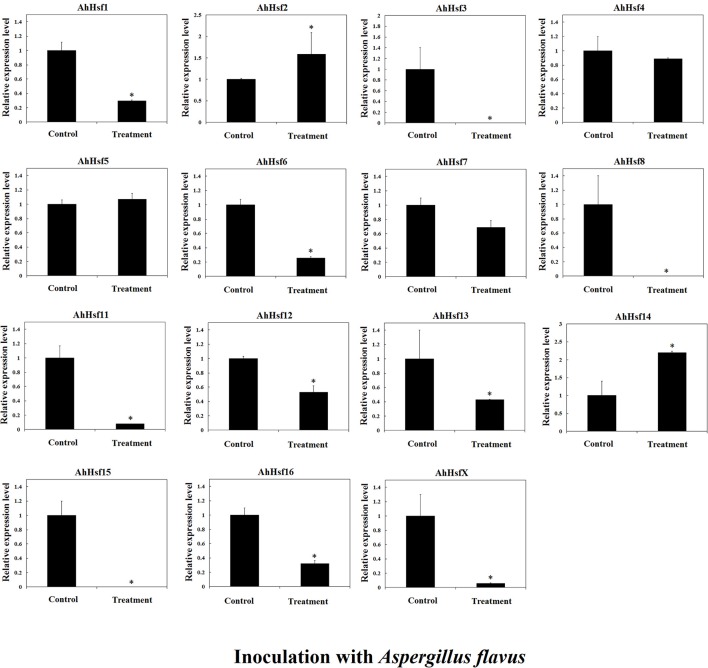
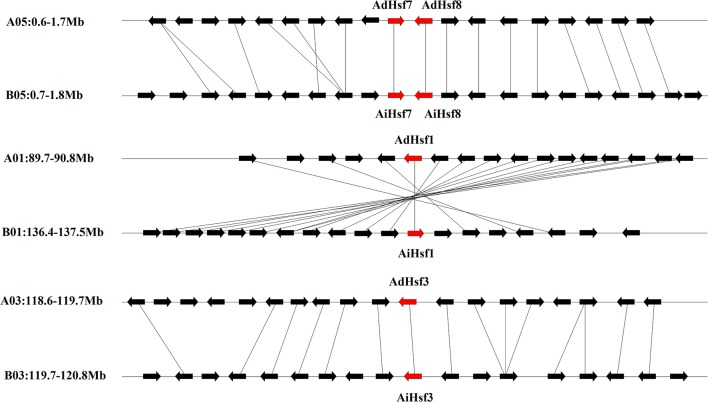
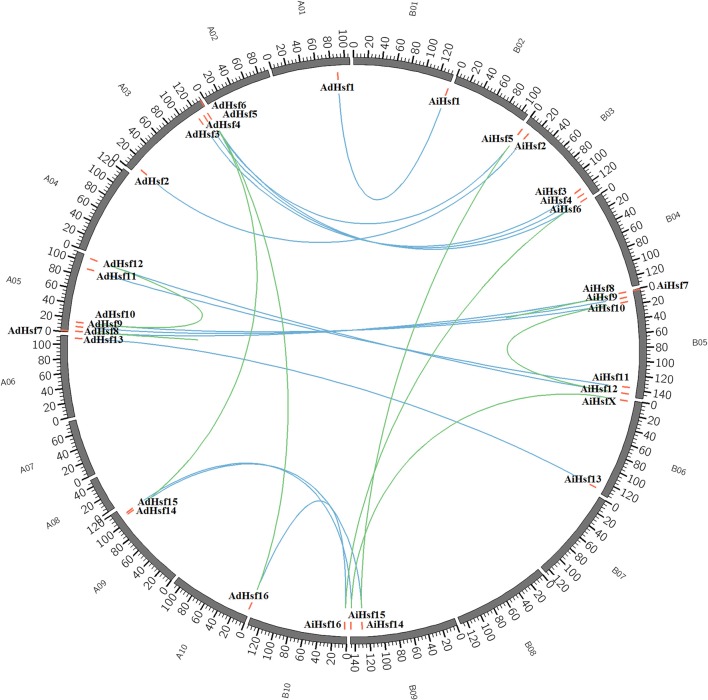
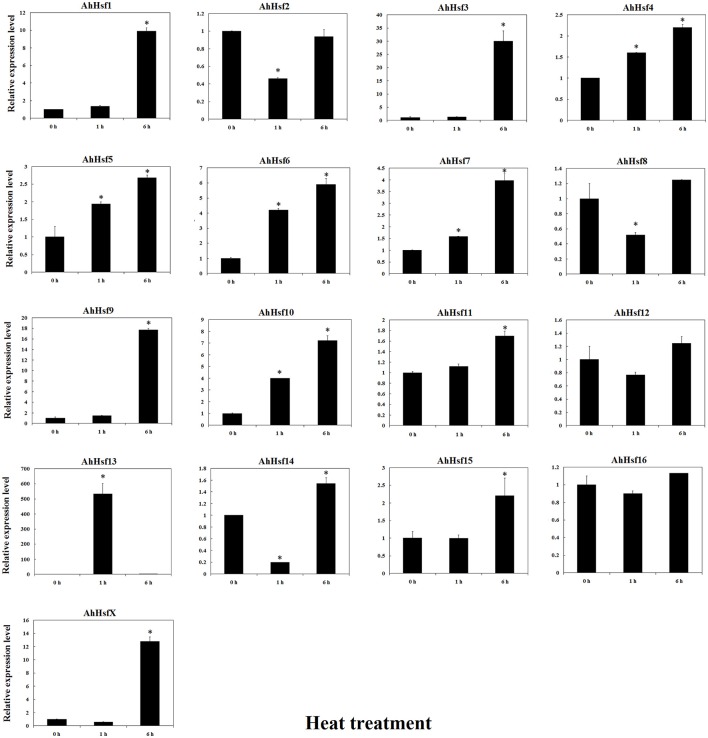
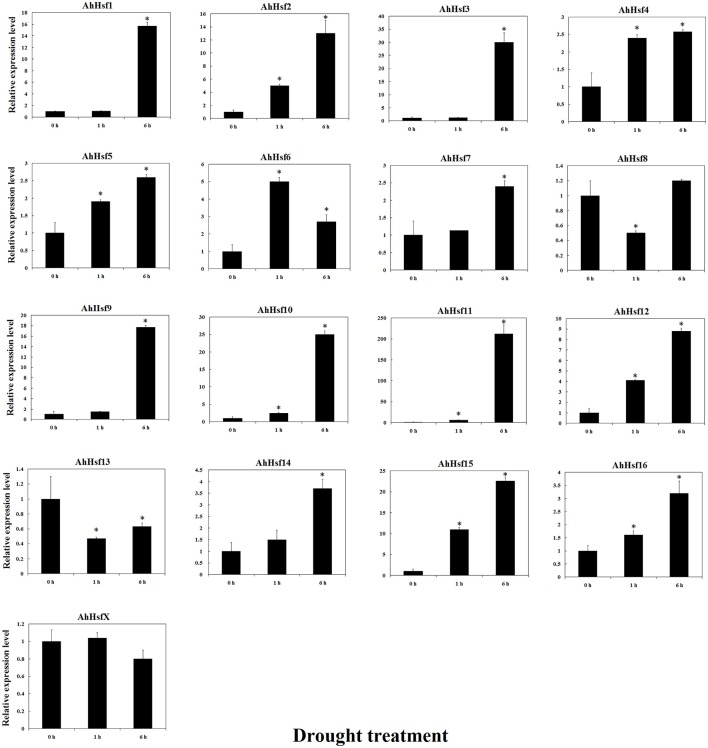
Heat shock transcription factors (Hsfs) are important transcription factors (TFs) in protecting plants from damages caused by various stresses. The released whole genome sequences of wild peanuts make it possible for genome-wide analysis of Hsfs in peanut. In this study, a total of 16 and 17 genes were identified from and , respectively. We identified 16 orthologous Hsf gene pairs in both peanut species; however was only identified from . Orthologous pairs between two wild peanut species were highly syntenic. Based on phylogenetic relationship, peanut Hsfs were divided into groups A, B, and C. Selection pressure analysis showed that group B Hsf genes mainly underwent positive selection and group A Hsfs were affected by purifying selection. Small scale segmental and tandem duplication may play important roles in the evolution of these genes. Cis-elements, such as ABRE, DRE, and HSE, were found in the promoters of most Hsf genes. Five and two contained fungal elicitor responsive elements suggesting their involvement in response to fungi infection. These genes were differentially expressed in cultivated peanut under abiotic stress and infection. and were significantly up-regulated after inoculation with suggesting their possible role in fungal resistance.
热激转录因子(Hsfs)是保护植物免受各种胁迫造成损害的重要转录因子(TFs)。野生花生全基因组序列的公布使得对花生中的Hsfs进行全基因组分析成为可能。在本研究中,分别从[具体物种1]和[具体物种2]中鉴定出16个和17个基因。我们在两种花生物种中鉴定出16对直系同源Hsfs基因对;然而,[具体基因]仅从[具体物种]中鉴定出来。两个野生花生物种之间的直系同源对具有高度的共线性。基于系统发育关系,花生Hsfs被分为A、B和C组。选择压力分析表明,B组Hsfs基因主要经历正选择,A组Hsfs受到纯化选择的影响。小规模的片段重复和串联重复可能在这些基因的进化中起重要作用。在大多数Hsfs基因的启动子中发现了ABRE、DRE和HSE等顺式作用元件。五个[具体基因1]和两个[具体基因2]含有真菌激发子响应元件,表明它们参与对真菌感染的反应。这些基因在栽培花生受到非生物胁迫和[具体真菌]感染时差异表达。接种[具体真菌]后,[具体基因1]和[具体基因2]显著上调,表明它们在抗真菌方面可能发挥的作用。