Xing Weiwei, Yu Xinling, Feng Jingtao, Sun Kui, Fu Wenliang, Wang Yuanyuan, Zou Minji, Xia Wenrong, Luo Zhihong, He Hongbin, Li Yuesheng, Xu Donggang
The Laboratory of genomic engineering, Beijing Institute of Basic Medical Sciences, Beijing, China.
The key laboratory of Immune and Control of Schistosomiasis, Hunan Institute of Parasitic Diseases, Hunan, China.
BMC Infect Dis. 2017 Feb 21;17(1):164. doi: 10.1186/s12879-017-2182-6.
Current diagnostic methods for Schistosoma japonicum infection are insensitive for low-density infections. Therefore, a new diagnostic assay based on recombinase polymerase amplification (RPA) technology was established and assessed for field applification.
The S.japonicum RPA assay was developed to target highly repetitive retrotransposon SjR2 gene of S japonicum, and its sensitivity and specificity were assessed by serial dilution of S. japonicum genomic DNA and other related worm genomic DNA respectively. The RPA diagnostic validity was first evaluated in 60 fecal samples from healthy people and patients, and then compared with other diagnostic tests in 200 high-risk individuals living in endemic areas.
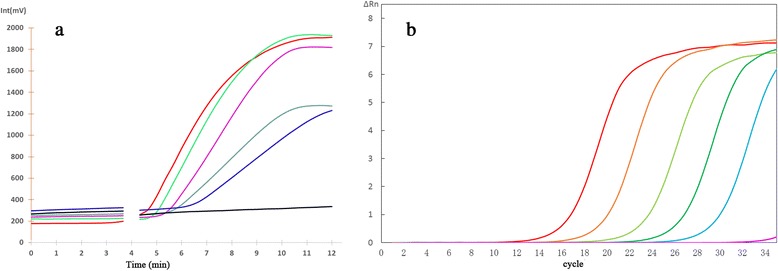
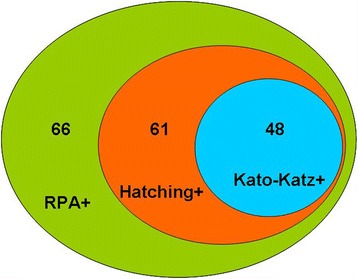
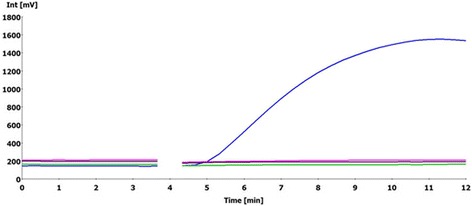
The real time RPA assay could detect 0.9 fg S. japonicum DNA within 15 min and distinguish S. japonicum from other worms. The validity analysis of RPA for the detection of S. japonicum in stool samples from 30 S. japonicum-infected patients and 30 healthy persons indicated 100% sensitivity and specificity. When testing 200 fecal or serum samples from a high-risk population, the percentage sensitivity of RPA was 100%, whereas that of indirect hemagglutination assay (IHA) and enzyme-linked immunosorbent assay (ELISA) were 80.3% and 85.2% respectively. In addition, the RPA presented better consistency with the stool-based tests than IHA and ELISA. Overall, the RPA was superior to other detection methods with respect to detection time, sensitivity, and convenience.
This is the first time we applied the RPA technology to the field evaluation of S. japonicum infection. And the results suggest that RPA-based assays can be used as a promising point-of-care test for the diagnosis of schistosomiasis.
目前日本血吸虫感染的诊断方法对低密度感染不敏感。因此,建立了一种基于重组酶聚合酶扩增(RPA)技术的新型诊断方法,并对其进行现场应用评估。
开发针对日本血吸虫高度重复反转录转座子SjR2基因的日本血吸虫RPA检测方法,分别通过对日本血吸虫基因组DNA和其他相关蠕虫基因组DNA进行系列稀释来评估其敏感性和特异性。首先在60份来自健康人和患者的粪便样本中评估RPA诊断的有效性,然后在200名生活在流行区的高危个体中与其他诊断测试进行比较。
实时RPA检测方法可在15分钟内检测到0.9 fg日本血吸虫DNA,并能区分日本血吸虫与其他蠕虫。对30例日本血吸虫感染患者和30名健康人的粪便样本进行RPA检测的有效性分析显示,其敏感性和特异性均为100%。在检测200份高危人群的粪便或血清样本时,RPA的敏感性百分比为100%,而间接血凝试验(IHA)和酶联免疫吸附试验(ELISA)的敏感性分别为80.3%和85.2%。此外,与IHA和ELISA相比,RPA与基于粪便的检测方法具有更好的一致性。总体而言,RPA在检测时间、敏感性和便利性方面优于其他检测方法。
这是我们首次将RPA技术应用于日本血吸虫感染的现场评估。结果表明,基于RPA的检测方法可作为一种有前景的即时检测方法用于血吸虫病的诊断。