Santiago João C P, Hallschmid Manfred
Institute of Medical Psychology and Behavioral Neurobiology, University of TübingenTübingen, Germany; German Center for Diabetes ResearchTübingen, Germany; Institute for Diabetes Research and Metabolic Diseases of the Helmholtz Center Munich at the University of TübingenTübingen, Germany.
Front Neurosci. 2017 Feb 8;11:54. doi: 10.3389/fnins.2017.00054. eCollection 2017.
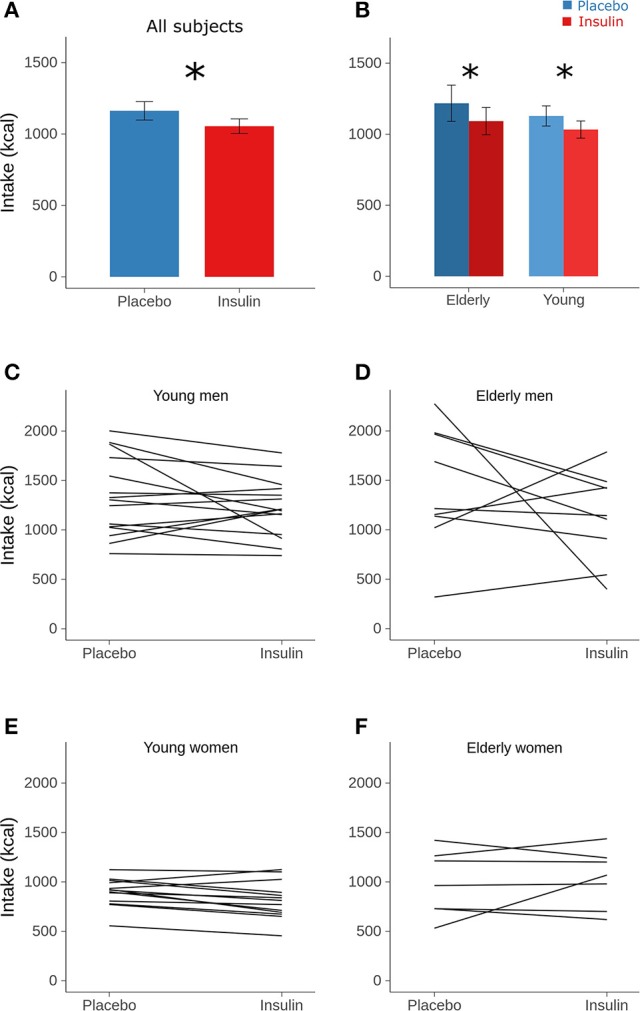
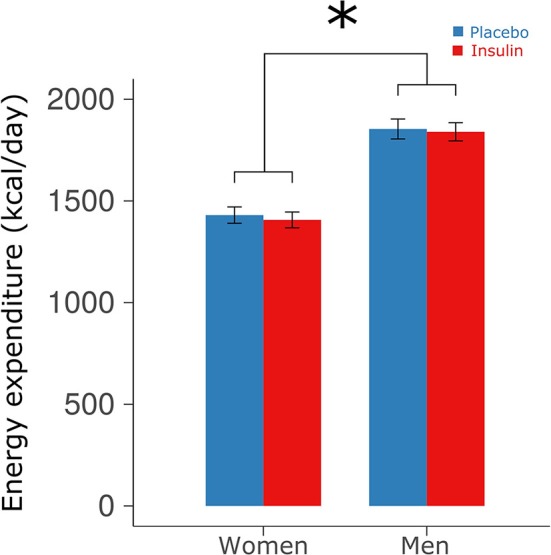
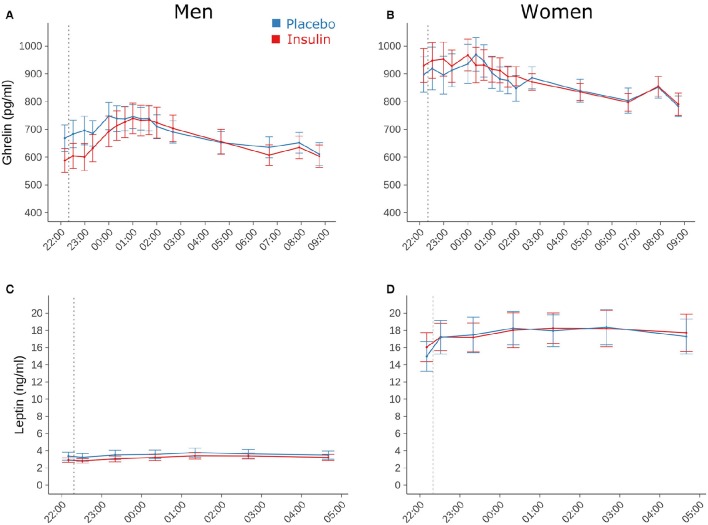
Peripheral insulin acts on the brain to regulate metabolic functions, in particular decreasing food intake and body weight. This concept has been supported by studies in humans relying on the intranasal route of administration, a method that permits the direct permeation of insulin into the CNS without substantial absorption into the blood stream. We investigated if intranasal insulin administration before nocturnal sleep, a period of reduced metabolic activity and largely absent external stimulation, affects food intake and energy turnover on the subsequent morning. Healthy participants who were either young (16 men and 16 women; mean age ± SEM, 23.68 ± 0.40 years, mean BMI ± SEM, 22.83 ± 0.33 kg/m) or elderly (10 men, 9 women; 70.79 ± 0.81 years, 25.27 ± 0.60 kg/m) were intranasally administered intranasal insulin (160 IU) or placebo before a night of regular sleep that was polysomnographically recorded. Blood was repeatedly sampled for the determination of circulating glucose, insulin, leptin and total ghrelin. In the morning, energy expenditure was assessed via indirect calorimetry and subjects were offered a large standardized breakfast buffet from which they could eat . Insulin compared to placebo reduced breakfast size by around 110 kcal (1,054.43 ± 50.91 vs. 1,162.36 ± 64.69 kcal, = 0.0095), in particular decreasing carbohydrate intake (502.70 ± 25.97 vs. 589.82 ± 35.03 kcal, = 0.0080). This effect was not dependent on sex or age (all > 0.11). Sleep architecture, blood glucose and hormonal parameters as well as energy expenditure were not or only marginally affected. Results show that intranasal insulin administered to healthy young and elderly humans before sleep exerts a delayed inhibitory effect on energy intake that is not compensated for by changes in energy expenditure. While the exact underlying mechanisms cannot be derived from our data, findings indicate a long-lasting catabolic effect of central nervous insulin delivery that extends across sleep and might be of particular relevance for potential therapeutic applications.
外周胰岛素作用于大脑以调节代谢功能,尤其是减少食物摄入量和体重。这一概念已得到人类研究的支持,这些研究采用鼻内给药途径,该方法可使胰岛素直接渗透到中枢神经系统,而不会大量吸收进入血流。我们研究了在夜间睡眠(代谢活动降低且基本没有外部刺激的时间段)前鼻内给予胰岛素是否会影响次日早晨的食物摄入量和能量代谢。健康参与者分为年轻组(16名男性和16名女性;平均年龄±标准误,23.68±0.40岁,平均体重指数±标准误,22.83±0.33kg/m²)或老年组(10名男性,9名女性;70.79±0.81岁,25.27±0.60kg/m²),在进行多导睡眠图记录的正常睡眠前,鼻内给予胰岛素(160IU)或安慰剂。多次采集血液样本以测定循环葡萄糖、胰岛素、瘦素和总胃饥饿素。早晨,通过间接测热法评估能量消耗,并为受试者提供一顿丰盛的标准化自助早餐,他们可以随意进食。与安慰剂相比,胰岛素使早餐摄入量减少了约110千卡(1054.43±50.91千卡对1162.36±64.69千卡,P = 0.0095),尤其是碳水化合物摄入量减少(502.7±25.97千卡对589.82±35.03千卡,P = 0.0080)。这种效应不依赖于性别或年龄(所有P>0.11)。睡眠结构、血糖和激素参数以及能量消耗未受影响或仅受到轻微影响。结果表明,在睡眠前对健康的年轻人和老年人鼻内给予胰岛素会对能量摄入产生延迟的抑制作用,且这种作用不会因能量消耗的变化而得到补偿。虽然确切的潜在机制无法从我们的数据中推导出来,但研究结果表明中枢神经系统胰岛素给药具有持久的分解代谢作用,这种作用会持续到睡眠期间,可能对潜在的治疗应用具有特别重要的意义。