Hayakawa Mineji, Kushimoto Shigeki, Watanabe Eizo, Goto Koji, Suzuki Yasushi, Kotani Toru, Kiguchi Takeyuki, Yatabe Tomoaki, Tagawa Jun, Komatsu Fumiyo, Gando Satoshi
Mineji Hayakawa, MD, PhD, Emergency and Critical Care Center, Hokkaido University Hospital, N14W5 Kita-ku, Sapporo 060-8648 Japan, Tel.: +81 11 706 7377, Fax: +81 11 706 7378, E-mail:
Thromb Haemost. 2017 May 3;117(5):851-859. doi: 10.1160/TH16-07-0547. Epub 2017 Feb 23.
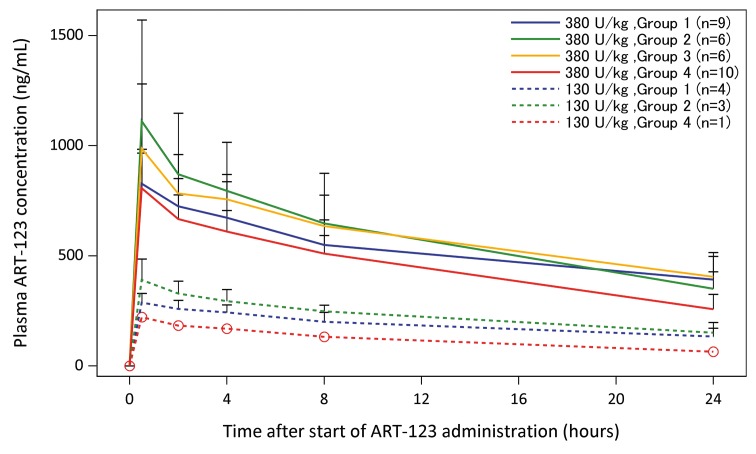
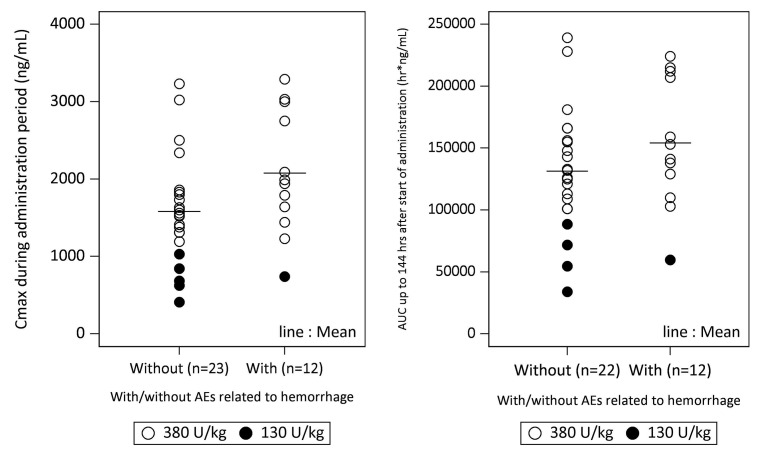
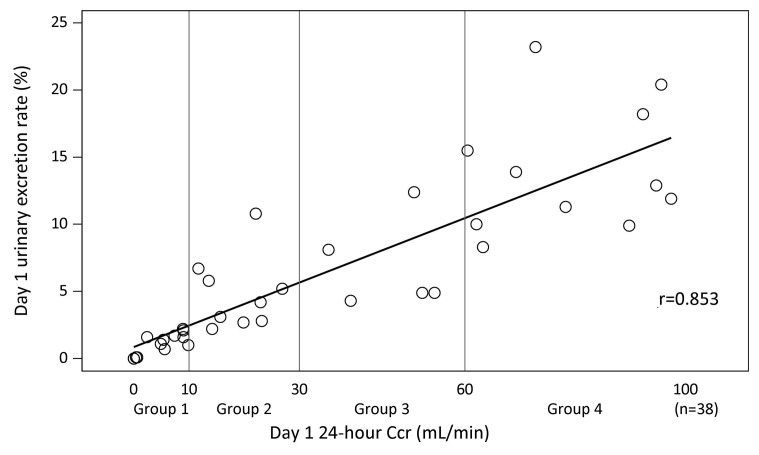
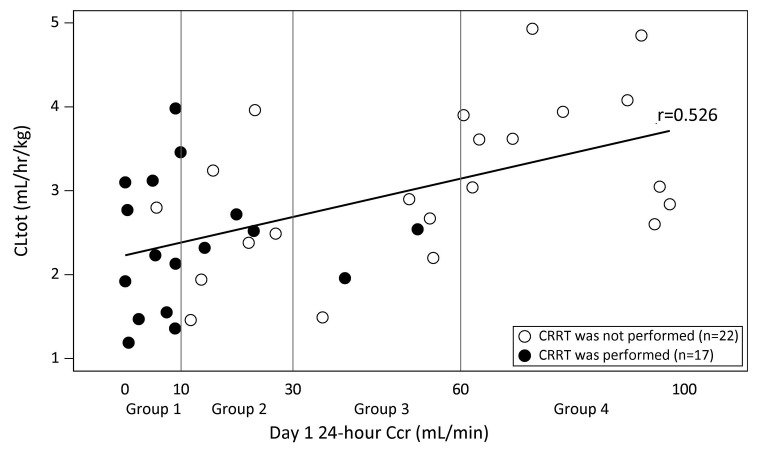
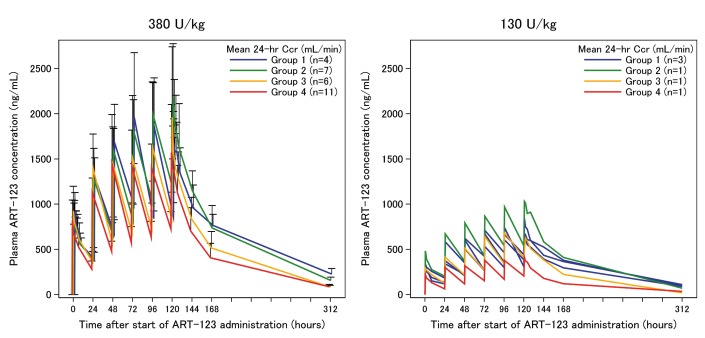
Recombinant human soluble thrombomodulin (ART-123) is a novel anticoagulant for patients with disseminated intravascular coagulation (DIC). It is widely used in clinical settings throughout Japan. Furthermore, a global Phase 3 study is currently being conducted. In healthy subjects, ART-123 is excreted mainly via the kidneys. Therefore, ART-123 dose decrease was recommended in DIC patients with severe renal dysfunction. However, the pharmacokinetics of ART-123 in DIC patients with severe acute renal dysfunction has not been elucidated. In an open-label, multicentre, prospective, clinical pharmacological study, we investigated the pharmacokinetics and safety of ART-123 upon repeated administration to DIC patients. ART-123 was administered to patients at a dose of 130 or 380 U/kg/day for six consecutive days. Plasma concentrations of ART-123 were measured at 21 time points until eight days after the final administration. Urinary excretion rates during the first 24 hours (h) were calculated. Patient renal functions were evaluated by measuring 24-h creatinine clearance (Ccr). Forty-three patients were enrolled in the present study. The urinary excretion rates of ART-123 correlated closely with 24-h Ccr. Total body clearance of ART-123 was also weakly related with 24-h Ccr. However, the plasma concentrations of ART-123 were not considerably different among patients with different renal function. Two patients had subcutaneous haemorrhage as an adverse event related to ART-123. In conclusion, plasma concentrations of ART-123 may not be different among patients with different renal functions. ART-123 was well tolerated in these patients.
重组人可溶性血栓调节蛋白(ART-123)是一种用于弥散性血管内凝血(DIC)患者的新型抗凝剂。它在日本各地的临床环境中广泛使用。此外,一项全球3期研究目前正在进行。在健康受试者中,ART-123主要通过肾脏排泄。因此,对于严重肾功能不全的DIC患者,建议降低ART-123剂量。然而,ART-123在严重急性肾功能不全的DIC患者中的药代动力学尚未阐明。在一项开放标签、多中心、前瞻性临床药理学研究中,我们调查了ART-123重复给药于DIC患者后的药代动力学和安全性。以130或380 U/kg/天的剂量连续6天给患者施用ART-总清除率也与24小时肌酐清除率(Ccr)呈弱相关。然而,不同肾功能患者的ART-123血浆浓度没有显著差异。两名患者出现皮下出血,这是与ART-123相关的不良事件。总之,不同肾功能患者的ART-123血浆浓度可能没有差异。这些患者对ART-123耐受性良好。