Miconi Thomas
The Neurosciences Institute, California, United States.
Elife. 2017 Feb 23;6:e20899. doi: 10.7554/eLife.20899.
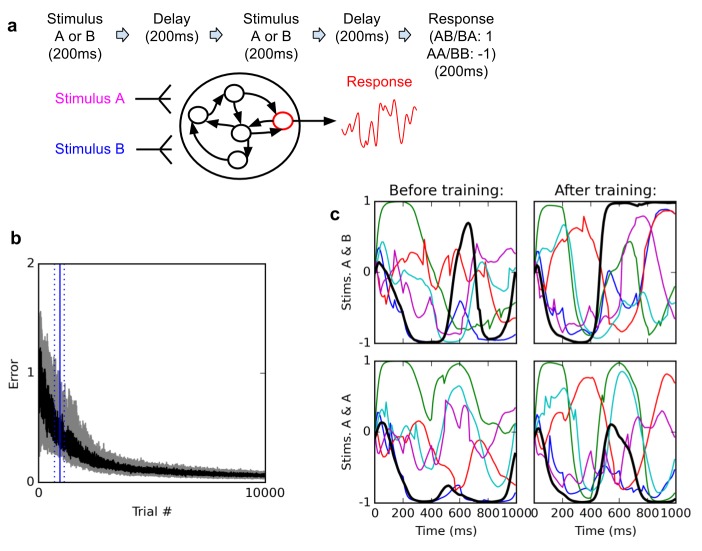
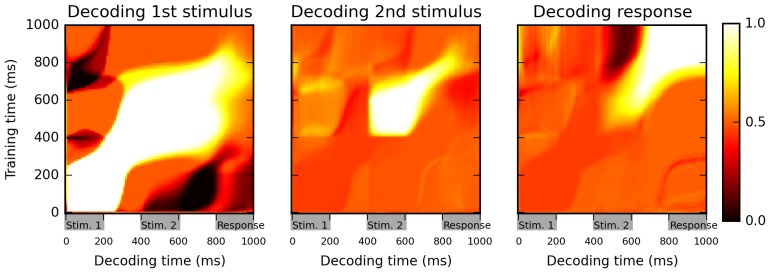
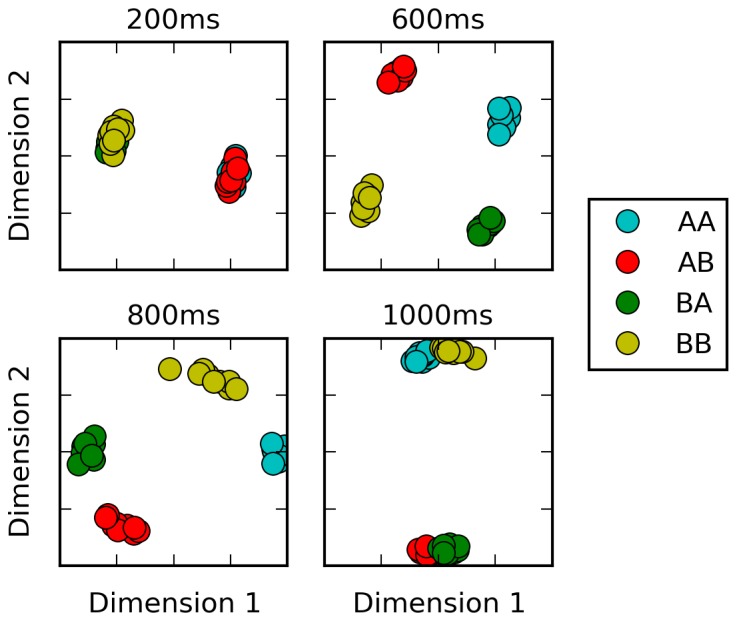
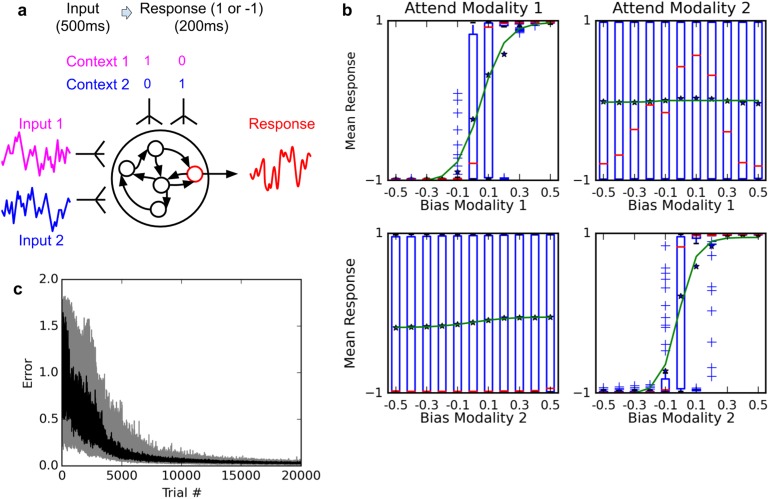
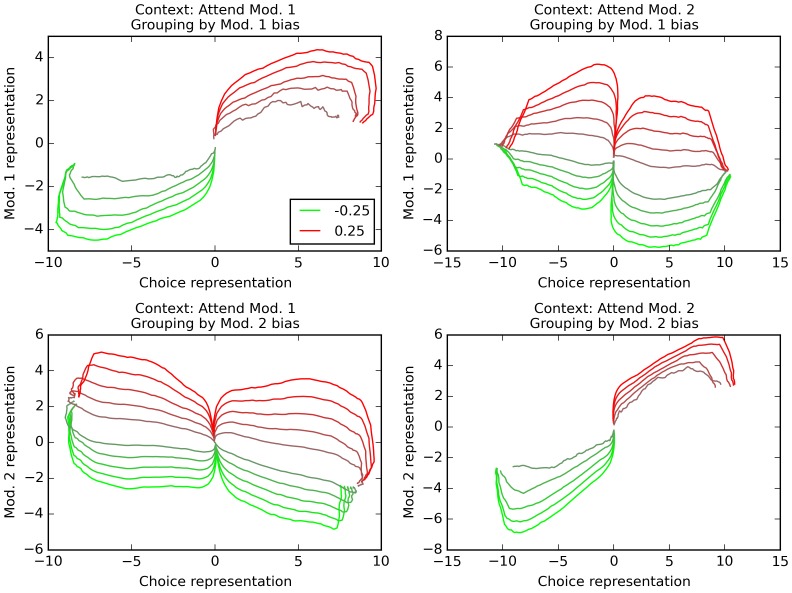
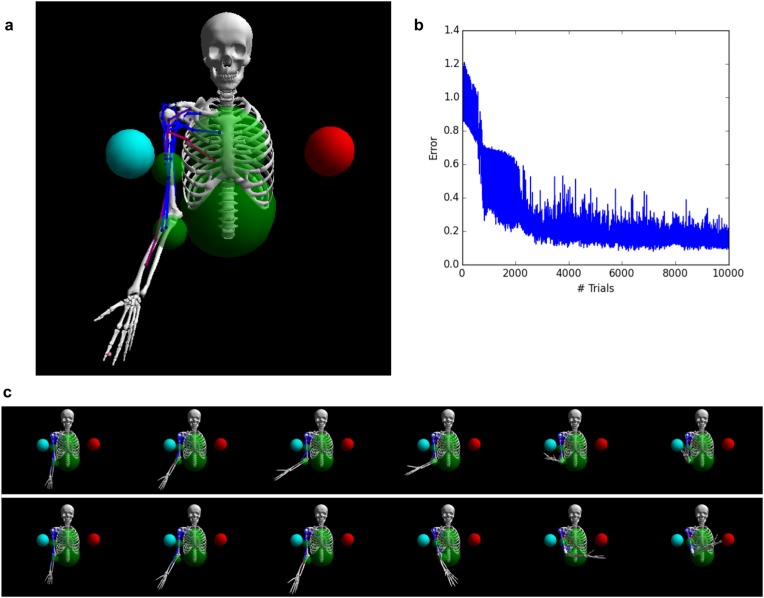
Neural activity during cognitive tasks exhibits complex dynamics that flexibly encode task-relevant variables. Chaotic recurrent networks, which spontaneously generate rich dynamics, have been proposed as a model of cortical computation during cognitive tasks. However, existing methods for training these networks are either biologically implausible, and/or require a continuous, real-time error signal to guide learning. Here we show that a biologically plausible learning rule can train such recurrent networks, guided solely by delayed, phasic rewards at the end of each trial. Networks endowed with this learning rule can successfully learn nontrivial tasks requiring flexible (context-dependent) associations, memory maintenance, nonlinear mixed selectivities, and coordination among multiple outputs. The resulting networks replicate complex dynamics previously observed in animal cortex, such as dynamic encoding of task features and selective integration of sensory inputs. We conclude that recurrent neural networks offer a plausible model of cortical dynamics during both learning and performance of flexible behavior.
认知任务期间的神经活动表现出复杂的动力学,能够灵活地编码与任务相关的变量。混沌递归网络能够自发地产生丰富的动力学,已被提议作为认知任务期间皮质计算的一种模型。然而,现有的训练这些网络的方法要么在生物学上不合理,和/或需要连续的实时误差信号来指导学习。在这里,我们表明一种生物学上合理的学习规则可以训练这样的递归网络,仅由每个试验结束时的延迟、阶段性奖励来引导。赋予这种学习规则的网络能够成功学习需要灵活(依赖于上下文)关联、记忆维持、非线性混合选择性以及多个输出之间协调的重要任务。由此产生的网络复制了先前在动物皮质中观察到的复杂动力学,例如任务特征的动态编码和感觉输入的选择性整合。我们得出结论,递归神经网络为灵活行为的学习和执行过程中的皮质动力学提供了一个合理的模型。