Zhong Cheng, Feng Jun, Lin Xiangjin, Bao Qi
Department of Orthopaedic, First Affiliated Hospital, School of Medicine, Zhejiang University, Hangzhou, People's Republic of China.
Department of Molecular and Medical Pharmacology, University of California, Los Angeles, CA.
Int J Nanomedicine. 2017 Feb 13;12:1215-1226. doi: 10.2147/IJN.S124040. eCollection 2017.
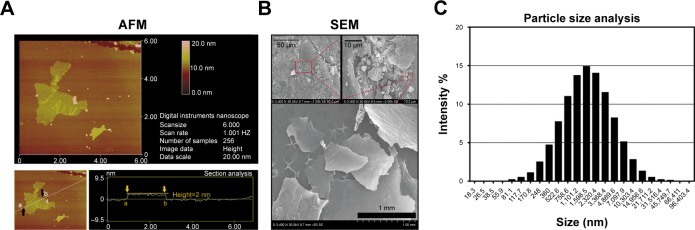
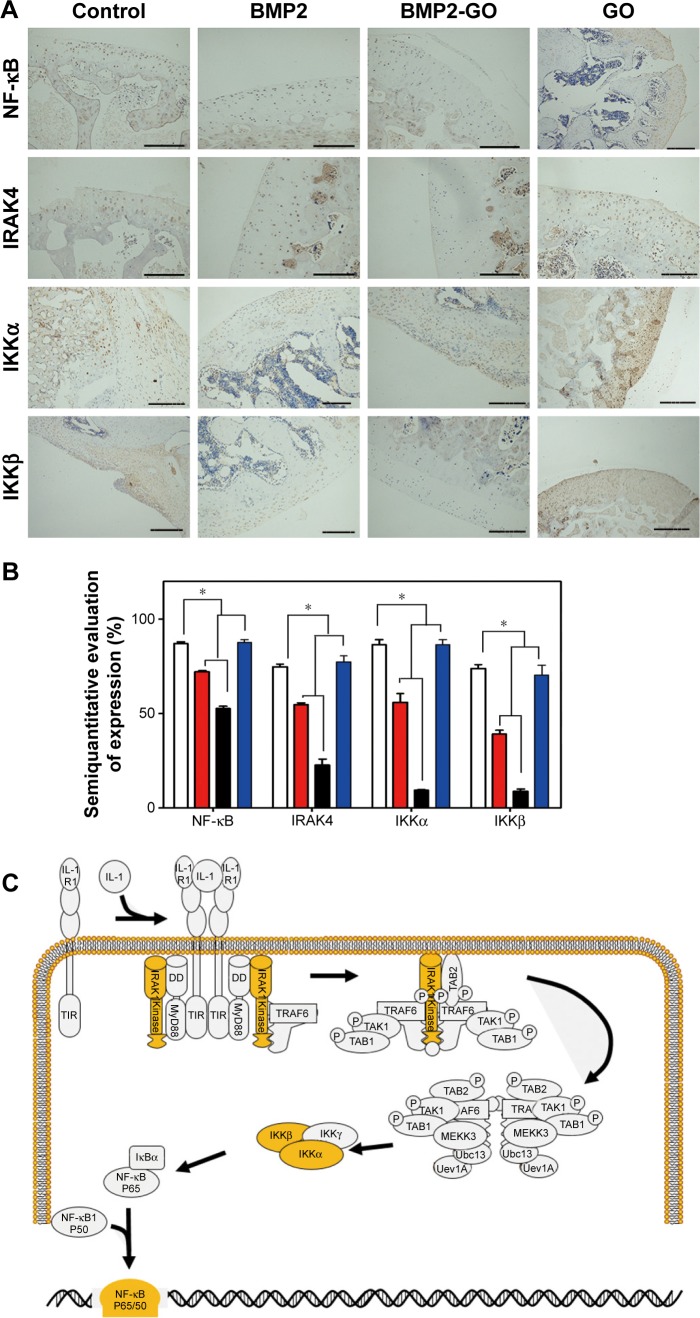
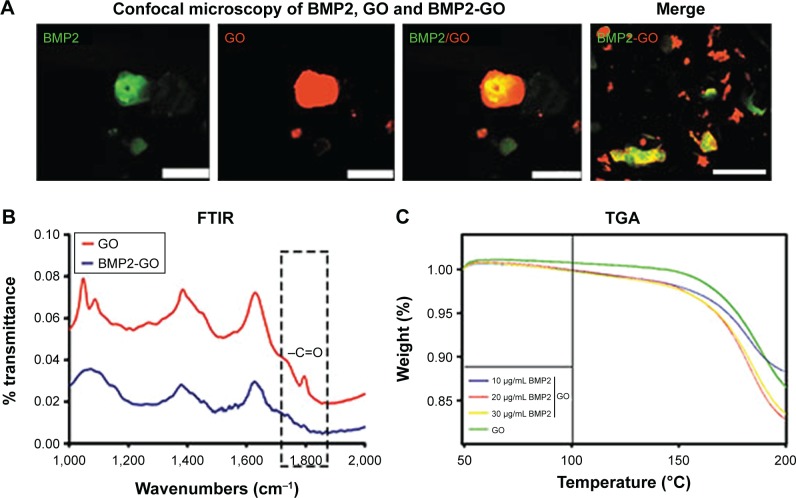
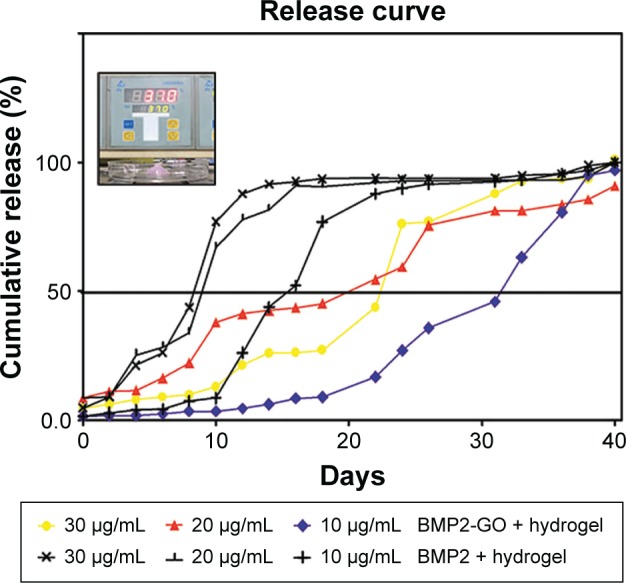
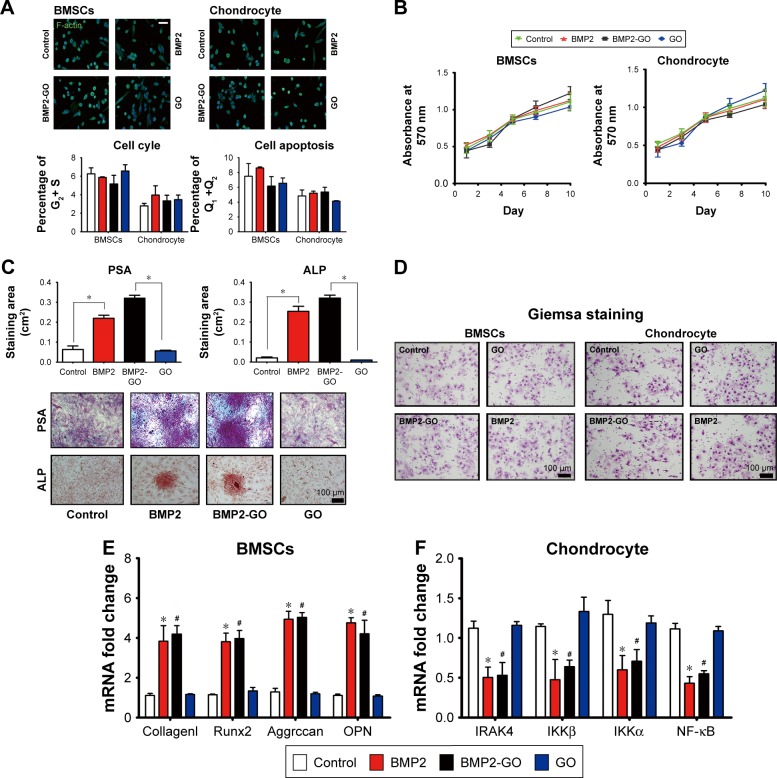
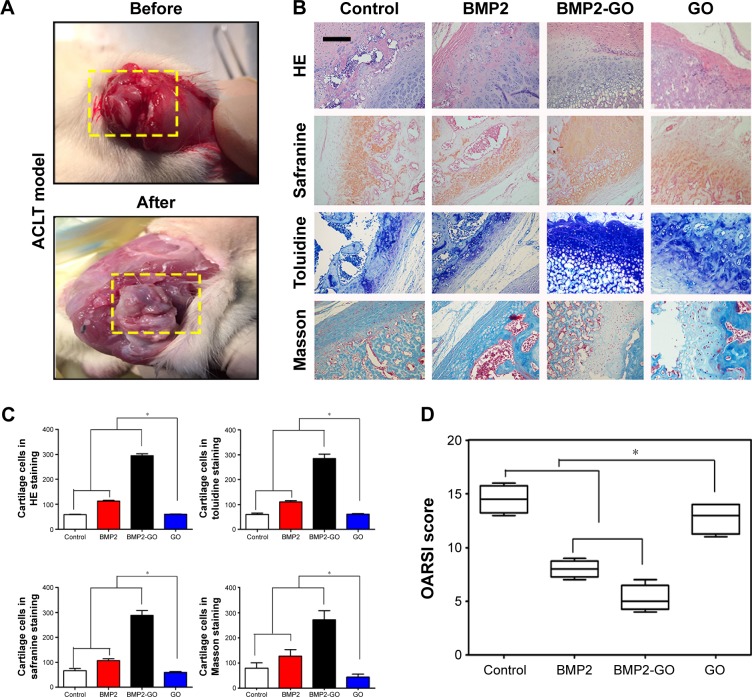
Graphene oxide (GO) has been used as a delivery vehicle for small molecule drugs and nucleotides. To further investigate GO as a smart biomaterial for the controlled release of cargo molecules, we hypothesized that GO may be an appropriate delivery vehicle because it releases bone morphogenetic protein 2 (BMP2). GO characterization indicated that the size distribution of the GO flakes ranged from 81.1 nm to 45,749.7 nm, with an approximate thickness of 2 nm. After BMP2 adsorption onto GO, Fourier-transformed infrared spectroscopy (FTIR) and thermal gravimetric analysis were performed. Compared to GO, BMP2-GO did not induce significant changes in the characteristics of the materials. GO continuously released BMP2 for at least 40 days. Bone marrow stem cells (BMSCs) and chondrocytes were treated with BMP2-GO in interleukin-1 media and assessed in terms of cell viability, flow cytometric characterization, and expression of particular mRNA. Compared to GO, BMP2-GO did not induce any significant changes in biocompatibility. We treated osteoarthritic rats with BMP2 and BMP2-GO, which showed significant differences in Osteoarthritis Research Society International (OARSI) scores (<0.05). Quantitative assessment revealed significant differences compared to that using BMP2 and BMP2-GO (<0.05). These findings indicate that GO may be potentially used to control the release of carrier materials. The combination of BMP2 and GO slowed the progression of NF-κB-activated degenerative changes in osteoarthritis. Therefore, we infer that our BMP2-GO strategy could alleviate the NF-κB pathway by inducing continuous BMP2 release.
氧化石墨烯(GO)已被用作小分子药物和核苷酸的递送载体。为了进一步研究GO作为一种用于控制货物分子释放的智能生物材料,我们推测GO可能是一种合适的递送载体,因为它能释放骨形态发生蛋白2(BMP2)。GO表征表明,GO薄片的尺寸分布范围为81.1nm至45749.7nm,厚度约为2nm。BMP2吸附到GO上后,进行了傅里叶变换红外光谱(FTIR)和热重分析。与GO相比,BMP2-GO并未引起材料特性的显著变化。GO持续释放BMP2至少40天。在白细胞介素-1培养基中用BMP2-GO处理骨髓干细胞(BMSCs)和软骨细胞,并从细胞活力、流式细胞术表征和特定mRNA表达方面进行评估。与GO相比,BMP2-GO在生物相容性方面未引起任何显著变化。我们用BMP2和BMP2-GO治疗骨关节炎大鼠,它们在国际骨关节炎研究学会(OARSI)评分上显示出显著差异(<0.05)。定量评估显示,与使用BMP2和BMP2-GO相比存在显著差异(<0.05)。这些发现表明,GO可能潜在地用于控制载体材料的释放。BMP2与GO的组合减缓了骨关节炎中NF-κB激活的退行性变化的进展。因此,我们推断我们的BMP2-GO策略可以通过诱导BMP2持续释放来减轻NF-κB途径。