Shah Rupal L, Huang Yu, Guggenheim Jeremy A, Williams Cathy
School of Optometry and Vision Sciences, Cardiff University, Cardiff, United Kingdom.
School of Optometry and Vision Sciences, Cardiff University, Cardiff, United Kingdom 2School of Optometry, Hong Kong Polytechnic University, Kowloon, Hong Kong.
Invest Ophthalmol Vis Sci. 2017 Feb 1;58(2):1158-1166. doi: 10.1167/iovs.16-20894.
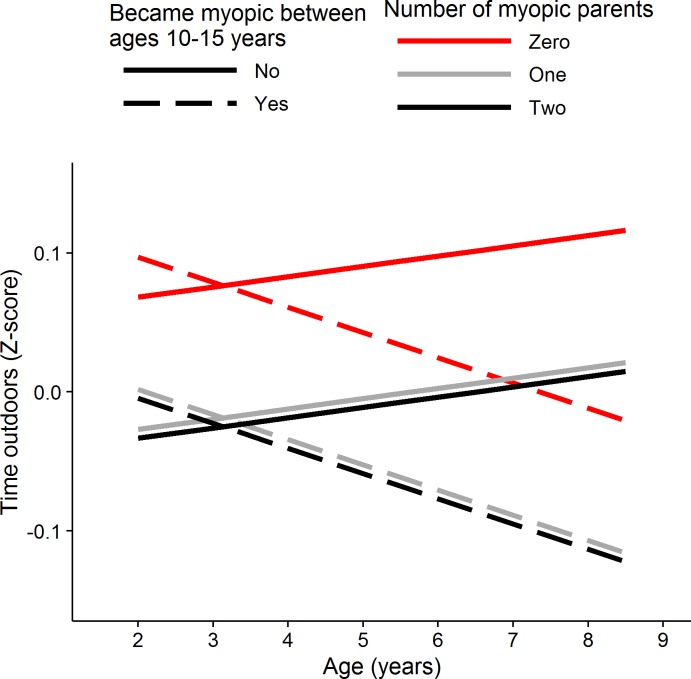
Time outdoors during childhood is negatively associated with incident myopia. Consequently, additional time outdoors has been suggested as a public health intervention to reduce the prevalence of myopia. We investigated whether there were specific ages during early childhood when the time outdoors versus incident myopia association was strongest.
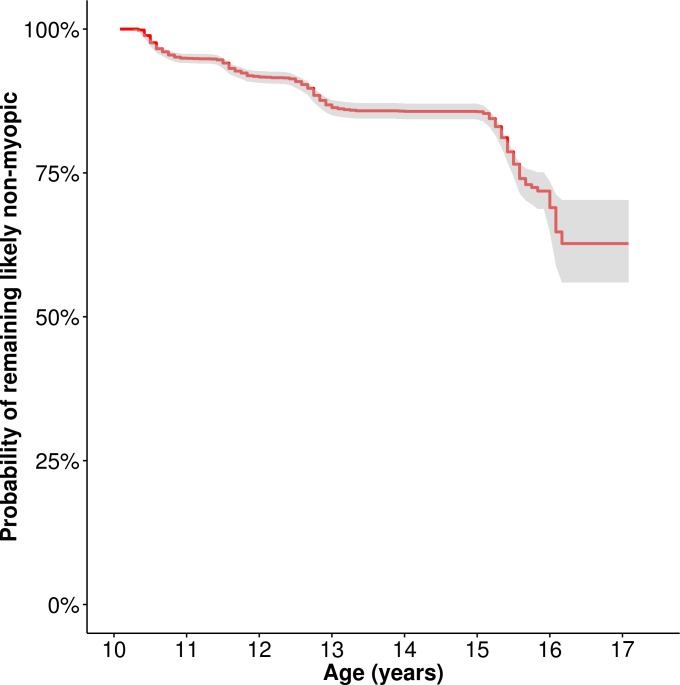
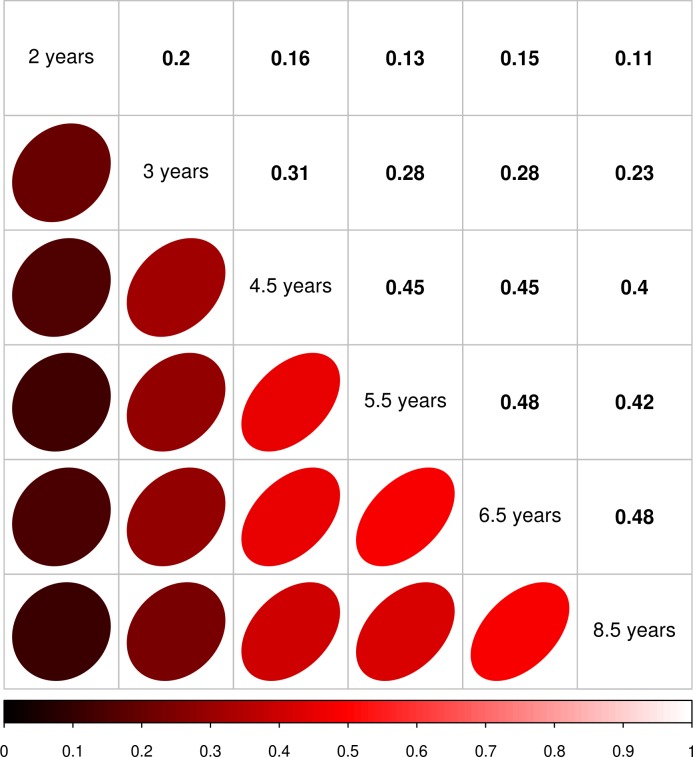
Children participating in the Avon Longitudinal Study of Parents and Children (ALSPAC) were studied from age 2 to 15 years. Parentally reported time outdoors and time spent reading were assessed longitudinally in early childhood (ages 2, 3, 4, 5, 7, and 9 years). Noncycloplegic autorefraction was carried out longitudinally in later childhood (ages 10, 11, 12, and 15 years). Information was available for 2833 participants. Cox proportional hazards regression was used to test for association between time outdoors and incident myopia.
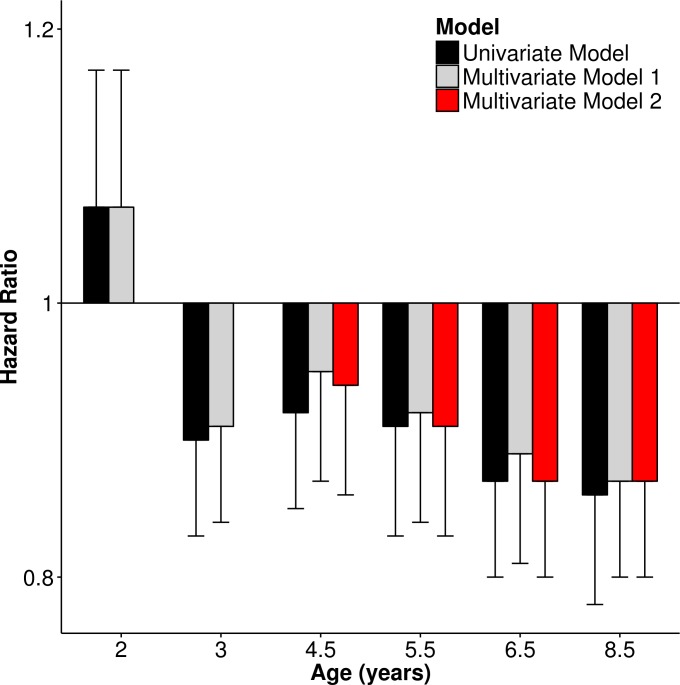
From 3 years of age onward, greater time outdoors was associated with a reduced risk of incident myopia. The hazard ratio for myopia changed progressively from 0.90 (95% CI 0.83-0.98, P = 0.012) at age 3 years, to 0.86 (95% CI 0.78-0.93, P = 0.001) at age 9 years, for each additional SD of time spent outdoors per day. These associations were independent of two major risk factors for myopia: time reading and number of myopic parents.
Additional time spent outdoors across the 3 to 9 years age range was associated with a reduced incidence of myopia between ages 10 and 15 years. There was a trend for the association to increase toward the older end of the 3 to 9 years range.
儿童期户外活动时间与近视发生率呈负相关。因此,增加户外活动时间被提议作为一项公共卫生干预措施,以降低近视患病率。我们调查了幼儿期是否存在特定年龄,在此期间户外活动时间与近视发生率之间的关联最为强烈。
对参与阿冯父母与儿童纵向研究(ALSPAC)的儿童进行了从2岁至15岁的研究。在幼儿期(2岁、3岁、4岁、5岁、7岁和9岁)纵向评估父母报告的户外活动时间和阅读时间。在儿童后期(10岁、11岁、12岁和15岁)纵向进行非散瞳验光。共有2833名参与者的数据可用。采用Cox比例风险回归来检验户外活动时间与近视发生率之间的关联。
从3岁起,户外活动时间越长,近视发生率风险越低。对于每天户外活动时间每增加一个标准差,近视的风险比从3岁时的0.90(95%可信区间0.83 - 0.98,P = 0.012)逐渐变化到9岁时的0.86(95%可信区间0.78 - 0.93,P = 0.001)。这些关联独立于近视的两个主要危险因素:阅读时间和近视父母的数量。
3至9岁年龄段增加户外活动时间与10至15岁之间近视发病率降低相关。在3至9岁年龄段接近较大年龄端时,这种关联有增强的趋势。