Ottman Noora, Reunanen Justus, Meijerink Marjolein, Pietilä Taija E, Kainulainen Veera, Klievink Judith, Huuskonen Laura, Aalvink Steven, Skurnik Mikael, Boeren Sjef, Satokari Reetta, Mercenier Annick, Palva Airi, Smidt Hauke, de Vos Willem M, Belzer Clara
Laboratory of Microbiology, Wageningen University, Wageningen, The Netherlands.
Department of Biosciences, University of Helsinki, Helsinki, Finland.
PLoS One. 2017 Mar 1;12(3):e0173004. doi: 10.1371/journal.pone.0173004. eCollection 2017.
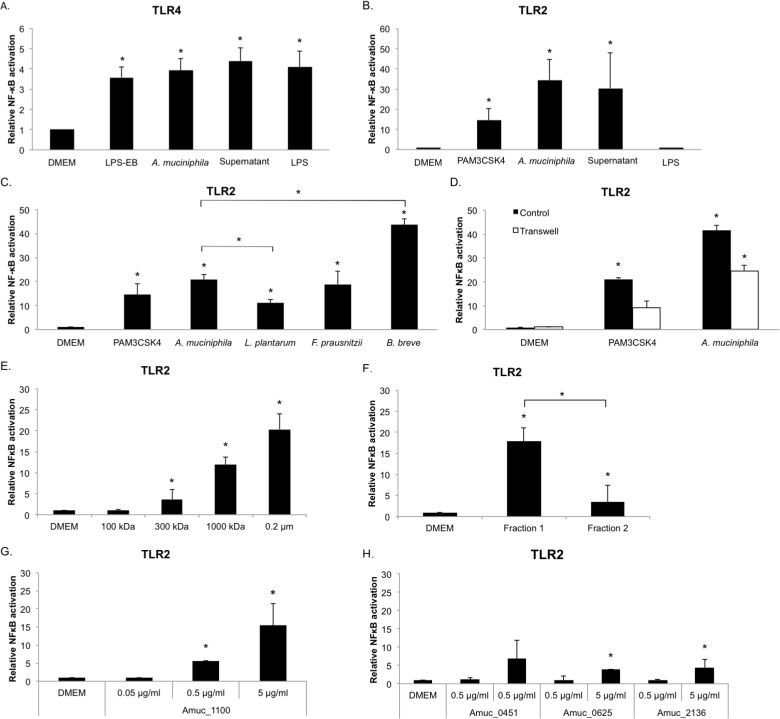
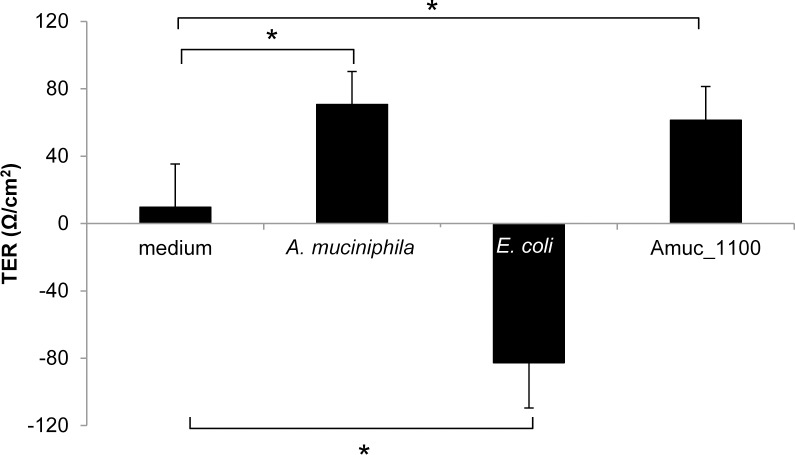
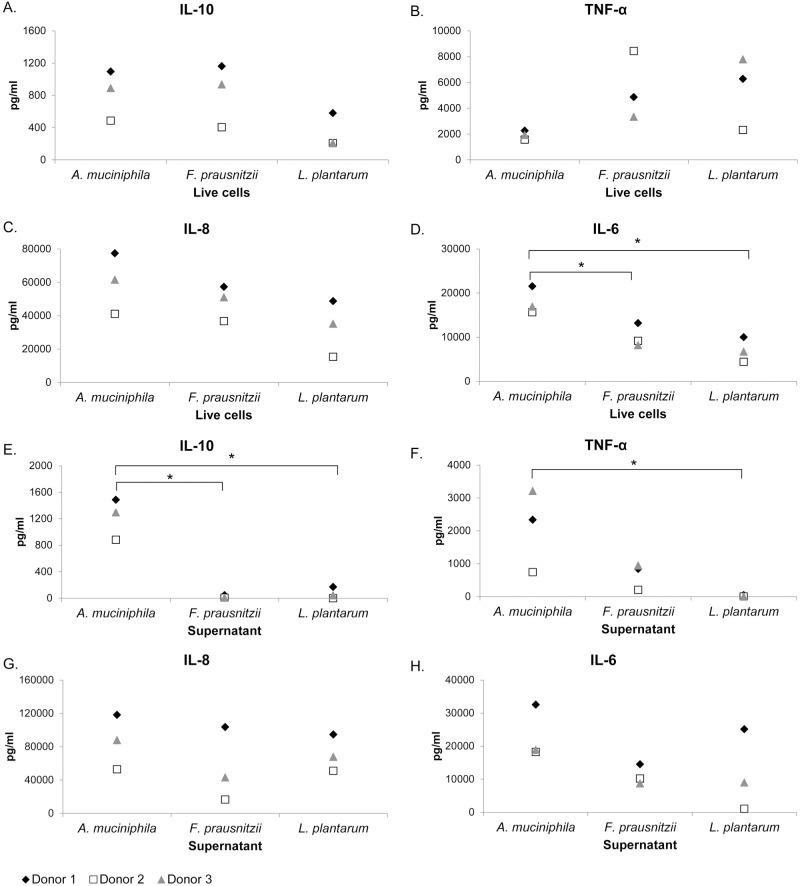
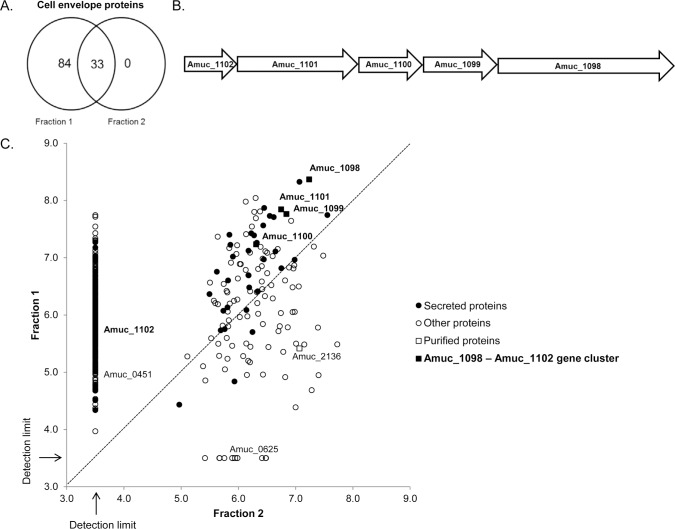
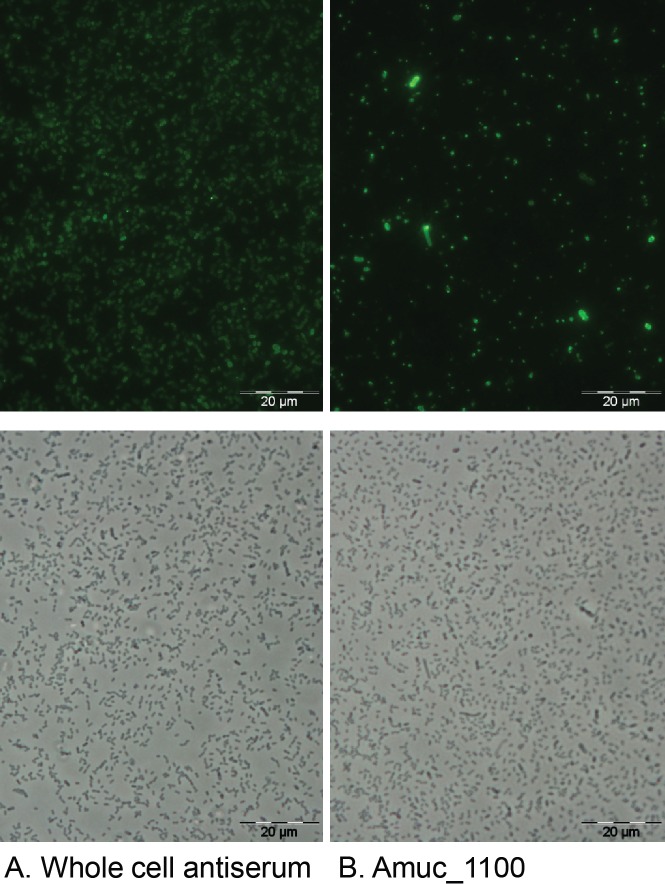
Gut barrier function is key in maintaining a balanced response between the host and its microbiome. The microbiota can modulate changes in gut barrier as well as metabolic and inflammatory responses. This highly complex system involves numerous microbiota-derived factors. The gut symbiont Akkermansia muciniphila is positively correlated with a lean phenotype, reduced body weight gain, amelioration of metabolic responses and restoration of gut barrier function by modulation of mucus layer thickness. However, the molecular mechanisms behind its metabolic and immunological regulatory properties are unexplored. Herein, we identify a highly abundant outer membrane pili-like protein of A. muciniphila MucT that is directly involved in immune regulation and enhancement of trans-epithelial resistance. The purified Amuc_1100 protein and enrichments containing all its associated proteins induced production of specific cytokines through activation of Toll-like receptor (TLR) 2 and TLR4. This mainly leads to high levels of IL-10 similar to those induced by the other beneficial immune suppressive microorganisms such as Faecalibacterium prausnitzii A2-165 and Lactobacillus plantarum WCFS1. Together these results indicate that outer membrane protein composition and particularly the newly identified highly abundant pili-like protein Amuc_1100 of A. muciniphila are involved in host immunological homeostasis at the gut mucosa, and improvement of gut barrier function.
肠道屏障功能对于维持宿主与其微生物群之间的平衡反应至关重要。微生物群可调节肠道屏障的变化以及代谢和炎症反应。这个高度复杂的系统涉及众多微生物衍生因子。肠道共生菌嗜黏蛋白阿克曼氏菌与瘦型表型、体重增加减少、代谢反应改善以及通过调节黏液层厚度恢复肠道屏障功能呈正相关。然而,其代谢和免疫调节特性背后的分子机制尚未得到探索。在此,我们鉴定出嗜黏蛋白阿克曼氏菌MucT一种高度丰富的外膜菌毛样蛋白,它直接参与免疫调节并增强跨上皮电阻。纯化的Amuc_1100蛋白及其包含所有相关蛋白的富集物通过激活Toll样受体(TLR)2和TLR4诱导特定细胞因子的产生。这主要导致高水平的IL-10,类似于由其他有益的免疫抑制微生物如普拉梭菌A2-165和植物乳杆菌WCFS1诱导产生的IL-10。这些结果共同表明,外膜蛋白组成,特别是新鉴定出的嗜黏蛋白阿克曼氏菌高度丰富的菌毛样蛋白Amuc_1100,参与肠道黏膜处的宿主免疫稳态以及肠道屏障功能的改善。