Wu Sanmao, Yu Chunwu, Zhang Wentao, Yin Shaolin, Chen Yong, Feng Yu, Ma Wentao
College of Life Sciences, Wuhan University, Wuhan, P.R.China.
College of Computer Sciences, Wuhan University, Wuhan, P.R.China.
PLoS One. 2017 Mar 2;12(3):e0172702. doi: 10.1371/journal.pone.0172702. eCollection 2017.
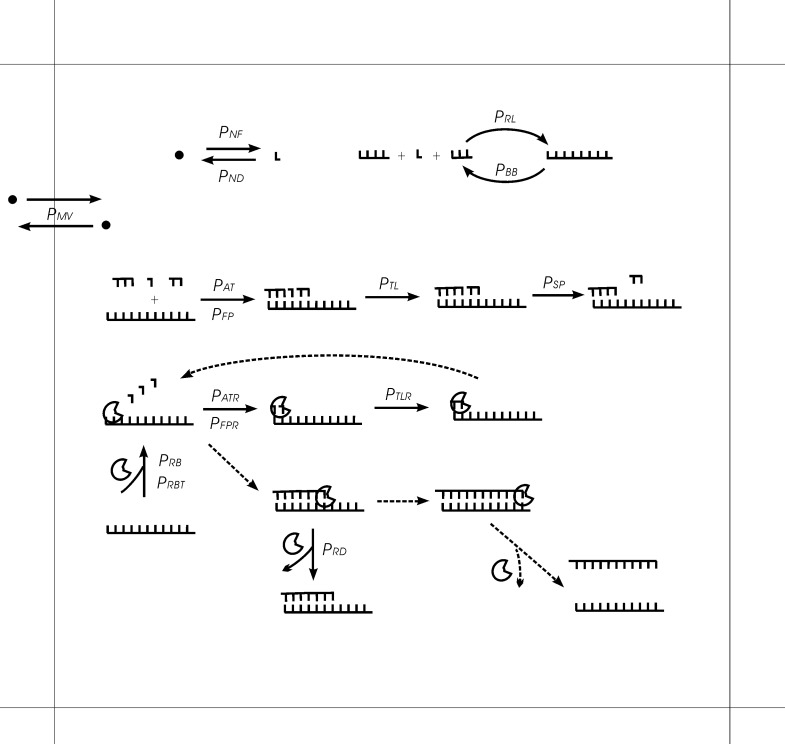
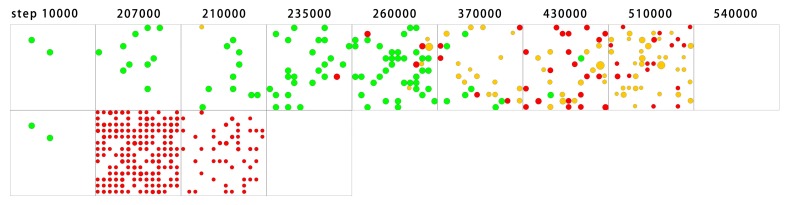
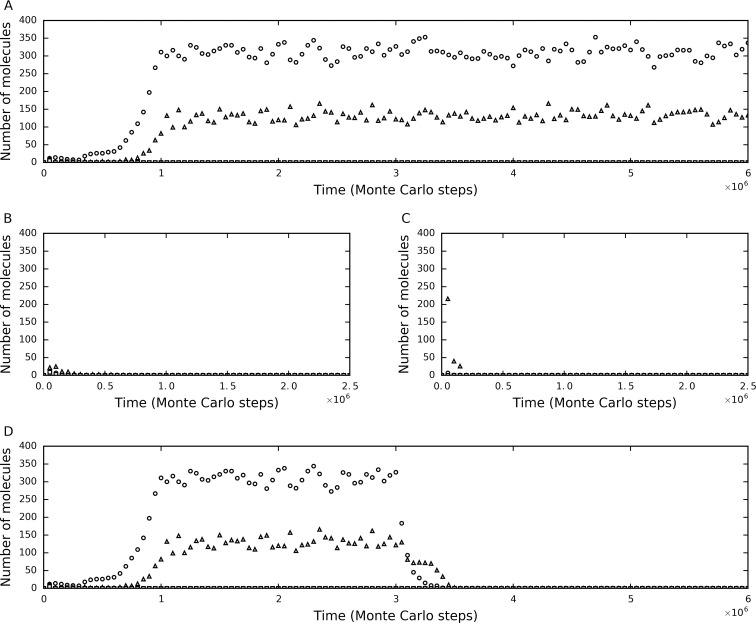
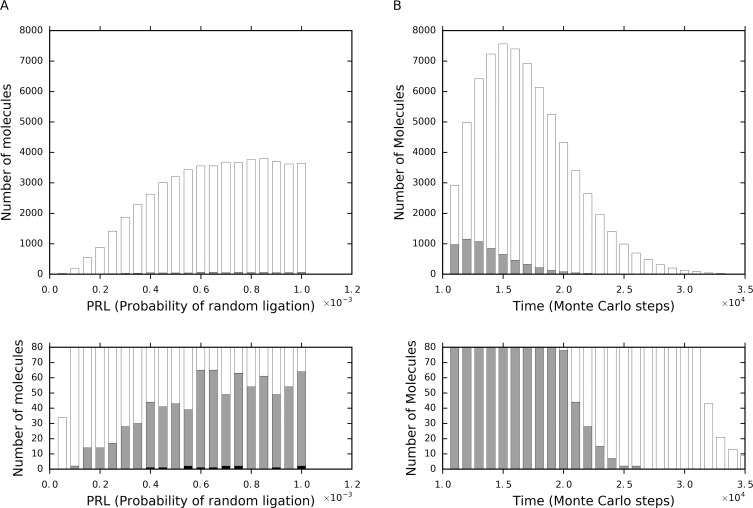
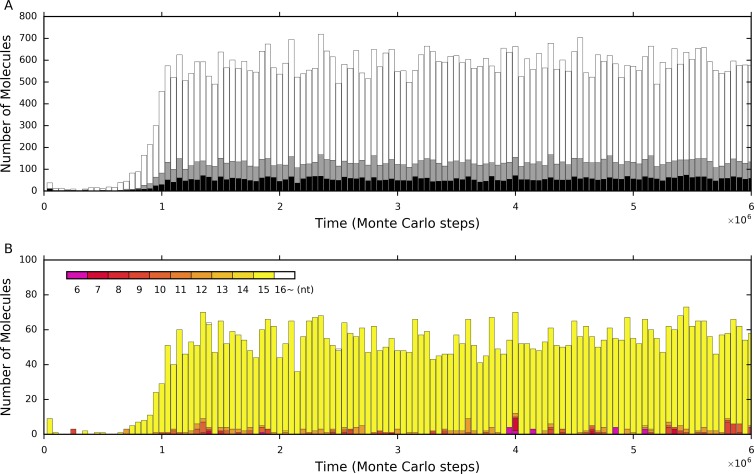
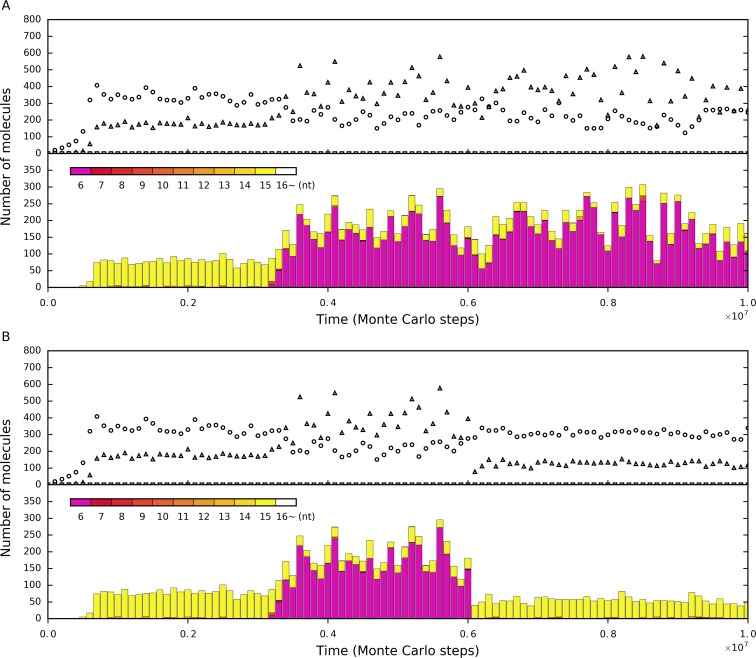
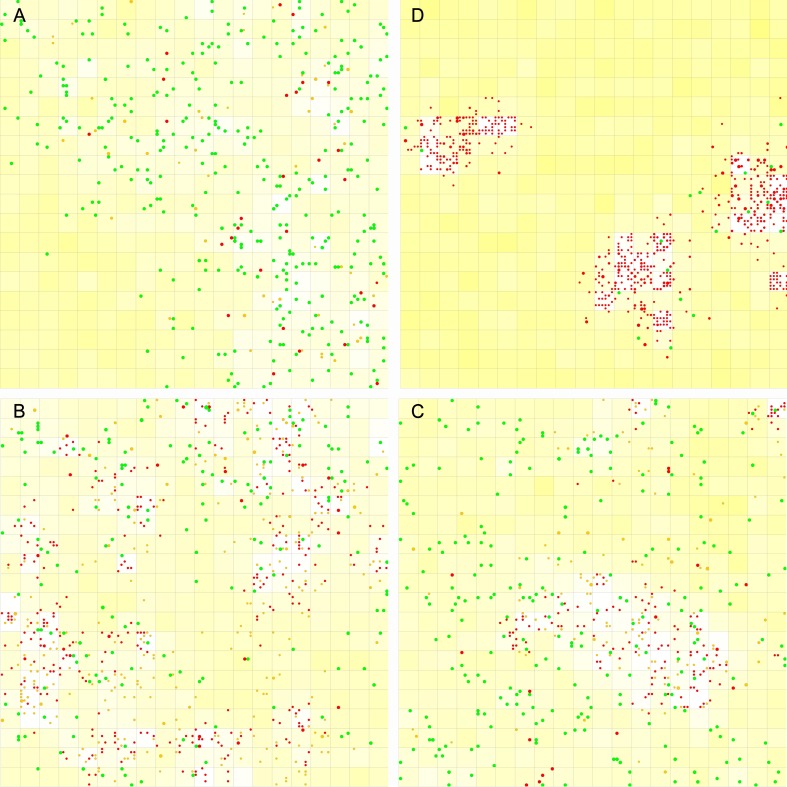
The idea that life may have started with an "RNA world" is attractive. Wherein, a crucial event (perhaps at the very beginning of the scenario) should have been the emergence of a ribozyme that catalyzes its own replication, i.e., an RNA replicase. Although now there is experimental evidence supporting the chemical feasibility of such a ribozyme, the evolutionary dynamics of how the replicase could overcome the "parasite" problem (because other RNAs may also exploit this ribozyme) and thrive, as described in the scenario, remains unclear. It has been suggested that spatial limitation may have been important for the replicase to confront parasites. However, more studies showed that such a mechanism is not sufficient when this ribozyme's altruistic trait is taken into full consideration. "Tag mechanism", which means labeling the replicase with a short subsequence for recognition in replication, may be a further mechanism supporting the thriving of the replicase. However, because parasites may also "equip" themselves with the tag, it is far from clear whether the tag mechanism could take effect. Here, we conducted a computer simulation using a Monte-Carlo model to study the evolutionary dynamics surrounding the development of a tag-driven (polymerase-type) RNA replicase in the RNA world. We concluded that (1) with the tag mechanism the replicase could resist the parasites and become prosperous, (2) the main underlying reason should be that the parasitic molecules, especially those strong parasites, are more difficult to appear in the tag-driven system, and (3) the tag mechanism has a synergic effect with the spatial limitation mechanism-while the former provides "time" for the replicase to escape from parasites, the latter provides "space" for the replicase to escape. Notably, tags may readily serve as "control handles", and once the tag mechanism was exploited, the evolution towards complex life may have been much easier.
生命可能起源于“RNA世界”这一观点很有吸引力。在这个设想中,一个关键事件(或许就在该设想的最开始)应该是一种能催化自身复制的核酶的出现,即一种RNA复制酶。尽管现在有实验证据支持这种核酶在化学上的可行性,但如该设想所述,复制酶如何克服“寄生”问题(因为其他RNA也可能利用这种核酶)并蓬勃发展的进化动力学仍不清楚。有人提出空间限制可能对复制酶对抗寄生虫很重要。然而,更多研究表明,当充分考虑这种核酶的利他特性时,这种机制并不充分。“标签机制”,即给复制酶标记一个短序列以便在复制过程中识别,可能是支持复制酶蓬勃发展的另一种机制。然而,由于寄生虫也可能给自己“配备”这个标签,标签机制是否能起作用还远不清楚。在此,我们使用蒙特卡洛模型进行了计算机模拟,以研究RNA世界中标签驱动(聚合酶型)RNA复制酶发展的进化动力学。我们得出结论:(1)有了标签机制,复制酶能够抵御寄生虫并繁荣发展;(2)主要的潜在原因应该是寄生分子,尤其是那些强寄生虫,在标签驱动系统中更难出现;(3)标签机制与空间限制机制有协同作用——前者为复制酶逃离寄生虫提供“时间”,后者为复制酶逃离提供“空间”。值得注意的是,标签可能很容易充当“控制手柄”,一旦利用了标签机制,向复杂生命的进化可能就容易得多。