
破裂性腹主动脉瘤腔内修复术后早期和晚期移植物肢体近端移位并导致1b型内漏
Early and Late Endograft Limb Proximal Migration with Resulting Type 1b Endoleak following an EVAR for Ruptured AAA.
作者信息
Jasinski Patrick T, Adrahtas Demetri, Monastiriotis Spyridon, Tassiopoulos Apostolos K
机构信息
Division of Vascular and Endovascular Surgery, Stony Brook Medicine, Stony Brook, NY, USA.
出版信息
Case Rep Vasc Med. 2017;2017:4931282. doi: 10.1155/2017/4931282. Epub 2017 Jan 31.
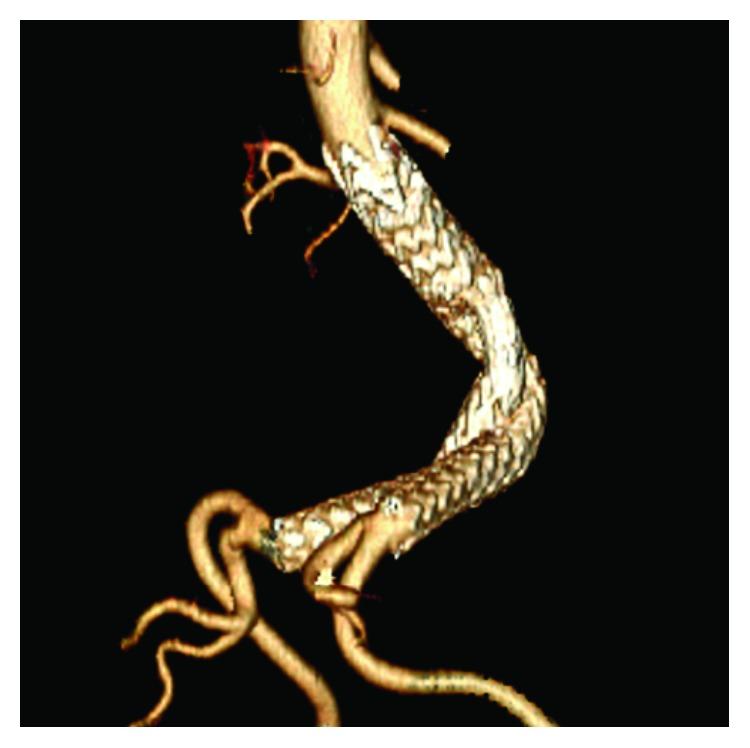
. Seal zone failure after EVAR leads to type 1 endoleaks and increases the risk of delayed aortic rupture. Type 1b endoleaks, although rare, represent a true risk to the repair. . We report the case of a 65-year-old female who underwent emergent endovascular repair for a ruptured infrarenal abdominal aortic aneurysm and developed bilateral type 1b endoleaks following proximal migration of both endograft limbs. The right-side failure was diagnosed within 48 hours from the initial repair and the left side at the 1-year follow-up. Both sides were successfully treated with endovascular techniques. A review of the literature with an analysis of potential risk factors is also reported. . For patients undergoing EVAR for ruptured AAA and with noncalcified iliac arteries, more aggressive oversizing of the iliac limbs is recommended to prevents distal seal zone failures.
腔内修复术后的封闭区失效会导致Ⅰ型内漏,并增加主动脉延迟破裂的风险。1b型内漏虽然罕见,但对修复构成真正风险。我们报告了一例65岁女性患者,该患者因破裂性肾下腹主动脉瘤接受了急诊血管腔内修复术,在两个移植物肢体近端移位后出现双侧1b型内漏。右侧失效在初次修复后48小时内诊断出来,左侧在1年随访时诊断出来。两侧均通过血管腔内技术成功治疗。本文还报道了对文献的回顾及潜在风险因素分析。对于因破裂性腹主动脉瘤接受腔内修复术且髂动脉无钙化的患者,建议更积极地加大髂部肢体的尺寸,以防止远端封闭区失效。


 Zotero 插件