Corral-Vázquez C, Aguilar-Quesada R, Catalina P, Lucena-Aguilar G, Ligero G, Miranda B, Carrillo-Ávila J A
Andalusian Public Health System Biobank, Avenida Del Conocimiento S/N, 18016, Granada, Spain.
Cell Tissue Bank. 2017 Jun;18(2):271-280. doi: 10.1007/s10561-017-9617-6. Epub 2017 Mar 2.
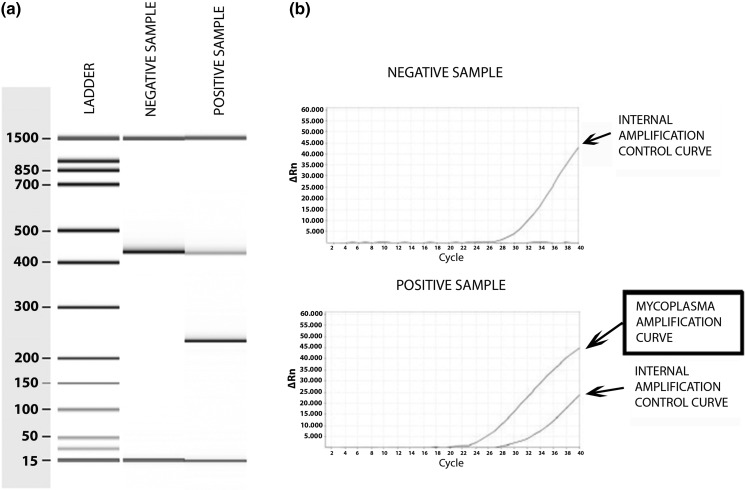
Establishment of continuous cell lines from human normal and tumor tissues is an extended and useful methodology for molecular characterization of cancer pathophysiology and drug development in research laboratories. The exchange of these cell lines between different labs is a common practice that can compromise assays reliability due to contamination with microorganism such as mycoplasma or cells from different flasks that compromise experiment reproducibility and reliability. Great proportions of cell lines are contaminated with mycoplasma and/or are replaced by cells derived for a different origin during processing or distribution process. The scientific community has underestimated this problem and thousand of research experiment has been done with cell lines that are incorrectly identified and wrong scientific conclusions have been published. Regular contamination and authentication tests are necessary in order to avoid negative consequences of widespread misidentified and contaminated cell lines. Cell banks generate, store and distribute cell lines for research, being mandatory a consistent and continuous quality program. Methods implementation for guaranteeing both, the absence of mycoplasma and authentication in the supplied cell lines, has been performed in the Andalusian Health System Biobank. Specifically, precise results were obtained using real time PCR detection for mycoplasma and 10 STRs identification by capillary electrophoresis for cell line authentication. Advantages and disadvantages of these protocols are discussed.
从人正常组织和肿瘤组织建立连续细胞系,是研究实验室中对癌症病理生理学进行分子特征分析和药物研发的一种广泛且有用的方法。在不同实验室之间交换这些细胞系是一种常见做法,但这可能会因支原体等微生物污染或来自不同培养瓶的细胞污染而影响检测的可靠性,进而损害实验的可重复性和可靠性。很大比例的细胞系被支原体污染和/或在处理或分发过程中被源自不同来源的细胞所取代。科学界低估了这个问题,已经用错误识别的细胞系进行了数千项研究实验,并发表了错误的科学结论。为避免广泛存在的错误识别和污染细胞系带来的负面影响,定期进行污染和鉴定测试是必要的。细胞库为研究生成、储存和分发细胞系,因此必须有一个持续一致的质量计划。安达卢西亚卫生系统生物银行已实施相关方法,以确保所提供的细胞系既无支原体污染又经过鉴定。具体而言,使用实时PCR检测支原体以及通过毛细管电泳进行10个短串联重复序列(STR)鉴定来进行细胞系鉴定,获得了精确结果。本文讨论了这些方案的优缺点。