Amdahl Hanne, Haapasalo Karita, Tan Lydia, Meri Taru, Kuusela Pentti I, van Strijp Jos A, Rooijakkers Suzan, Jokiranta T Sakari
Department of Bacteriology and Immunology, Haartman Institute, University of Helsinki, Helsinki, Finland.
Research Programs Unit, Immunobiology, University of Helsinki, Helsinki, Finland.
PLoS One. 2017 Mar 8;12(3):e0172675. doi: 10.1371/journal.pone.0172675. eCollection 2017.
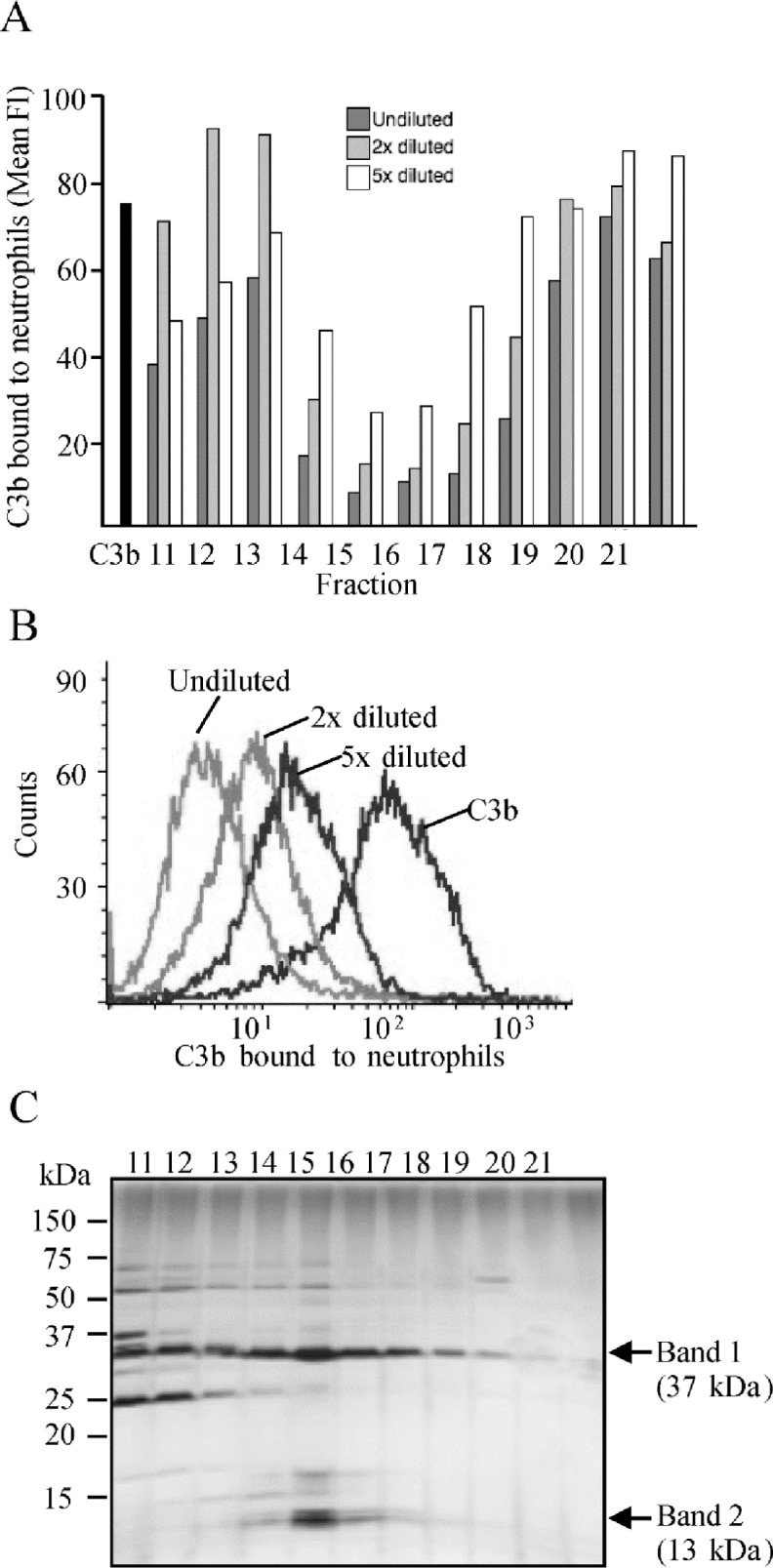
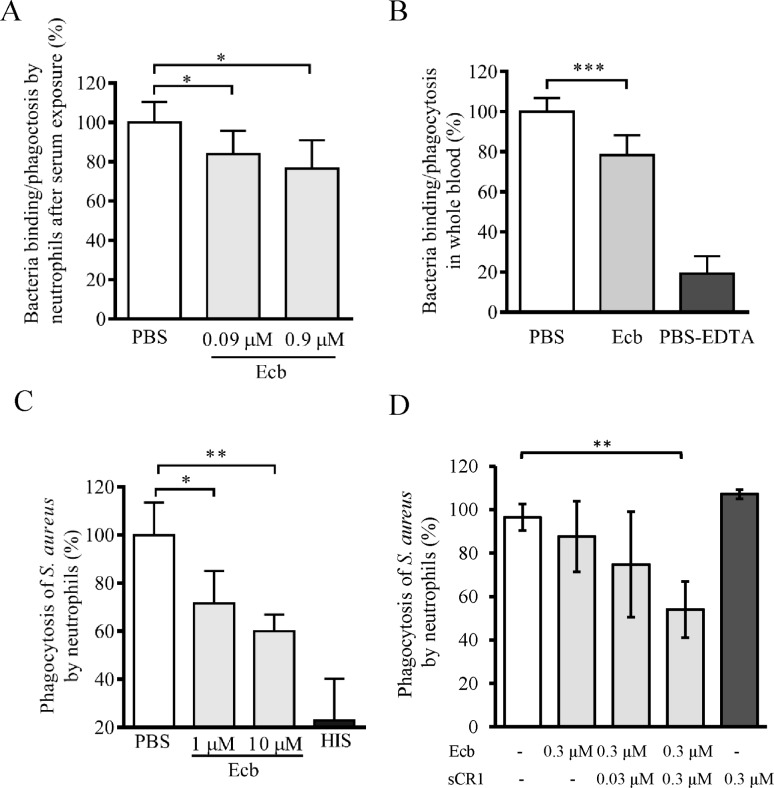
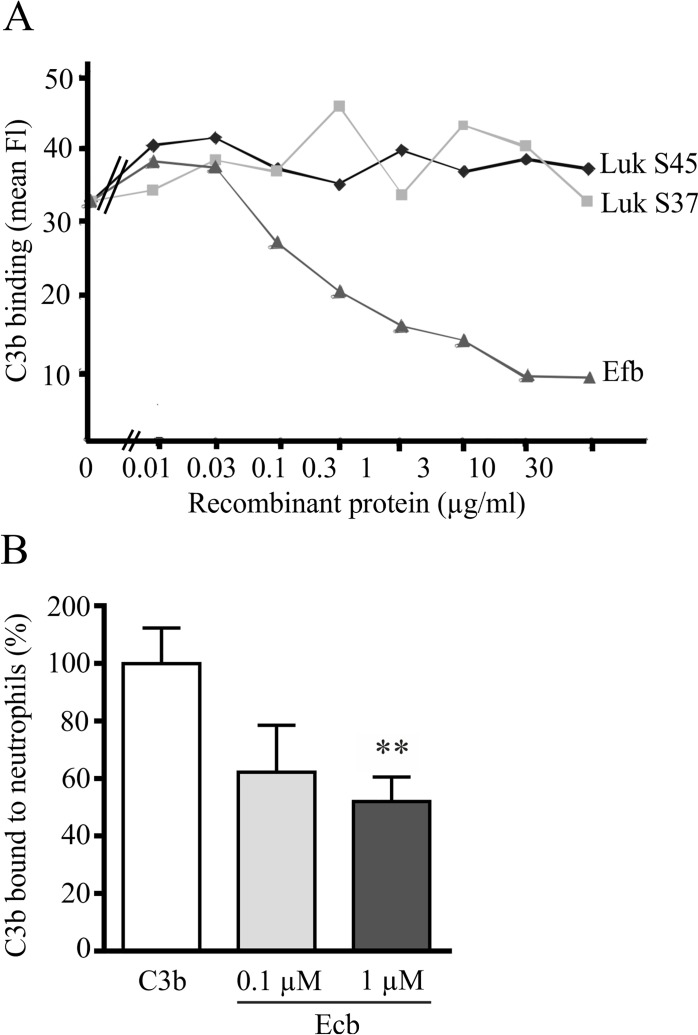
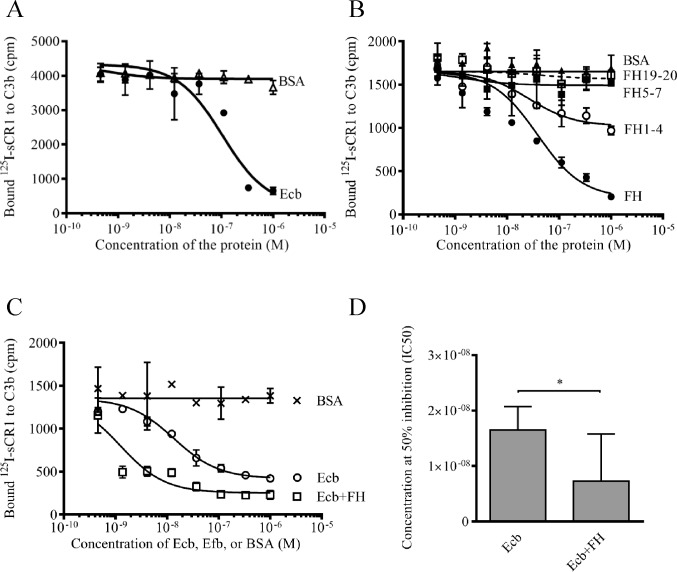
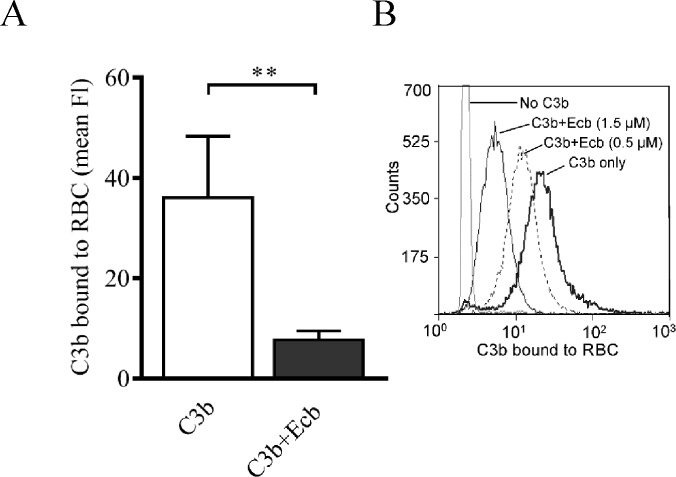
Staphyloccus aureus is a major human pathogen leading frequently to sepsis and soft tissue infections with abscesses. Multiple virulence factors including several immune modulating molecules contribute to its survival in the host. When S. aureus invades the human body, one of the first line defenses is the complement system, which opsonizes the bacteria with C3b and attract neutrophils by release of chemotactic peptides. Neutrophils express Complement receptor-1 [CR1, CD35) that interacts with the C3b-opsonized particles and thereby plays an important role in pathogen recognition by phagocytic cells. In this study we observed that a fraction of S. aureus culture supernatant prevented binding of C3b to neutrophils. This fraction consisted of S. aureus leukocidins and Efb. The C-terminus of Efb is known to bind C3b and shares significant sequence homology to the extracellular complement binding protein [Ecb). Here we show that S. aureus Ecb displays various mechanisms to block bacterial recognition by neutrophils. The presence of Ecb blocked direct interaction between soluble CR1 and C3b and reduced the cofactor activity of CR1 in proteolytic inactivation of C3b. Furthermore, Ecb could dose-dependently prevent recognition of C3b by cell-bound CR1 that lead to impaired phagocytosis of NHS-opsonized S. aureus. Phagocytosis was furthermore reduced in the presence of soluble CR1 [sCR1). These data indicate that the staphylococcal protein Ecb prevents recognition of C3b opsonized bacteria by neutrophil CR1 leading to impaired killing by phagocytosis and thereby contribute to immune evasion of S. aureus.
金黄色葡萄球菌是一种主要的人类病原体,常导致败血症和伴有脓肿的软组织感染。包括几种免疫调节分子在内的多种毒力因子有助于其在宿主体内存活。当金黄色葡萄球菌侵入人体时,第一道防线之一是补体系统,该系统用C3b调理细菌,并通过释放趋化肽吸引中性粒细胞。中性粒细胞表达补体受体-1[CR1,CD35],其与C3b调理的颗粒相互作用,从而在吞噬细胞识别病原体中起重要作用。在本研究中,我们观察到金黄色葡萄球菌培养上清液的一部分可阻止C3b与中性粒细胞结合。该部分由金黄色葡萄球菌杀白细胞素和Efb组成。已知Efb的C末端结合C3b,并且与细胞外补体结合蛋白[Ecb]具有显著的序列同源性。在这里,我们表明金黄色葡萄球菌Ecb表现出多种机制来阻断中性粒细胞对细菌的识别。Ecb的存在阻断了可溶性CR1与C3b之间的直接相互作用,并降低了CR1在C3b蛋白水解失活中的辅因子活性。此外,Ecb可以剂量依赖性地阻止细胞结合的CR1对C3b的识别,这导致对NHS调理的金黄色葡萄球菌的吞噬作用受损。在存在可溶性CR1[sCR1]的情况下,吞噬作用进一步降低。这些数据表明,葡萄球菌蛋白Ecb可阻止中性粒细胞CR1识别C3b调理的细菌,导致吞噬杀伤受损,从而有助于金黄色葡萄球菌的免疫逃逸。