Votintseva Antonina A, Bradley Phelim, Pankhurst Louise, Del Ojo Elias Carlos, Loose Matthew, Nilgiriwala Kayzad, Chatterjee Anirvan, Smith E Grace, Sanderson Nicolas, Walker Timothy M, Morgan Marcus R, Wyllie David H, Walker A Sarah, Peto Tim E A, Crook Derrick W, Iqbal Zamin
Nuffield Department of Clinical Medicine, University of Oxford, John Radcliffe Hospital, Oxford, United Kingdom
Wellcome Trust Centre for Human Genetics, University of Oxford, Oxford, United Kingdom.
J Clin Microbiol. 2017 May;55(5):1285-1298. doi: 10.1128/JCM.02483-16. Epub 2017 Mar 8.
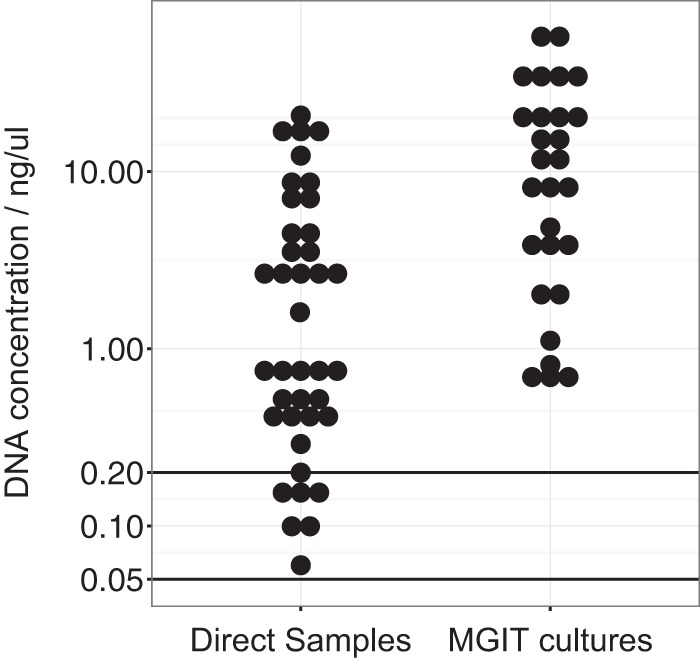
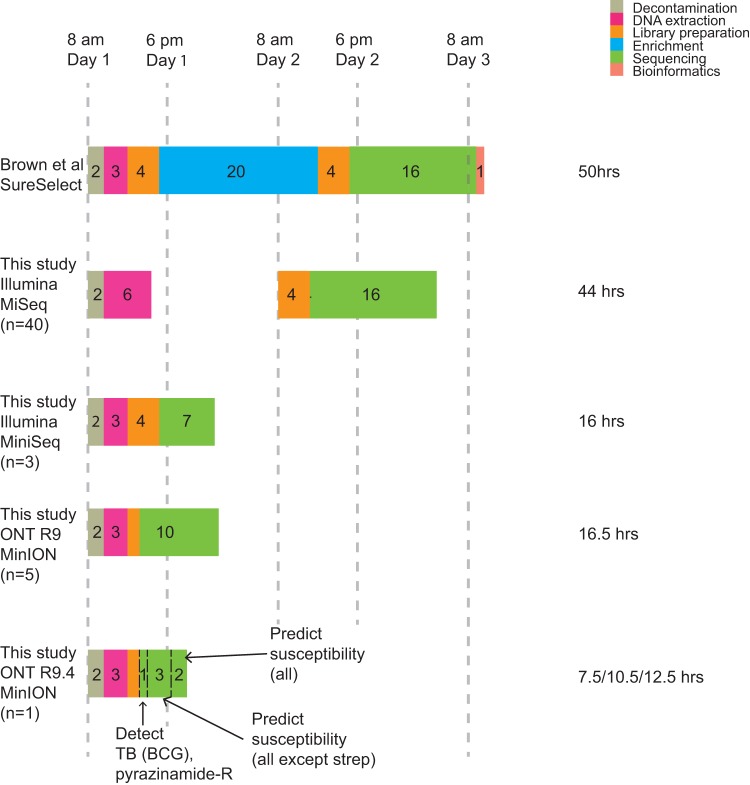
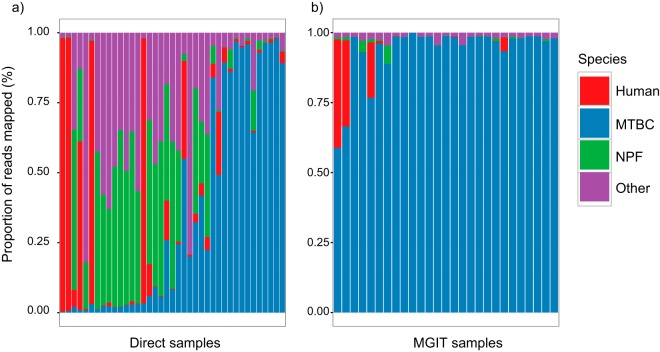
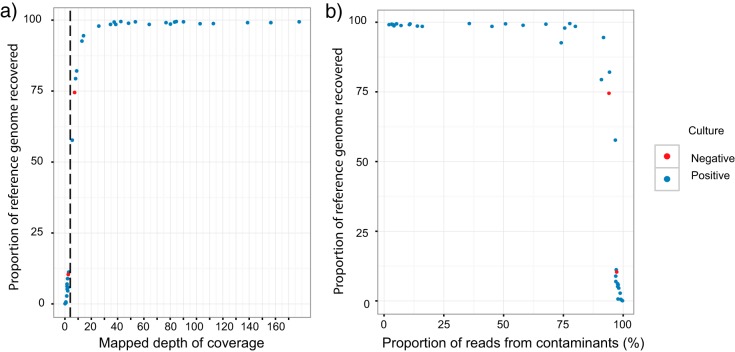
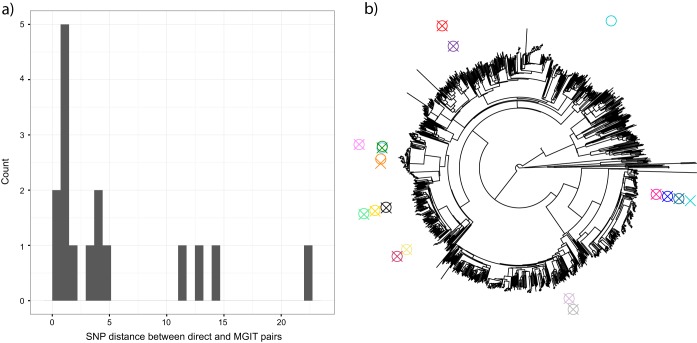
Routine full characterization of is culture based, taking many weeks. Whole-genome sequencing (WGS) can generate antibiotic susceptibility profiles to inform treatment, augmented with strain information for global surveillance; such data could be transformative if provided at or near the point of care. We demonstrate a low-cost method of DNA extraction directly from patient samples for WGS. We initially evaluated the method by using the Illumina MiSeq sequencer (40 smear-positive respiratory samples obtained after routine clinical testing and 27 matched liquid cultures). was identified in all 39 samples from which DNA was successfully extracted. Sufficient data for antibiotic susceptibility prediction were obtained from 24 (62%) samples; all results were concordant with reference laboratory phenotypes. Phylogenetic placement was concordant between direct and cultured samples. With Illumina MiSeq/MiniSeq, the workflow from patient sample to results can be completed in 44/16 h at a reagent cost of £96/£198 per sample. We then employed a nonspecific PCR-based library preparation method for sequencing on an Oxford Nanopore Technologies MinION sequencer. We applied this to cultured strain BCG DNA and to combined culture-negative sputum DNA and BCG DNA. For flow cell version R9.4, the estimated turnaround time from patient to identification of BCG, detection of pyrazinamide resistance, and phylogenetic placement was 7.5 h, with full susceptibility results 5 h later. Antibiotic susceptibility predictions were fully concordant. A critical advantage of MinION is the ability to continue sequencing until sufficient coverage is obtained, providing a potential solution to the problem of variable amounts of DNA in direct samples.
对结核分枝杆菌的常规全面鉴定基于培养,需要数周时间。全基因组测序(WGS)可以生成抗生素敏感性谱以指导治疗,并补充菌株信息用于全球监测;如果在护理点或接近护理点时提供此类数据,可能会带来变革。我们展示了一种直接从患者样本中提取DNA用于WGS的低成本方法。我们最初使用Illumina MiSeq测序仪(40份常规临床检测后获得的涂片阳性呼吸道样本和27份匹配的液体培养物)评估了该方法。在成功提取DNA的所有39个样本中均鉴定出结核分枝杆菌。从24个(62%)样本中获得了足够的抗生素敏感性预测数据;所有结果均与参考实验室表型一致。直接样本和培养样本之间的系统发育定位一致。使用Illumina MiSeq/MiniSeq,从患者样本到结果的工作流程可以在44/16小时内完成,每个样本的试剂成本为96英镑/198英镑。然后,我们采用了一种基于非特异性PCR的文库制备方法,用于在牛津纳米孔技术公司的MinION测序仪上进行测序。我们将其应用于培养的结核分枝杆菌卡介苗菌株DNA以及培养阴性痰DNA和卡介苗DNA的混合物。对于R9.4版本的流动槽,从患者样本到鉴定卡介苗、检测吡嗪酰胺耐药性和系统发育定位的估计周转时间为7.5小时,5小时后获得完整的敏感性结果。抗生素敏感性预测完全一致。MinION的一个关键优势是能够持续测序直至获得足够的覆盖度,为直接样本中结核分枝杆菌DNA量变化的问题提供了潜在的解决方案。