Gajewski Patrick D, Freude Gabriele, Falkenstein Michael
Ageing Research Group, Leibniz Research Centre for Working Environment and Human Factors (IfADo), Technical University of Dortmund Dortmund, Germany.
Federal Institute for Occupational Safety and Health Berlin, Germany.
Front Hum Neurosci. 2017 Feb 22;11:81. doi: 10.3389/fnhum.2017.00081. eCollection 2017.
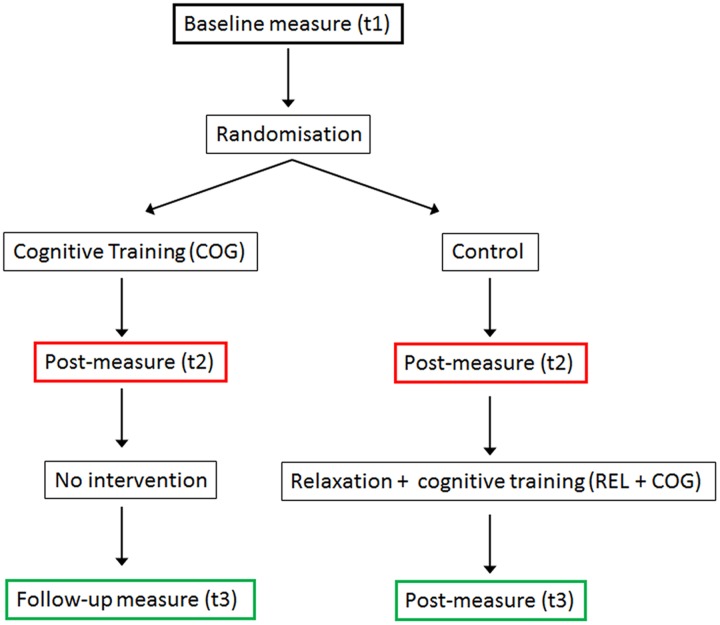
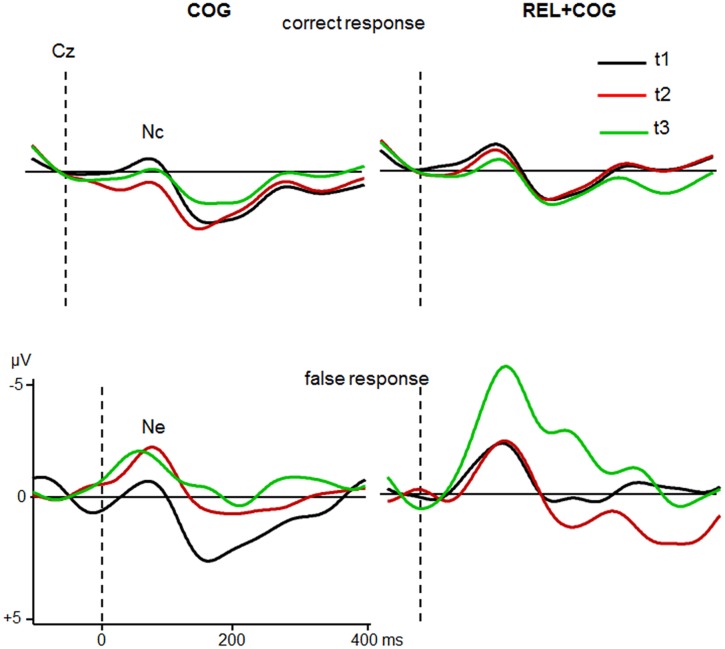
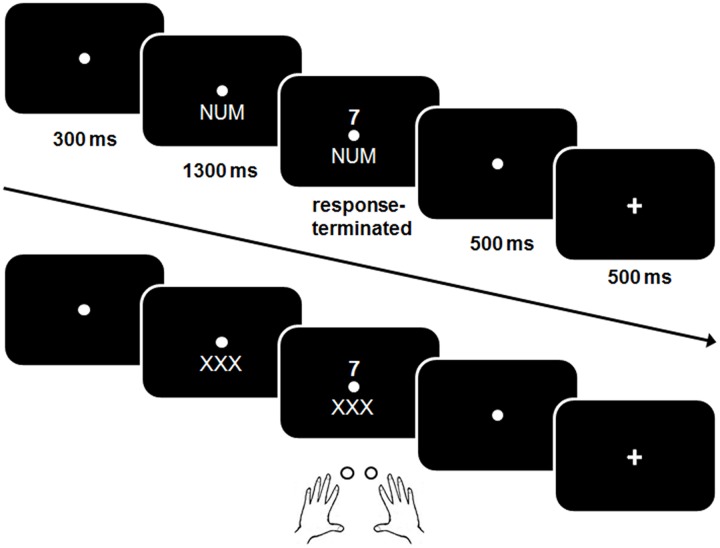
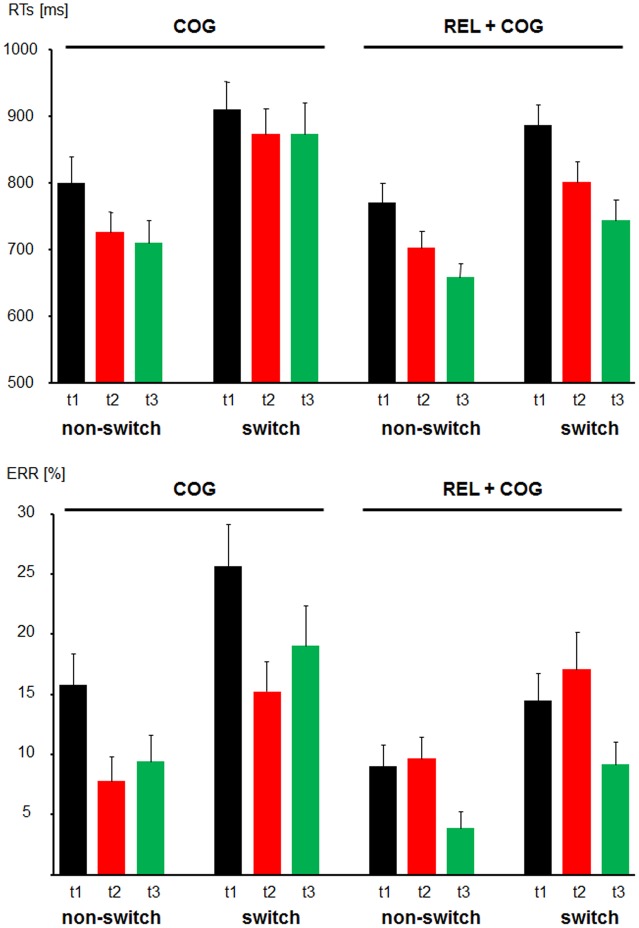
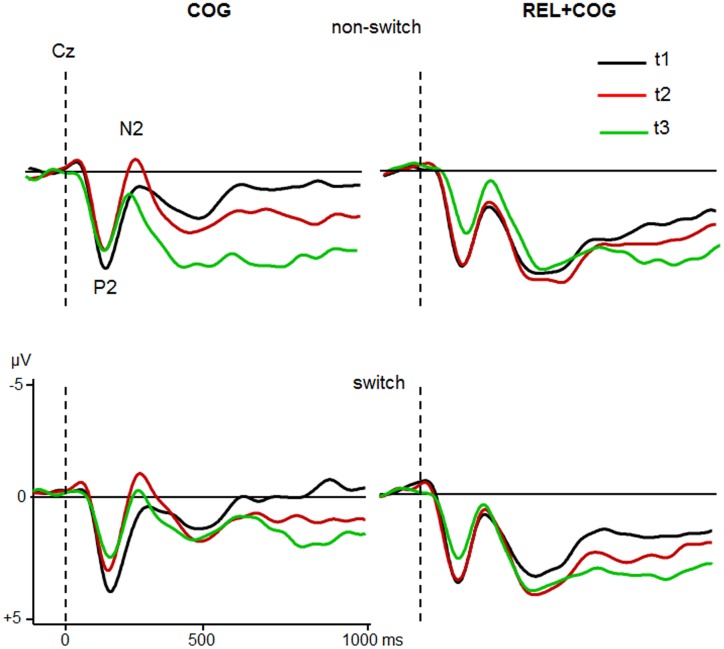
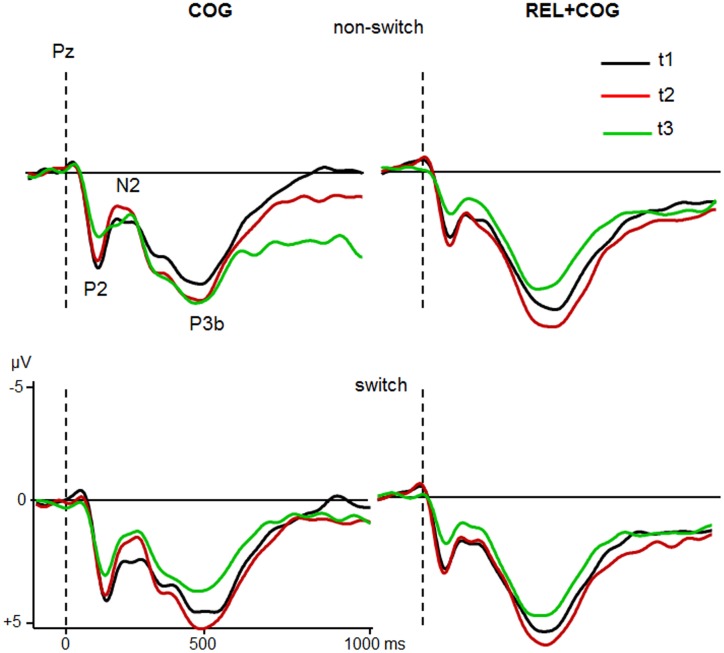
Recently, we reported results of a cross-sectional study investigating executive functions in dependence of aging and type of work. That study showed deficits in performance and electrophysiological activity in middle-aged workers with long-term repetitive and unchallenging work. Based on these findings, we conducted a longitudinal study that aimed at ameliorating these cognitive deficits by means of a trainer-guided cognitive training (CT) in 57 further middle-aged workers with repetitive type of work from the same factory. This study was designed as a randomized controlled trail with pre- (t1), post- (t2), and a 3-month follow-up (t3) measure. The waiting control group was trained between t2 and t3. The training lasted 3 months (20 sessions) and was evaluated with the same task switching paradigm used in the previous cross-sectional study. The CT improved performance in accuracy at the behavioral level and affected the electrophysiological correlates of retrieval of stimulus-response sets (P2), response selection (N2), and error detection (Ne), thus unveiling the neuronal background of the behavioral effects. The same training effects were observed in the waiting control group after CT at t3. Moreover, at t3, most of the behavioral and electrophysiological training-induced changes were found stable. Hence, CT appears to be an important intervention for compensating cognitive deficits in executive functions in middle-aged employees with cognitively unchallenging work.
最近,我们报告了一项横断面研究的结果,该研究调查了执行功能与衰老及工作类型之间的关系。该研究表明,从事长期重复性且缺乏挑战性工作的中年员工在绩效和电生理活动方面存在缺陷。基于这些发现,我们进行了一项纵向研究,旨在通过由训练师指导的认知训练(CT)来改善另外57名来自同一家工厂、从事重复性工作的中年员工的这些认知缺陷。这项研究被设计为一项随机对照试验,采用了前测(t1)、后测(t2)以及3个月随访(t3)的测量方法。等待对照组在t2和t3之间接受训练。训练持续3个月(共20节课程),并使用与之前横断面研究相同的任务切换范式进行评估。认知训练在行为层面提高了准确性方面的表现,并影响了刺激 - 反应集检索(P2)、反应选择(N2)和错误检测(Ne)的电生理相关性,从而揭示了行为效应的神经学背景。在t3对等待对照组进行认知训练后,也观察到了相同的训练效果。此外,在t3时,大多数由训练引起的行为和电生理变化被发现是稳定的。因此,对于从事认知上缺乏挑战性工作的中年员工而言,认知训练似乎是补偿执行功能认知缺陷的一项重要干预措施。