Haseeb Muhammad, Butt Muhammad Farooq, Altaf Tariq, Muzaffar Khalid, Gupta Anil, Jallu Aleena
Department of Orthopaedics, Government Medical College, Jammu, Jammu and Kashmir, Jammu, India.
Department of Orthopaedics, Kokilaben Dhirubhai Ambani Hospital, Mumbai, Maharashtra, India.
Int J Health Sci (Qassim). 2017 Jan-Mar;11(1):1-7.
Fracture fixation has become advanced with the advent of new and custom metal implants for each type of bone/fracture. After union though, the implant ceases to be important and may be removed. Routine removal is advocated by some and opposed by others. Nevertheless, some patients require removal of the hardware because of various implant-related problems. Our study was aimed at identifying the most common causes for implant removal.
To investigate the common indications of orthopedic implant removal surgeries.
Adult patients admitted for implant removal in our department were included in the study. They were operated in the next OT list. They were then followed for an average 4 months for resolutions of symptoms or appearance of new problems.
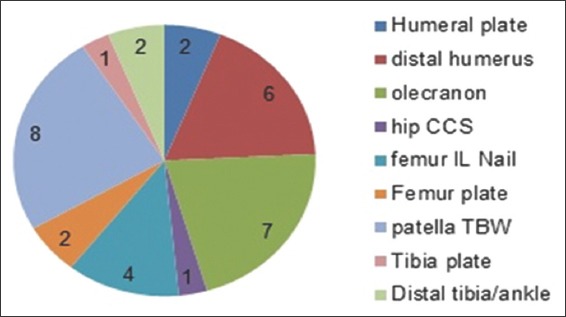
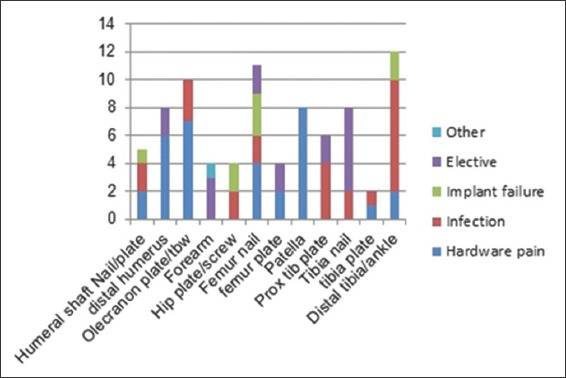
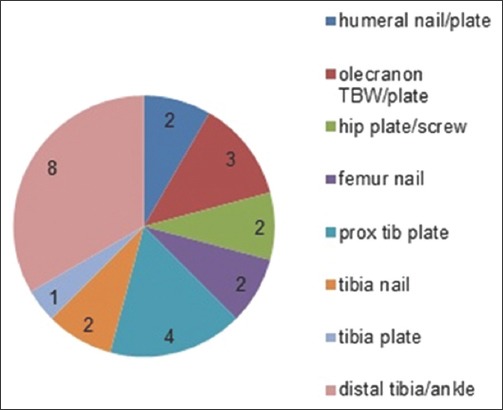
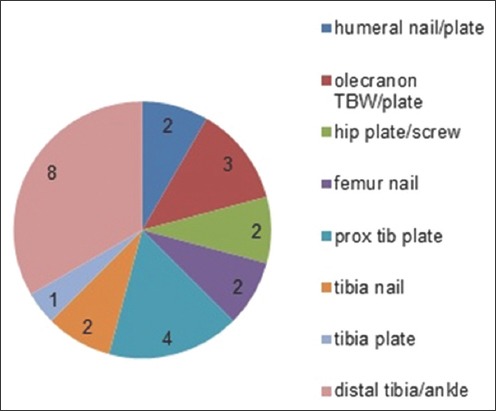
A total of 83 patients were studied. 71 of them were males. The mean age was 38 years. The reasons for removal of implants were found to lie in five categories: Pain/discomfort/prominent hardware, infected hardware, implant failure, elective (patient's insistence), and other reasons. Overall, the most frequently removed implants in our series were distal tibial/ankle plates (14.45% of implants removed), femoral intramedullary (IM) nails (13.25%), olecranon wires and plates (12.04%), and tibial IM nails and patellar tension band wirings (9.53% each).
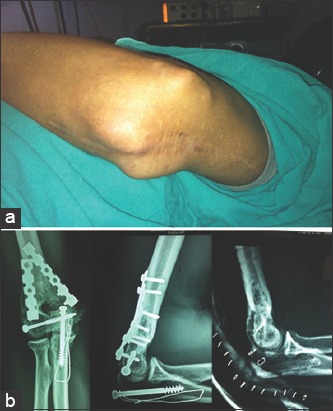
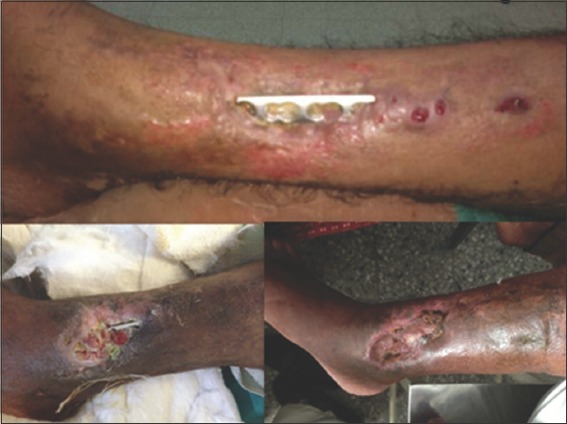
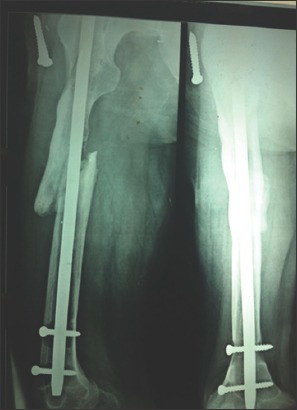
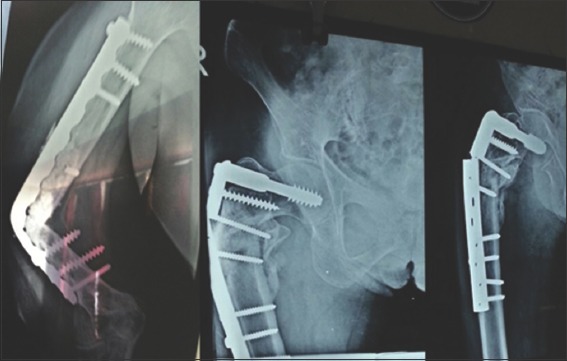
The clinical indications of implant removal are not well established, and few definitive data exist to guide whether routine implant removal is appropriate. Symptomatic hardware frequently needs removal. We found that pain and implant prominence (mechanical symptoms) are the most common indications. Infection is the next most common, followed by hardware failure. Other indications are implant failure, bone resorption due to excessive stress shielding and patient's will. Removal is, however, not an easy surgery, and several factors such as bone ingrowth and wear of the implant may make its removal difficult.
随着针对每种类型的骨骼/骨折的新型定制金属植入物的出现,骨折固定技术已取得进展。然而,在骨折愈合后,植入物不再重要,可能需要取出。一些人主张常规取出,而另一些人则反对。尽管如此,由于各种与植入物相关的问题,一些患者仍需要取出内固定物。我们的研究旨在确定植入物取出的最常见原因。
探讨骨科植入物取出手术的常见指征。
本研究纳入了在我科接受植入物取出手术的成年患者。他们在下次手术室排班时接受手术。然后对他们进行平均4个月的随访,以观察症状是否缓解或是否出现新问题。
共研究了83例患者。其中71例为男性。平均年龄为38岁。发现植入物取出的原因可分为五类:疼痛/不适/内固定物突出、内固定物感染、植入物失败、择期(患者坚持)及其他原因。总体而言,在我们的系列研究中,最常取出的植入物是胫骨干骺端/踝关节钢板(占取出植入物的14.45%)、股骨髓内钉(13.25%)、鹰嘴钢丝和钢板(12.04%)以及胫骨髓内钉和髌骨张力带钢丝(各占9.53%)。
植入物取出的临床指征尚未明确确立,几乎没有确凿的数据来指导常规植入物取出是否合适。有症状的内固定物通常需要取出。我们发现疼痛和植入物突出(机械症状)是最常见的指征。感染是第二常见的原因,其次是内固定物失败。其他指征包括植入物失败、因过度应力遮挡导致的骨吸收以及患者的意愿。然而,取出手术并非易事,诸如骨长入和植入物磨损等几个因素可能会使其取出变得困难。