Yang Peiran, Kuc Rhoda E, Brame Aimée L, Dyson Alex, Singer Mervyn, Glen Robert C, Cheriyan Joseph, Wilkinson Ian B, Davenport Anthony P, Maguire Janet J
Department of Medicine, Experimental Medicine and Immunotherapeutics, University of Cambridge Cambridge, UK.
Division of Medicine, Bloomsbury Institute of Intensive Care Medicine, University College London London, UK.
Front Neurosci. 2017 Feb 28;11:92. doi: 10.3389/fnins.2017.00092. eCollection 2017.
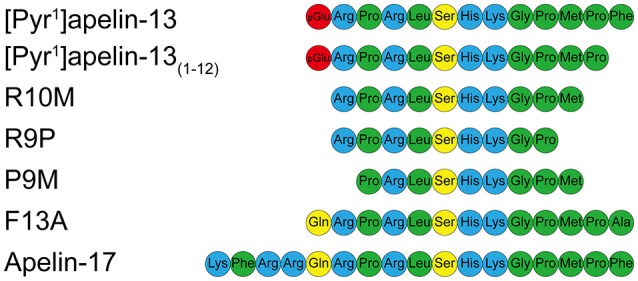
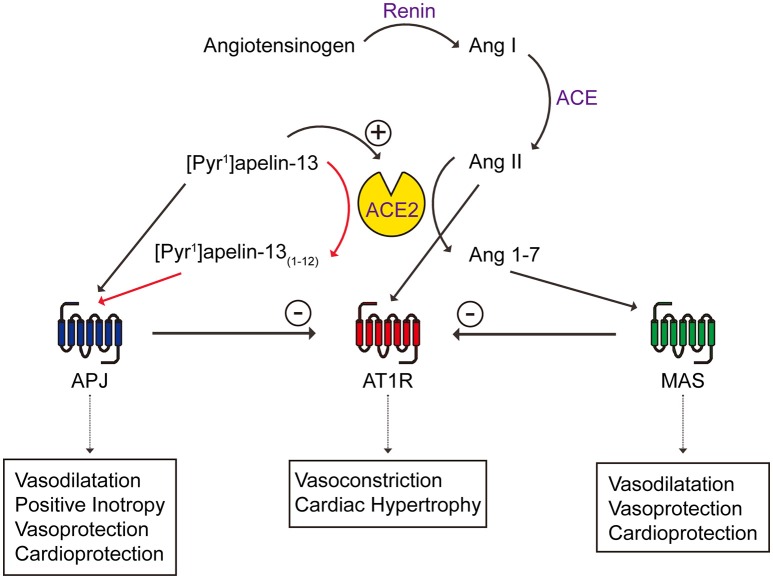
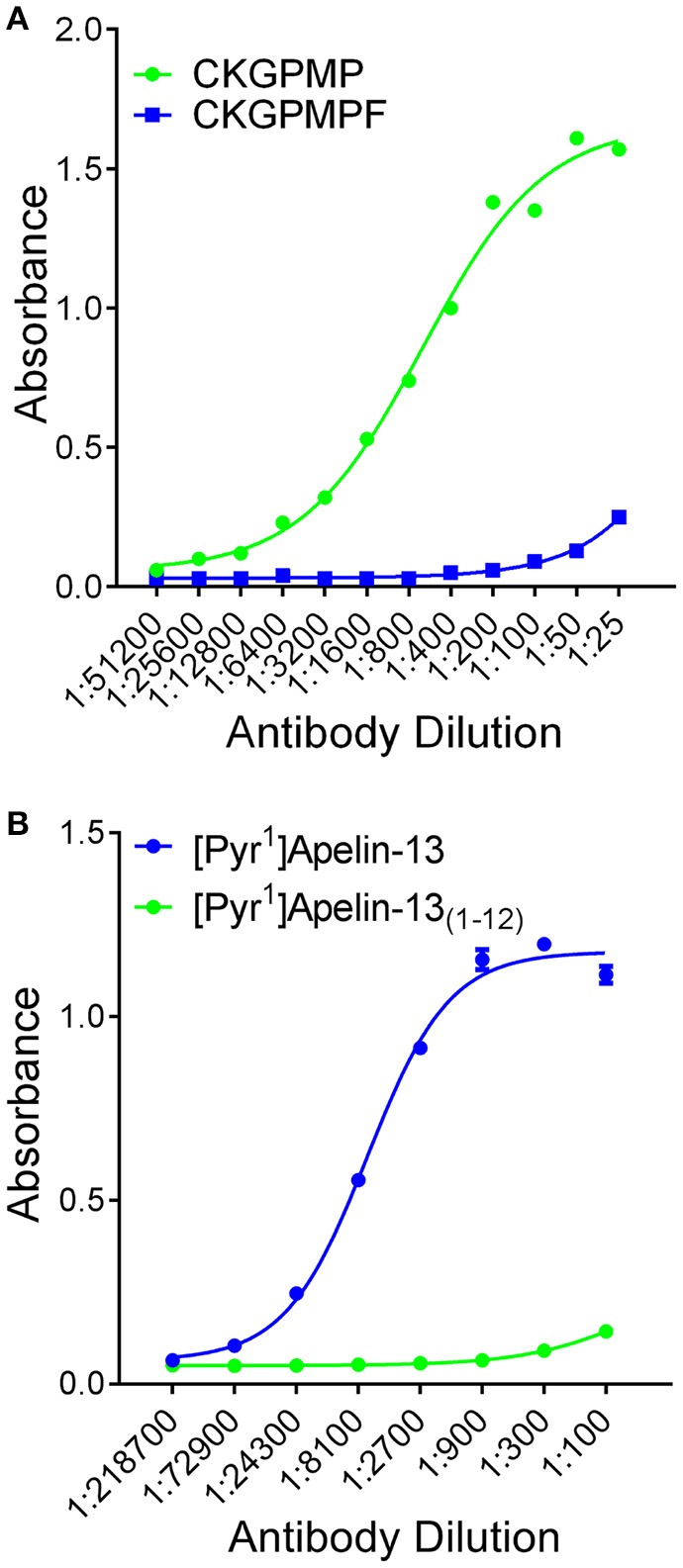
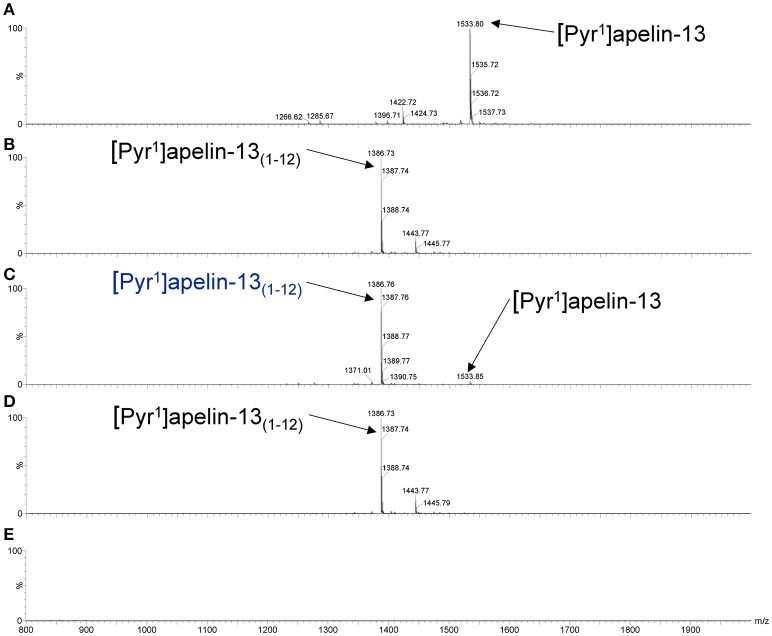
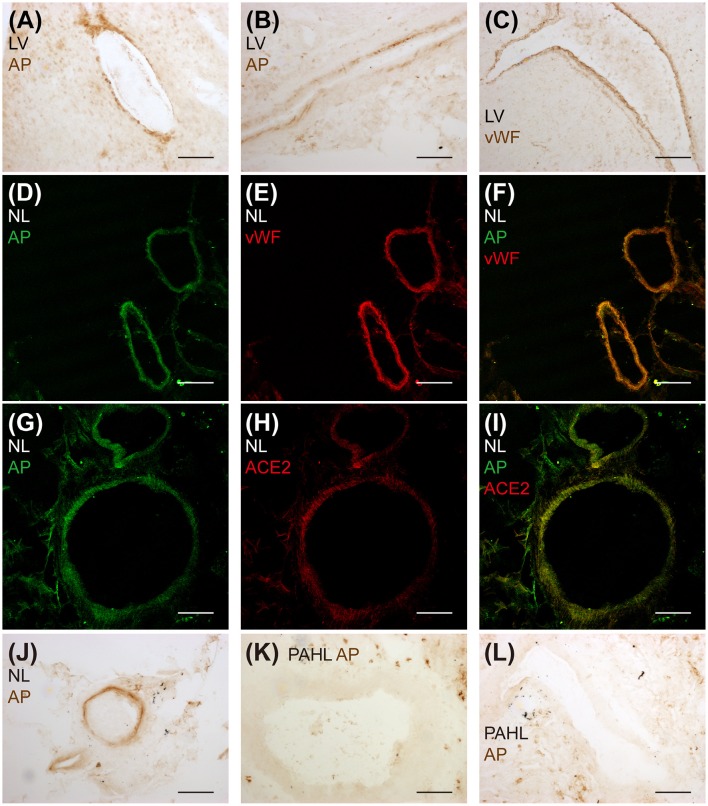
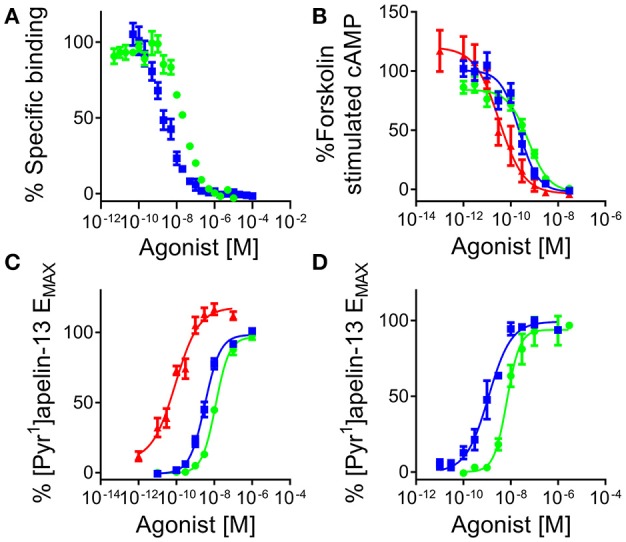
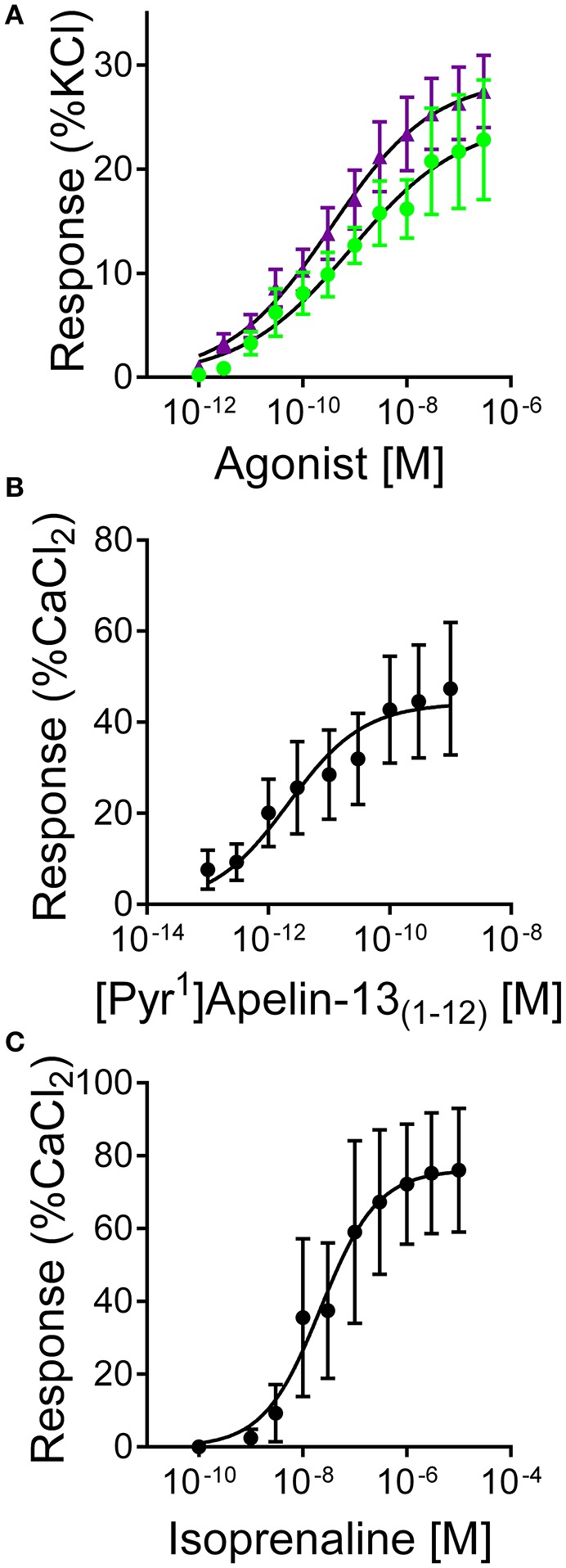
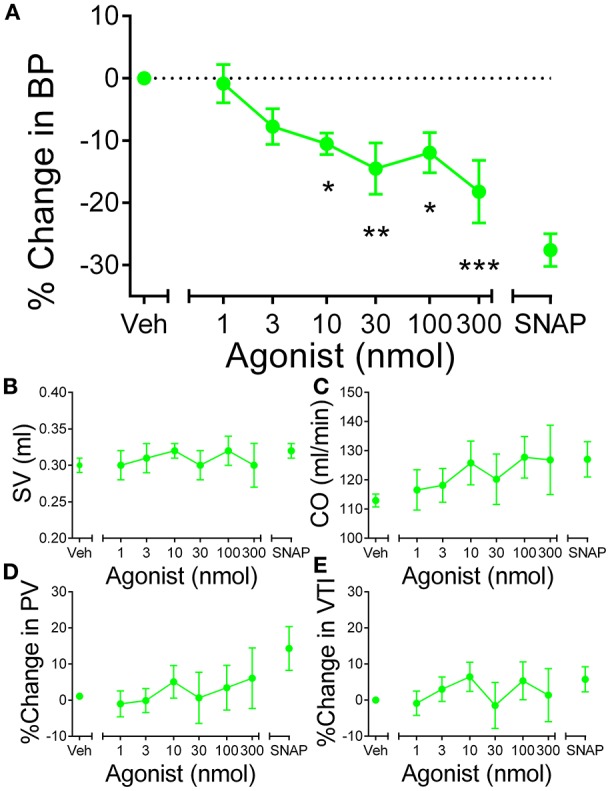
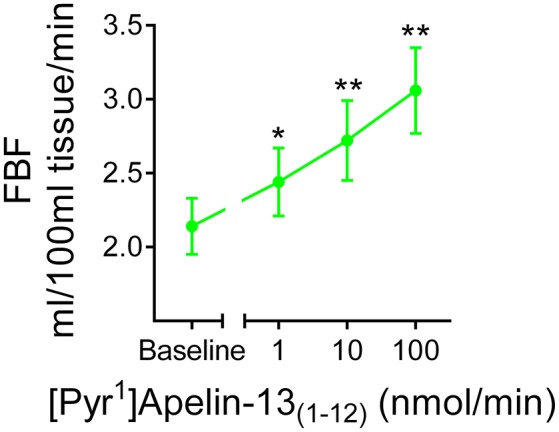
Apelin is a predicted substrate for ACE2, a novel therapeutic target. Our aim was to demonstrate the endogenous presence of the putative ACE2 product [Pyr]apelin-13 in human cardiovascular tissues and to confirm it retains significant biological activity for the apelin receptor and . The minimum active apelin fragment was also investigated. [Pyr]apelin-13 incubated with recombinant human ACE2 resulted in de novo generation of [Pyr]apelin-13 identified by mass spectrometry. Endogenous [Pyr]apelin-13 was detected by immunostaining in human heart and lung localized to the endothelium. Expression was undetectable in lung from patients with pulmonary arterial hypertension. In human heart [Pyr]apelin-13 (pK = 8.04 ± 0.06) and apelin-13(F13A) (pK = 8.07 ± 0.24) competed with [I]apelin-13 binding with nanomolar affinity, 4-fold lower than for [Pyr]apelin-13 (pK = 8.83 ± 0.06) whereas apelin-17 exhibited highest affinity (pK = 9.63 ± 0.17). The rank order of potency of peptides to inhibit forskolin-stimulated cAMP was apelin-17 (pD = 10.31 ± 0.28) > [Pyr]apelin-13 (pD = 9.67 ± 0.04) ≥ apelin-13(F13A) (pD = 9.54 ± 0.05) > [Pyr]apelin-13 (pD = 9.30 ± 0.06). The truncated peptide apelin-13(R10M) retained nanomolar potency (pD = 8.70 ± 0.04) but shorter fragments exhibited low micromolar potency. In a β-arrestin recruitment assay the rank order of potency was apelin-17 (pD = 10.26 ± 0.09) >> [Pyr]apelin-13 (pD = 8.43 ± 0.08) > apelin-13(R10M) (pD = 8.26 ± 0.17) > apelin-13(F13A) (pD = 7.98 ± 0.04) ≥ [Pyr]apelin-13 (pD = 7.84 ± 0.06) >> shorter fragments (pD < 6). [Pyr]apelin-13 and apelin-13(F13A) contracted human saphenous vein with similar sub-nanomolar potencies and [Pyr]apelin-13 was a potent inotrope in paced mouse right ventricle and human atria. [Pyr]apelin-13 elicited a dose-dependent decrease in blood pressure in anesthetized rat and dose-dependent increase in forearm blood flow in human volunteers. We provide evidence that ACE2 cleaves [Pyr]apelin-13 to [Pyr]apelin-13 and this cleavage product is expressed in human cardiovascular tissues. We have demonstrated biological activity of [Pyr]apelin-13 at the human and rodent apelin receptor and . Our data show that reported enhanced ACE2 activity in cardiovascular disease should not significantly compromise the beneficial effects of apelin based therapies for example in PAH.
Apelin是一种预测的血管紧张素转换酶2(ACE2)作用底物,ACE2是一个新的治疗靶点。我们的目的是证明假定的ACE2产物[Pyr]apelin-13在人类心血管组织中的内源性存在,并证实其对apelin受体保留显著的生物活性。同时也研究了最小活性apelin片段。与重组人ACE2一起孵育的[Pyr]apelin-13通过质谱鉴定导致了[Pyr]apelin-13的重新生成。通过免疫染色在人类心脏和肺中定位于内皮的部位检测到内源性[Pyr]apelin-13。在肺动脉高压患者的肺中未检测到表达。在人类心脏中,[Pyr]apelin-13(pK = 8.04±0.06)和apelin-13(F13A)(pK = 8.07±0.24)以纳摩尔亲和力与[I]apelin-13结合竞争,比[Pyr]apelin-13(pK = 8.83±0.06)低4倍,而apelin-17表现出最高亲和力(pK = 9.63±0.17)。肽抑制福斯高林刺激的环磷酸腺苷(cAMP)的效力顺序为apelin-17(pD = 10.31±0.28)>[Pyr]apelin-13(pD = 9.67±0.04)≥apelin-13(F13A)(pD = 9.54±0.05)>[Pyr]apelin-13(pD = 9.30±0.06)。截短的肽apelin-13(R10M)保留纳摩尔效力(pD = 8.70±0.04),但较短的片段表现出低微摩尔效力。在β-抑制蛋白募集试验中,效力顺序为apelin-17(pD = 10.26±0.09)>>[Pyr]apelin-13(pD = 8.43±0.08)>apelin-13(R10M)(pD = 8.