Tang Yi-Yuan, Tang Yan, Tang Rongxiang, Lewis-Peacock Jarrod A
Department of Psychological Sciences, Texas Tech University Lubbock, TX, USA.
Department of Psychological and Brain Sciences, Washington University in St. Louis St. Louis, MO, USA.
Front Syst Neurosci. 2017 Feb 28;11:6. doi: 10.3389/fnsys.2017.00006. eCollection 2017.
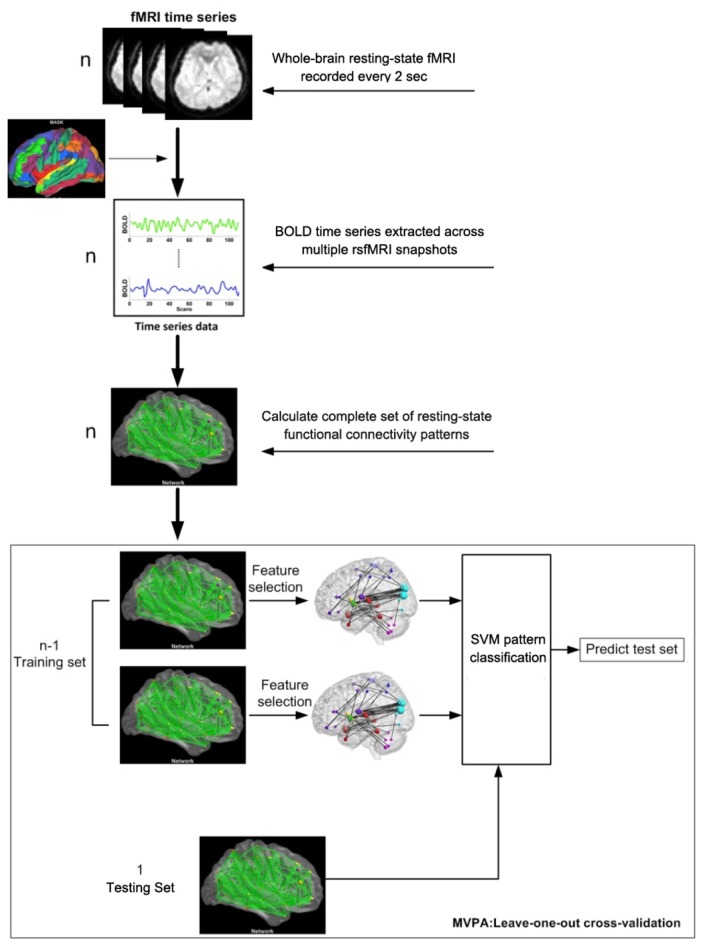
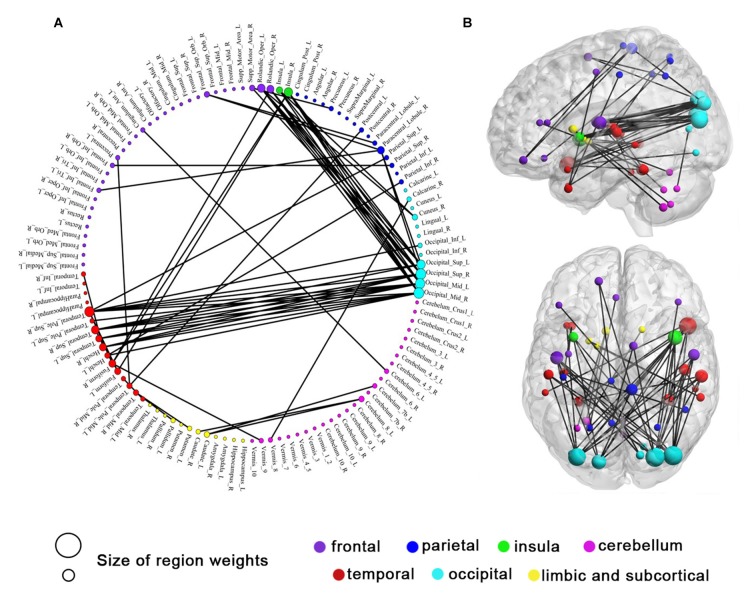
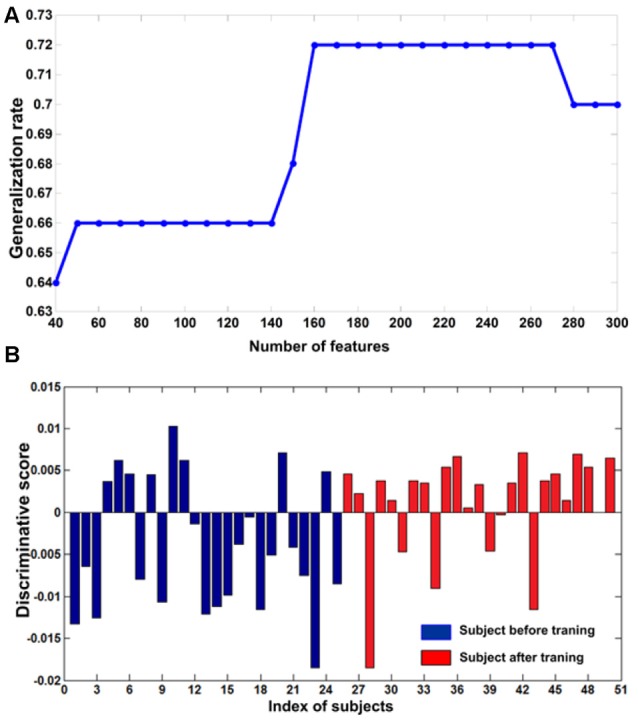
Emerging evidences have shown that one form of mental training-mindfulness meditation, can improve attention, emotion regulation and cognitive performance through changing brain activity and structural connectivity. However, whether and how the short-term mindfulness meditation alters large-scale brain networks are not well understood. Here, we applied a novel data-driven technique, the multivariate pattern analysis (MVPA) to resting-state fMRI (rsfMRI) data to identify changes in brain activity patterns and assess the neural mechanisms induced by a brief mindfulness training-integrative body-mind training (IBMT), which was previously reported in our series of randomized studies. Whole brain rsfMRI was performed on an undergraduate group who received 2 weeks of IBMT with 30 min per session (5 h training in total). Classifiers were trained on measures of functional connectivity in this fMRI data, and they were able to reliably differentiate (with 72% accuracy) patterns of connectivity from before vs. after the IBMT training. After training, an increase in positive functional connections (60 connections) were detected, primarily involving bilateral superior/middle occipital gyrus, bilateral frontale operculum, bilateral superior temporal gyrus, right superior temporal pole, bilateral insula, caudate and cerebellum. These results suggest that brief mental training alters the functional connectivity of large-scale brain networks at rest that may involve a portion of the neural circuitry supporting attention, cognitive and affective processing, awareness and sensory integration and reward processing.
越来越多的证据表明,一种心理训练形式——正念冥想,可以通过改变大脑活动和结构连接来提高注意力、情绪调节能力和认知表现。然而,短期正念冥想是否以及如何改变大规模脑网络尚不清楚。在此,我们应用一种新颖的数据驱动技术——多变量模式分析(MVPA),对静息态功能磁共振成像(rsfMRI)数据进行分析,以识别大脑活动模式的变化,并评估一种简短的正念训练——身心整合训练(IBMT)所诱导的神经机制,该训练先前已在我们的一系列随机研究中有所报道。对一组本科生进行全脑rsfMRI检查,他们接受了为期2周的IBMT训练,每次训练30分钟(总共训练5小时)。在这些功能磁共振成像数据的功能连接测量上训练分类器,它们能够可靠地区分(准确率为72%)IBMT训练前后的连接模式。训练后,检测到正向功能连接增加(60个连接),主要涉及双侧枕上/中回、双侧额岛盖、双侧颞上回、右侧颞上极、双侧脑岛、尾状核和小脑。这些结果表明,简短的心理训练会改变静息状态下大规模脑网络的功能连接,这可能涉及一部分支持注意力、认知和情感处理、意识和感觉整合以及奖赏处理的神经回路。