Song Peng-Kun, Li Hong, Man Qing-Qing, Jia Shan-Shan, Li Li-Xiang, Zhang Jian
National Institute for Nutrition and Health, Chinese Center for Disease Control and Prevention, 27 Nanwei Road, Xicheng District, Beijing 100050, China.
Central laboratory of Beijing Center for Disease Control and Prevention, 16 Hepingli Middle Street, Dongcheng District, Beijing 100013, China.
Nutrients. 2017 Mar 15;9(3):279. doi: 10.3390/nu9030279.
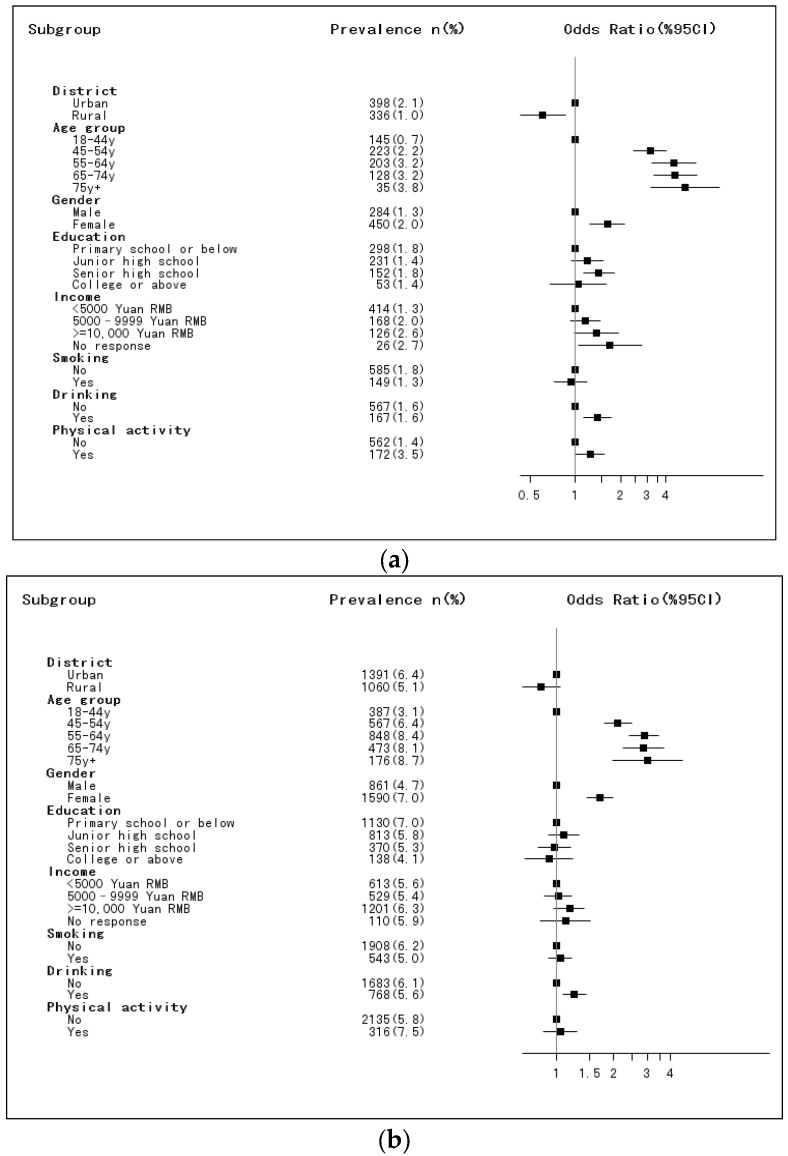
Hypercholesterolemia is a known risk factor for cardiovascular diseases and affects a high proportion of the population. This study aimed to assess and compare the determinants of hypercholesterolemia among Chinese adults aged 18 years and above, from 2002 to 2012. The study used a stratified multistage cluster sampling method to select participants. Sociodemographic and lifestyle information was collected during face-to-face interviews. Dietary intake was calculated by 3-day, 24-h dietary records in combination with weighted edible oil and condiments. Hypercholesterolemia was defined as total cholesterol above 6.22 mmol/L (240 mg/dL) from fasting blood samples. The study included 47,701 (mean age 43.0 years) and 39,870 (mean age 51.0 years) participants in 2002 and 2010-2012 surveys respectively. The weighted prevalence of hypercholesterolemia increased from 1.6% (2.1% urban, 1.0% rural) in 2002 to 6.0% (6.4% urban, 5.1% rural) in 2012. The intake of plant-based food decreased but the intake of pork increased over the 10 years. A high intake of protein and pork, alcohol drinking and overweight/obesity were positively associated with hypercholesterolemia. Neither education nor fruit and vegetable intake were associated with hypercholesterolemia. In conclusion, the burden of hypercholesterolemia increased substantially between 2002 and 2012 in China. Unhealthy lifestyle factors and change in traditional dietary pattern were positively associated with hypercholesterolemia. Further research on the role of diet in the development and prevention of hypercholesterolemia is needed.
高胆固醇血症是心血管疾病的已知危险因素,影响着很大一部分人群。本研究旨在评估和比较2002年至2012年18岁及以上中国成年人高胆固醇血症的决定因素。该研究采用分层多阶段整群抽样方法选取参与者。社会人口统计学和生活方式信息通过面对面访谈收集。饮食摄入量通过3天、24小时饮食记录结合食用油和调味品的加权计算得出。高胆固醇血症定义为空腹血样中总胆固醇高于6.22毫摩尔/升(240毫克/分升)。该研究在2002年和2010 - 2012年调查中分别纳入了47,701名(平均年龄43.0岁)和39,870名(平均年龄51.0岁)参与者。高胆固醇血症的加权患病率从2002年的1.6%(城市2.1%,农村1.0%)上升至2012年的6.0%(城市6.4%,农村5.1%)。在这10年中,植物性食物的摄入量减少,而猪肉的摄入量增加。高蛋白和猪肉摄入、饮酒以及超重/肥胖与高胆固醇血症呈正相关。教育程度以及水果和蔬菜摄入量与高胆固醇血症均无关联。总之,2002年至2012年期间中国高胆固醇血症负担大幅增加。不健康的生活方式因素和传统饮食模式的改变与高胆固醇血症呈正相关。需要进一步研究饮食在高胆固醇血症发生和预防中的作用。