Jiang Xiaojie, Li Chengzong, Lin Bin, Hong Haijie, Jiang Lei, Zhu Siyuan, Wang Xiaoqian, Tang Nanhong, Li Xiujin, She Feifei, Chen Yanling
Department of Hepatobiliary Surgery and Fujian Institute of Hepatobiliary Surgery, Fujian Medical University Union Hospital, Fujian Medical University, Fuzhou, China.
Key Laboratory of Ministry of Education for Gastrointestinal Cancer and Key Laboratory of Tumour Microbiology, The School of Basic Medical Sciences, Fujian Medical University, Fuzhou, China.
Cancer Sci. 2017 Jun;108(6):1144-1156. doi: 10.1111/cas.13236. Epub 2017 May 31.
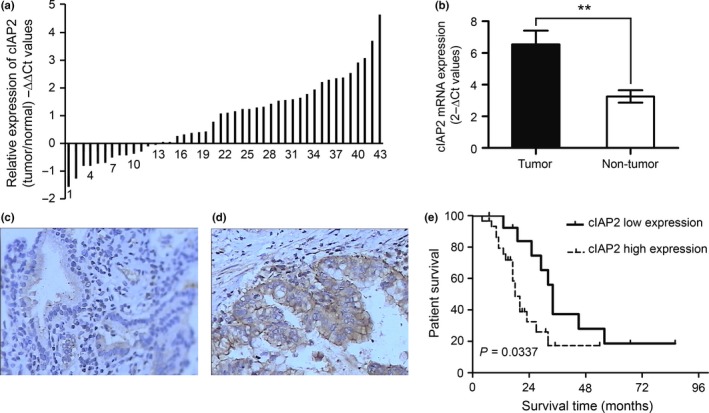
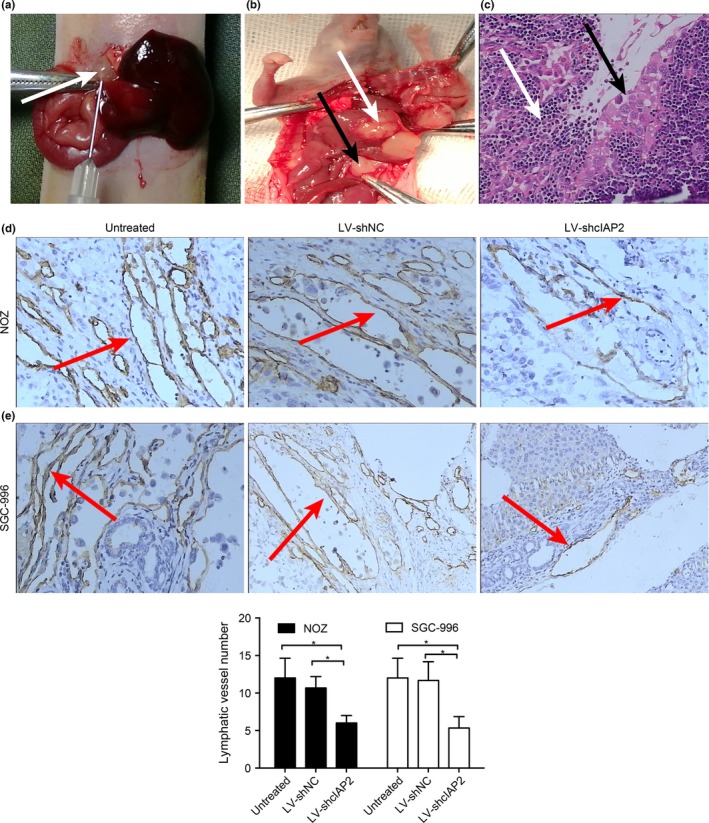
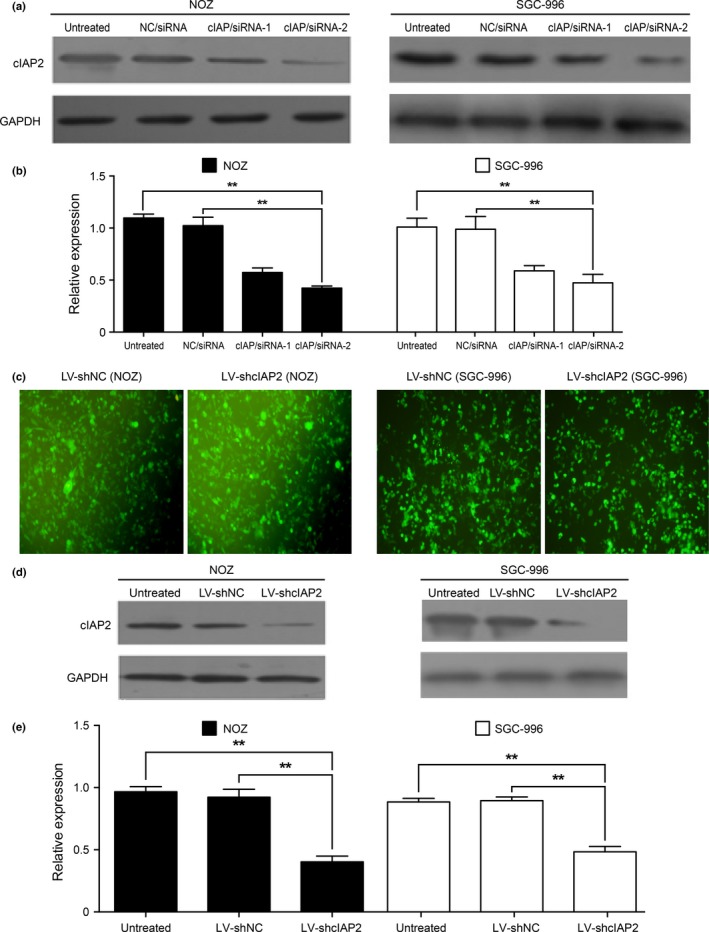
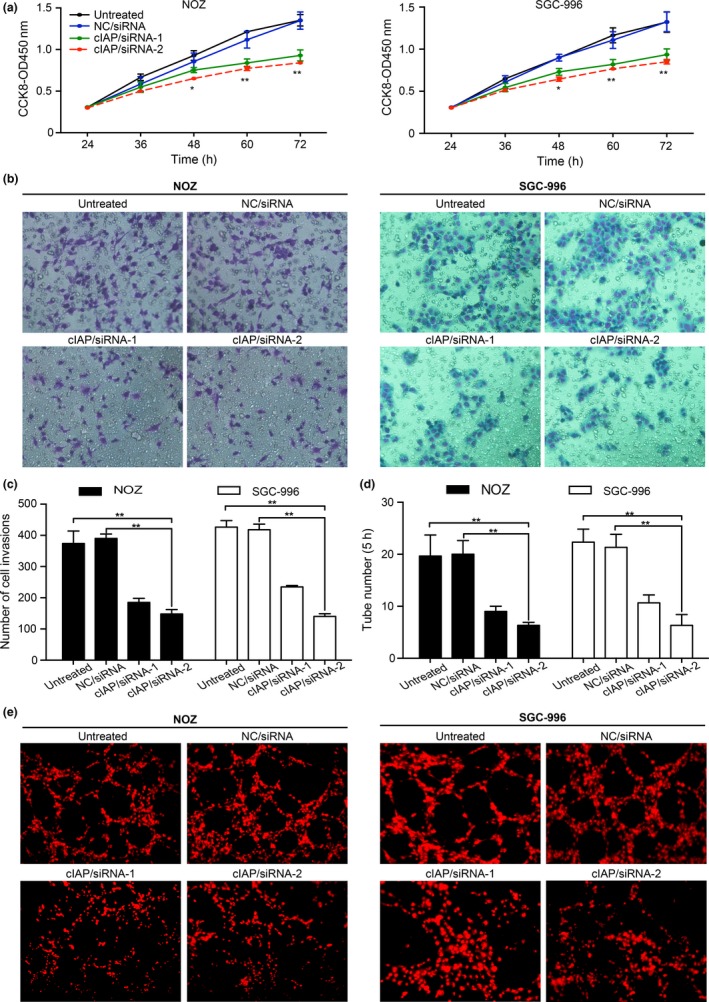
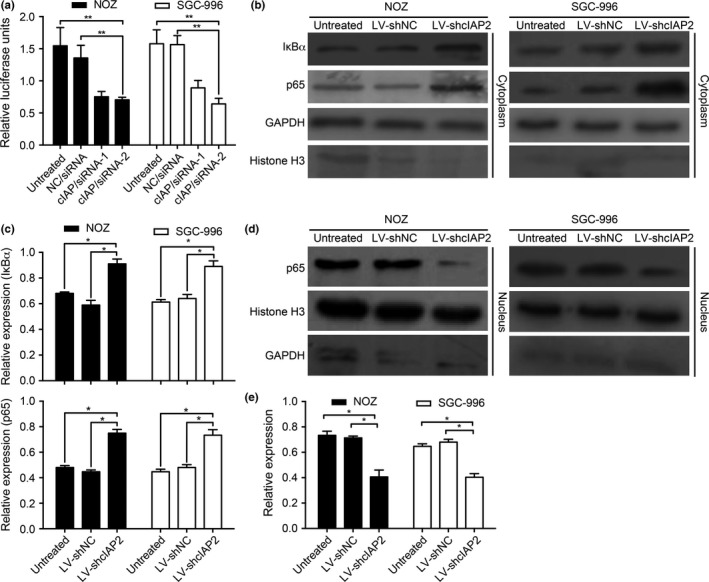
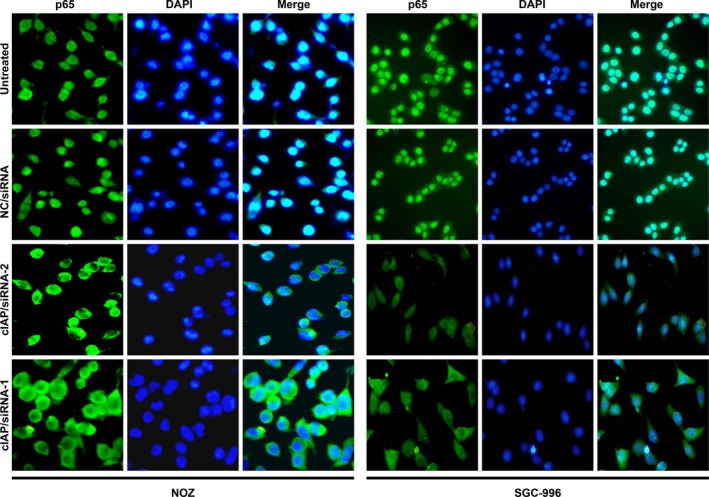
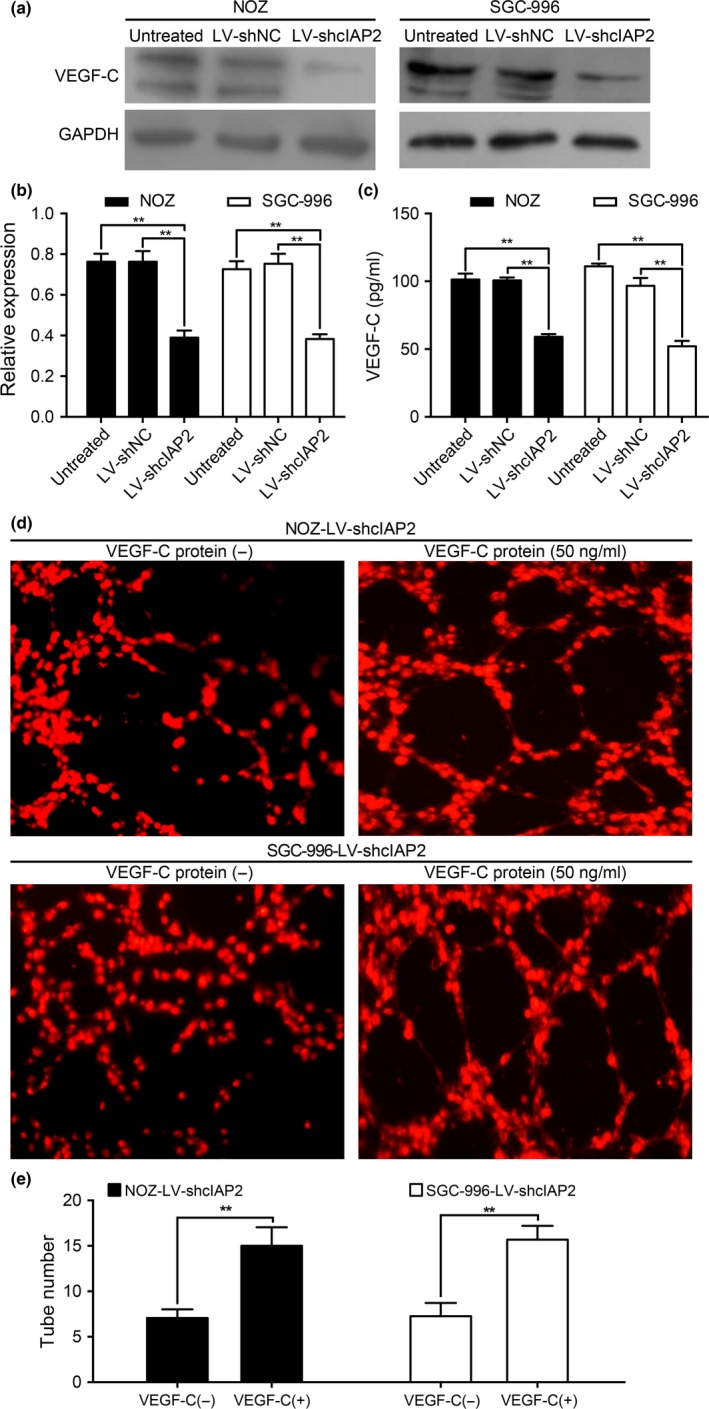
Several studies have produced contradictory findings about the prognostic implications for inhibitor of apoptosis proteins (IAP) in different types of cancer. Cellular inhibitor of apoptosis 2 (cIAP2/BIRC) is one of the most extensively characterized human IAP. To date, no studies have focused on the expression level of cIAP2 in human gallbladder cancer (GBC), and the mechanism of cIAP2 in GBC invasion and lymphangiogenesis remains unclear. Therefore, in the present study, cIAP2 expression in GBC was detected using quantitative real-time polymerase chain reaction and immunohistochemistry, and the relationship between cIAP2 levels in cancer tissues and the clinicopathological characteristics of patients was analyzed. The biological effect of cIAP2 in GBC cells was tested using the Cell Counting Kit-8 Assay, Transwell assays and the ability of human dermal lymphatic endothelial cells (HDLEC) to undergo tube formation. The role of cIAP2 in activating the NF-κB pathway was determined using a dual-luciferase reporter assay, immunofluorescence staining, western blotting and ELISA. Finally, an animal model was used to further confirm the role of cIAP2 in lymphangiogenesis. We showed that cIAP2 expression was elevated in human GBC tissues and correlated with a negative prognosis for patients. Moreover, cIAP2 was identified as a lymphangiogenic factor of GBC cells and, thus, promoted lymph node metastasis in GBC cells. Our study is the first to suggest that cIAP2 can promote GBC invasion and lymphangiogenesis by activating the NF-κB pathway.
多项研究针对凋亡抑制蛋白(IAP)在不同类型癌症中的预后影响得出了相互矛盾的结果。细胞凋亡抑制因子2(cIAP2/BIRC)是特征描述最为广泛的人类IAP之一。迄今为止,尚无研究聚焦于cIAP2在人类胆囊癌(GBC)中的表达水平,且cIAP2在GBC侵袭和淋巴管生成中的机制仍不清楚。因此,在本研究中,我们使用定量实时聚合酶链反应和免疫组织化学检测了GBC中cIAP2的表达,并分析了癌组织中cIAP2水平与患者临床病理特征之间的关系。使用细胞计数试剂盒-8检测法、Transwell检测法以及人真皮淋巴管内皮细胞(HDLEC)形成管腔的能力,测试了cIAP2在GBC细胞中的生物学效应。使用双荧光素酶报告基因检测法、免疫荧光染色、蛋白质印迹法和酶联免疫吸附测定法确定了cIAP2在激活核因子κB(NF-κB)通路中的作用。最后,使用动物模型进一步证实了cIAP2在淋巴管生成中的作用。我们发现,cIAP2在人类GBC组织中的表达升高,且与患者的不良预后相关。此外,cIAP2被确定为GBC细胞的淋巴管生成因子,因此促进了GBC细胞的淋巴结转移。我们的研究首次表明,cIAP2可通过激活NF-κB通路促进GBC侵袭和淋巴管生成。