Namuddu Jane, Waiswa Peter, Nsangi Betty, Iriso Robert, Matovu Joseph, Maganda Albert, Kekitiinwa Adeodata
CDC HIV/AIDS Fellowship Program, Makerere University School of Public Health, Uganda; Baylor College of Medicine Children's Foundation, Uganda.
Baylor College of Medicine Children's Foundation , Uganda.
J Public Health Afr. 2015 Aug 17;6(2):454. doi: 10.4081/jphia.2015.454.
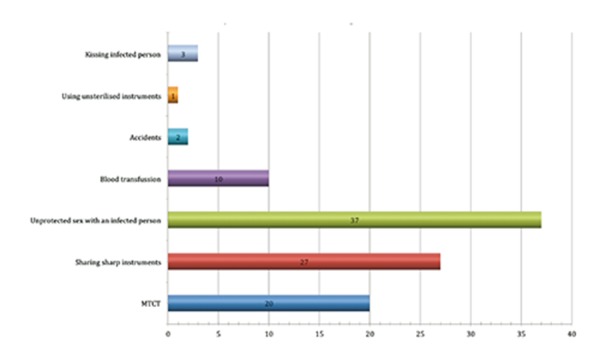
The aim of this study was to assess the level of availability of HIV prevention strategies in secondary schools in Kabarole district, Uganda in order to inform the design of interventions to strengthen HIV Prevention and psychosocial support. Quantitative and qualitative research methods were used in eight secondary schools in Kabarole district to establish available HIV prevention and psychosocial support services. Questionnaires were administered to 355 students 12-24 years old. In addition, 20 Key Informant interviews were held with education service providers. Quantitative data was analyzed using Epi-data and qualitative data were analyzed by thematic content analysis. Seven of the eight schools had at least one HIV prevention strategy. Two teachers in each of the five schools had been trained in HIV prevention. No school had a nurse trained in HIV prevention, care and support. Education service providers had limited knowledge of HIV prevention support and care of students living with HIV. We found out that students had knowledge on how one can acquire HIV. HIV prevention services reported by students in schools included: talks from teachers and guests (19%), drama with HIV prevention related messages (16%), peer education clubs (15%), workshops and seminars on HIV (8%), sensitization about HIV/AIDS (7%), guidance and counseling (6%), talking compounds- (5%), abstinence talks (6%), keeping students busy in sports (4%), straight talk (4%). Sixty three percent reported receiving HIV reading materials from various sources. Preventing HIV infection among students in schools is still demanding with limited interventions for students. Efforts to support school interventions should focus on including HIV Prevention in the school curriculum, working with peer educators as well as education service providers who spend much of the time with the students while at school.
本研究的目的是评估乌干达卡巴罗莱区中学的艾滋病毒预防策略的可获得水平,以便为加强艾滋病毒预防和心理社会支持的干预措施设计提供信息。在卡巴罗莱区的八所中学使用了定量和定性研究方法,以确定现有的艾滋病毒预防和心理社会支持服务。对355名12至24岁的学生进行了问卷调查。此外,还对教育服务提供者进行了20次关键 informant 访谈。定量数据使用Epi-data进行分析,定性数据通过主题内容分析进行分析。八所学校中有七所至少有一项艾滋病毒预防策略。五所学校中的每所学校都有两名教师接受过艾滋病毒预防培训。没有一所学校有接受过艾滋病毒预防、护理和支持培训的护士。教育服务提供者对艾滋病毒预防支持和对感染艾滋病毒学生的护理知识有限。我们发现学生了解人们如何感染艾滋病毒。学生在学校报告的艾滋病毒预防服务包括:教师和嘉宾的讲座(19%)、与艾滋病毒预防相关信息的戏剧(16%)、同伴教育俱乐部(15%)、关于艾滋病毒的讲习班和研讨会(8%)、艾滋病毒/艾滋病宣传(7%)、指导和咨询(6%)、谈话场所(5%)、禁欲讲座(6%)、让学生忙于体育运动(4%)、直接谈话(4%)。63%的人报告从各种来源收到了艾滋病毒阅读材料。在学校预防学生感染艾滋病毒仍然具有挑战性,针对学生的干预措施有限。支持学校干预措施的努力应侧重于将艾滋病毒预防纳入学校课程,与同伴教育者以及在学校与学生相处时间较多的教育服务提供者合作。