Howsmon Daniel P, Kruger Uwe, Melnyk Stepan, James S Jill, Hahn Juergen
Department of Chemical and Biological Engineering, Rensselaer Polytechnic Institute, Troy, New York, United States of America.
Center for Biotechnology and Interdisciplinary Studies, Rensselaer Polytechnic Institute, Troy, New York, United States of America.
PLoS Comput Biol. 2017 Mar 16;13(3):e1005385. doi: 10.1371/journal.pcbi.1005385. eCollection 2017 Mar.
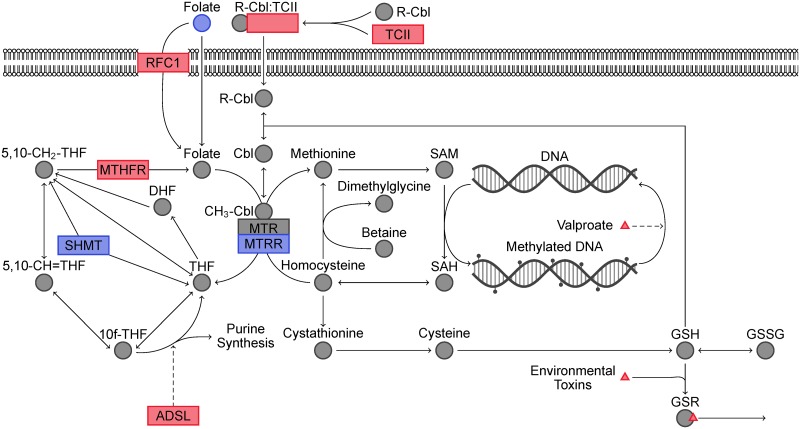
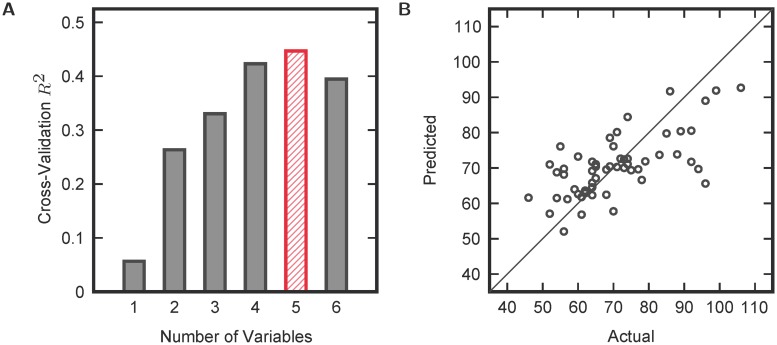
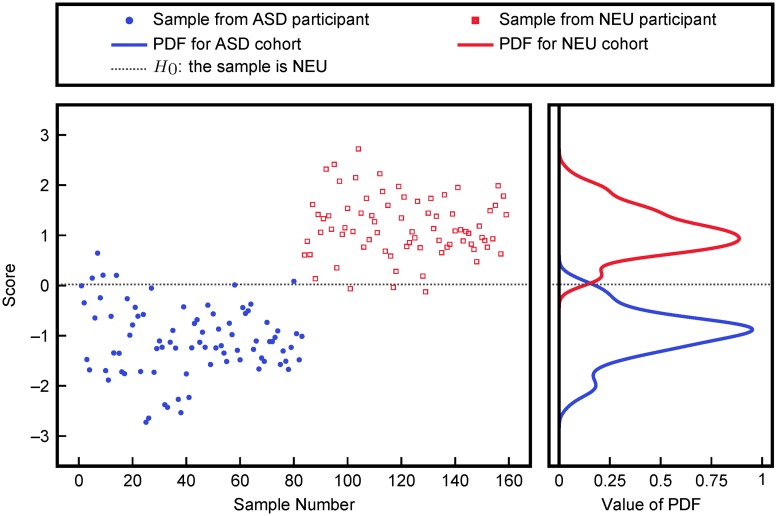
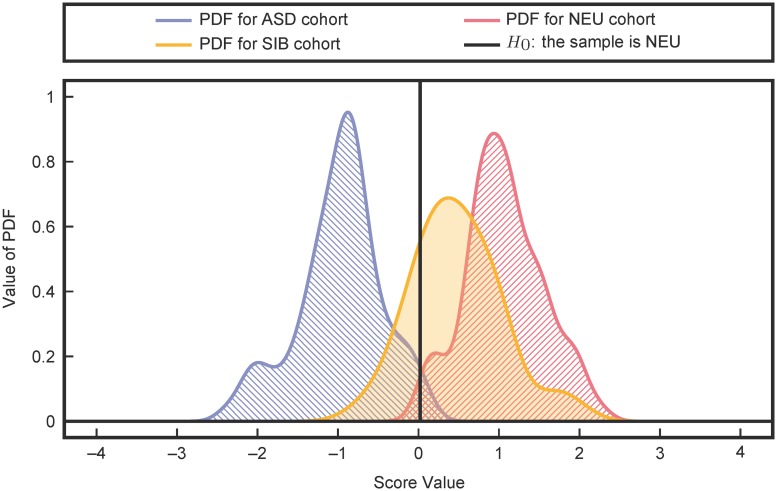
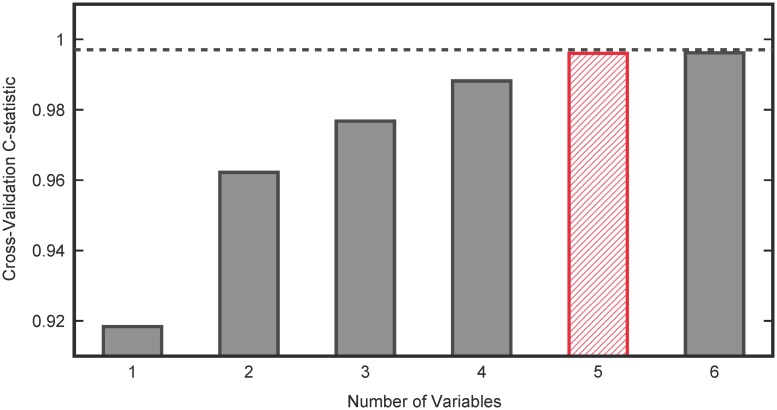
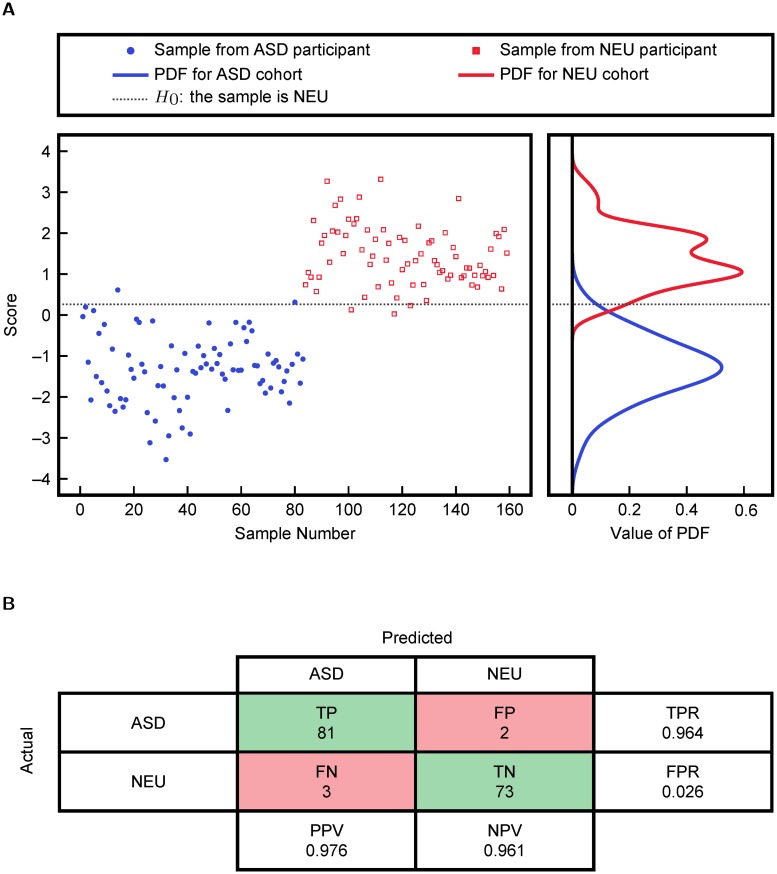
The number of diagnosed cases of Autism Spectrum Disorders (ASD) has increased dramatically over the last four decades; however, there is still considerable debate regarding the underlying pathophysiology of ASD. This lack of biological knowledge restricts diagnoses to be made based on behavioral observations and psychometric tools. However, physiological measurements should support these behavioral diagnoses in the future in order to enable earlier and more accurate diagnoses. Stepping towards this goal of incorporating biochemical data into ASD diagnosis, this paper analyzes measurements of metabolite concentrations of the folate-dependent one-carbon metabolism and transulfuration pathways taken from blood samples of 83 participants with ASD and 76 age-matched neurotypical peers. Fisher Discriminant Analysis enables multivariate classification of the participants as on the spectrum or neurotypical which results in 96.1% of all neurotypical participants being correctly identified as such while still correctly identifying 97.6% of the ASD cohort. Furthermore, kernel partial least squares is used to predict adaptive behavior, as measured by the Vineland Adaptive Behavior Composite score, where measurement of five metabolites of the pathways was sufficient to predict the Vineland score with an R2 of 0.45 after cross-validation. This level of accuracy for classification as well as severity prediction far exceeds any other approach in this field and is a strong indicator that the metabolites under consideration are strongly correlated with an ASD diagnosis but also that the statistical analysis used here offers tremendous potential for extracting important information from complex biochemical data sets.
在过去的四十年里,自闭症谱系障碍(ASD)的确诊病例数急剧增加;然而,关于ASD潜在的病理生理学仍存在相当大的争议。这种生物学知识的匮乏使得诊断只能基于行为观察和心理测量工具。不过,生理测量在未来应能支持这些行为诊断,以便实现更早、更准确的诊断。为了朝着将生化数据纳入ASD诊断这一目标迈进,本文分析了从83名ASD参与者和76名年龄匹配的神经典型同龄人血液样本中获取的叶酸依赖性一碳代谢和转硫途径的代谢物浓度测量值。费舍尔判别分析能够对参与者进行多变量分类,区分其是否属于谱系或神经典型,结果显示96.1%的神经典型参与者被正确识别,同时仍有97.6%的ASD队列参与者被正确识别。此外,核偏最小二乘法用于预测适应性行为,以文兰适应性行为综合得分来衡量,其中对这些途径的五种代谢物的测量足以在交叉验证后以R2为0.45预测文兰得分。这种分类和严重程度预测的准确率远远超过该领域的任何其他方法,有力地表明所考虑的代谢物与ASD诊断密切相关,而且这里使用的统计分析在从复杂的生化数据集中提取重要信息方面具有巨大潜力。