Sanger Anneri, Yip Yan Y, Randall Thomas S, Pernigo Stefano, Steiner Roberto A, Dodding Mark P
Randall Division of Cell and Molecular Biophysics, King's College London, London, SE1 1UL, UK.
Randall Division of Cell and Molecular Biophysics, King's College London, London, SE1 1UL, UK
J Cell Sci. 2017 May 1;130(9):1637-1651. doi: 10.1242/jcs.198267. Epub 2017 Mar 16.
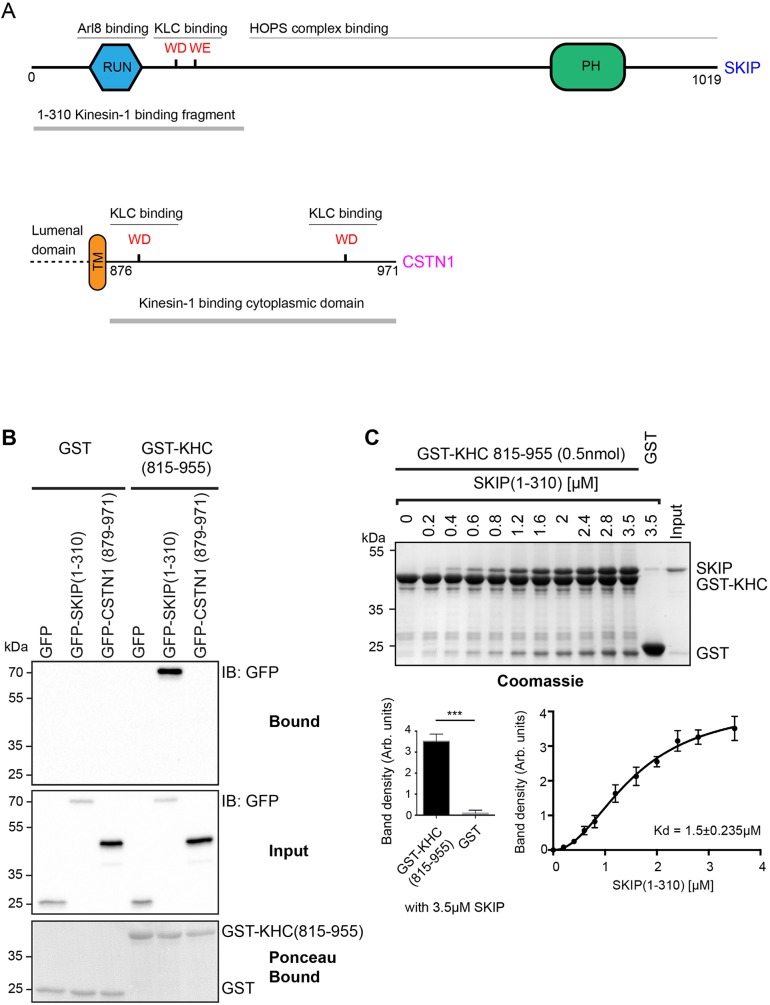
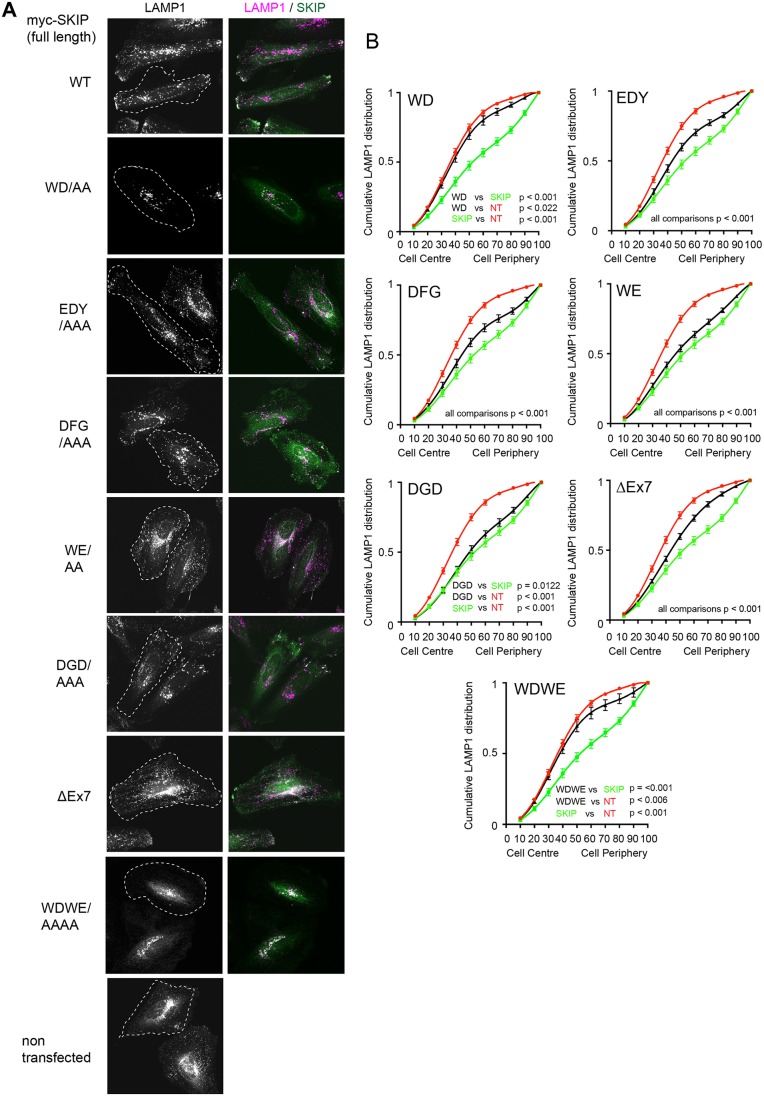
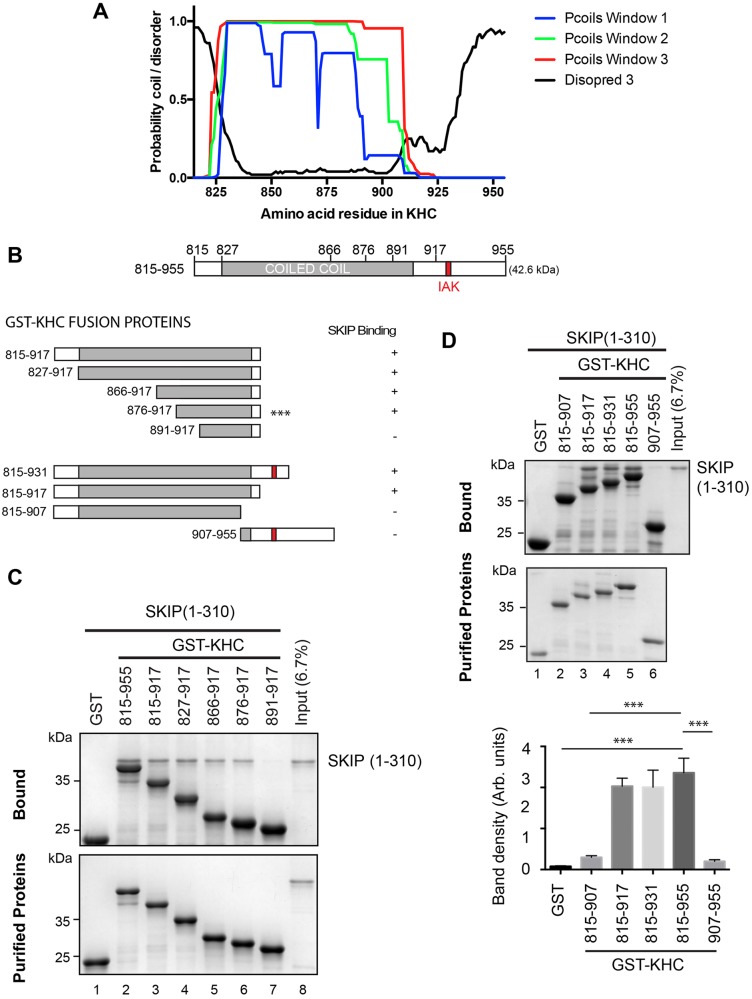
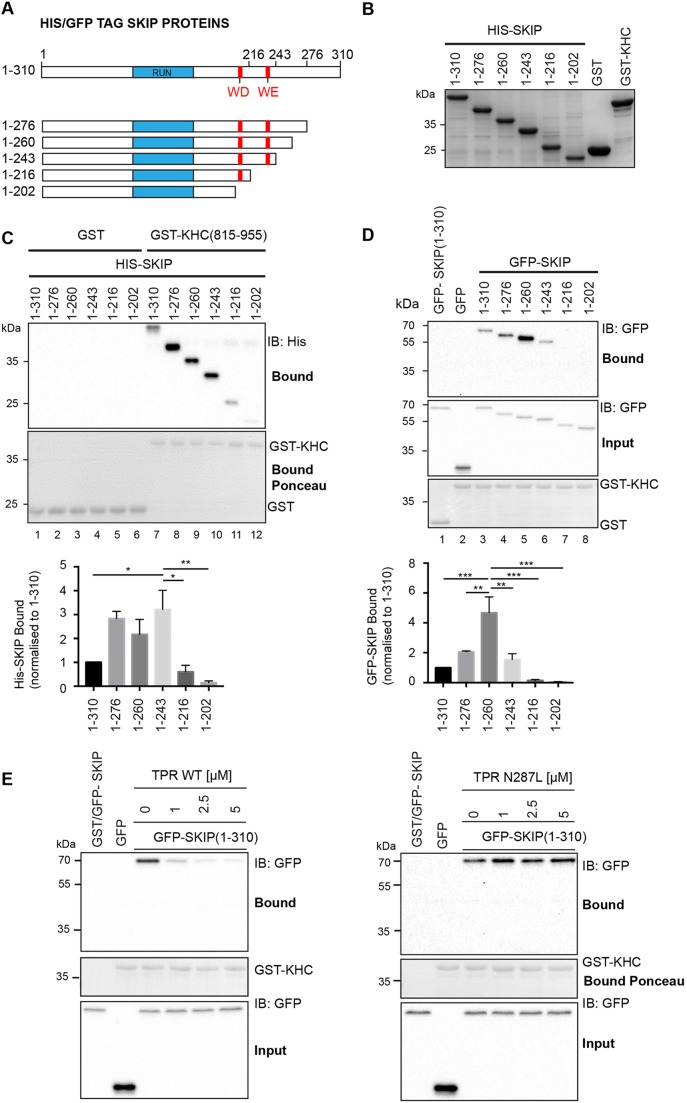
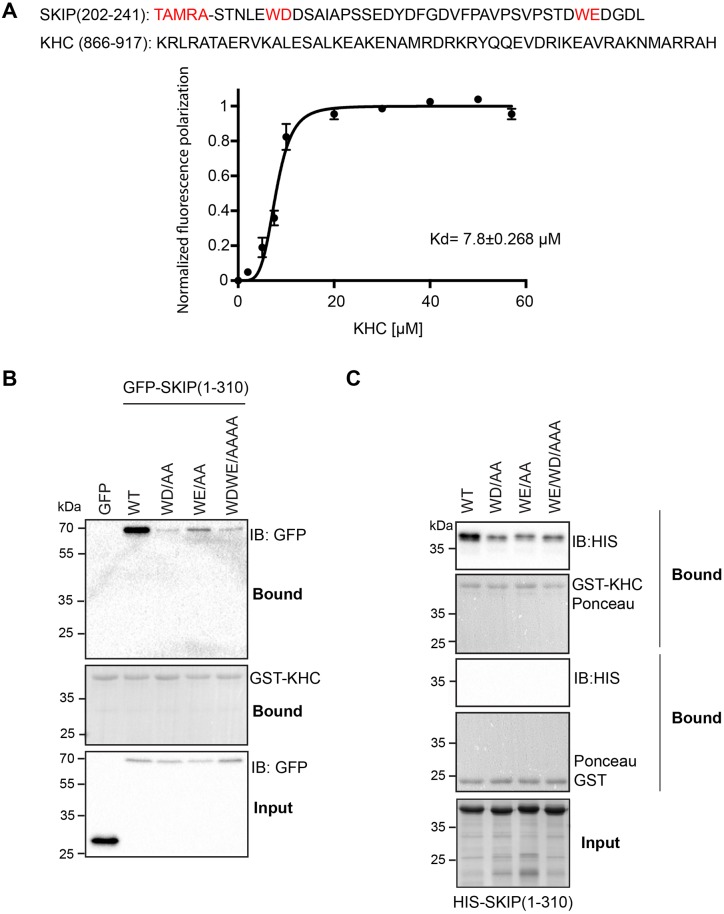
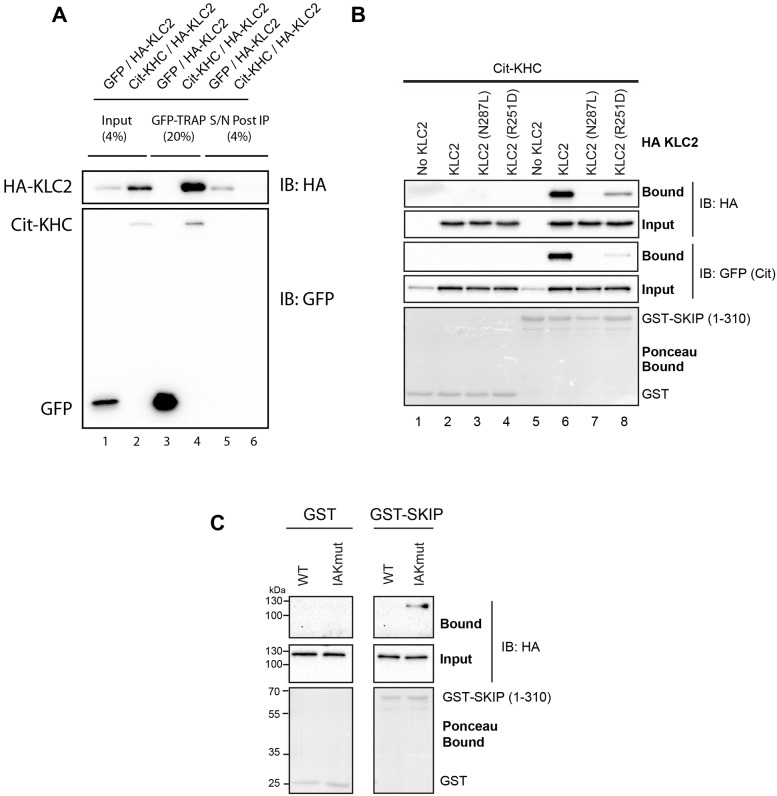
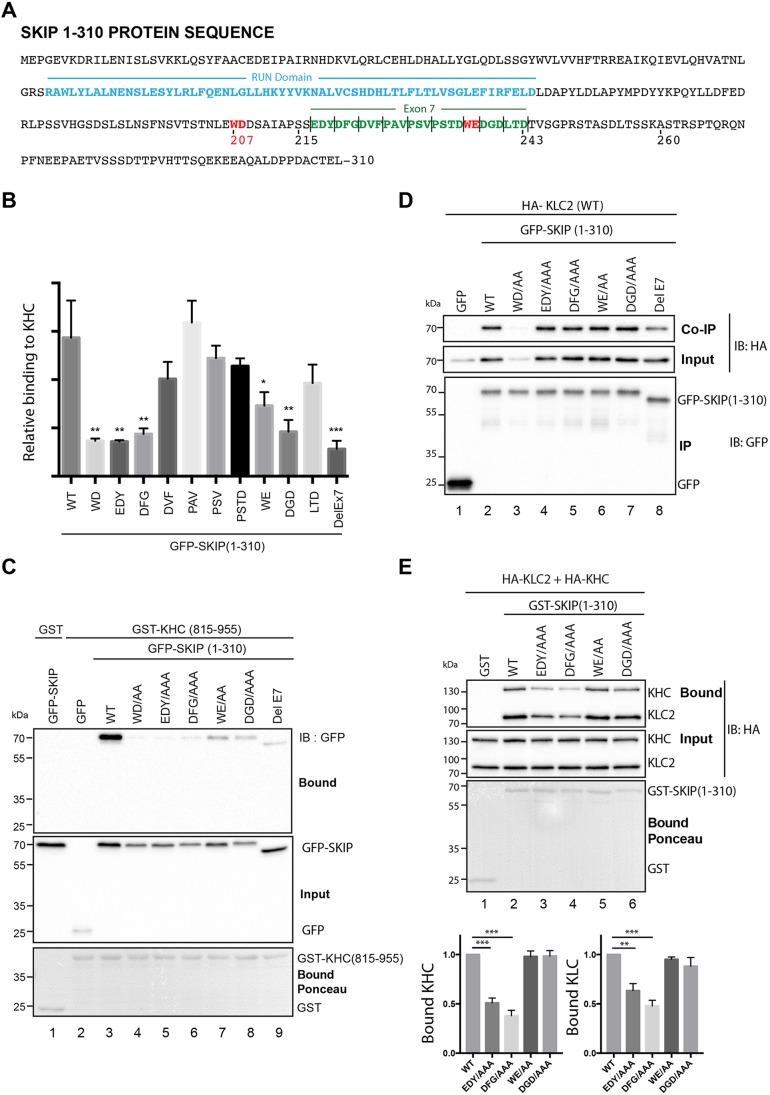
The molecular interplay between cargo recognition and regulation of the activity of the kinesin-1 microtubule motor is not well understood. Using the lysosome adaptor SKIP (also known as PLEKHM2) as model cargo, we show that the kinesin heavy chains (KHCs), in addition to the kinesin light chains (KLCs), can recognize tryptophan-acidic-binding determinants on the cargo when presented in the context of an extended KHC-interacting domain. Mutational separation of KHC and KLC binding shows that both interactions are important for SKIP-kinesin-1 interaction and that KHC binding is important for lysosome transport However, in the absence of KLCs, SKIP can only bind to KHC when autoinhibition is relieved, suggesting that the KLCs gate access to the KHCs. We propose a model whereby tryptophan-acidic cargo is first recognized by KLCs, resulting in destabilization of KHC autoinhibition. This primary event then makes accessible a second SKIP-binding site on the KHC C-terminal tail that is adjacent to the autoinhibitory IAK region. Thus, cargo recognition and concurrent activation of kinesin-1 proceed in hierarchical stepwise fashion driven by a dynamic network of inter- and intra-molecular interactions.
驱动蛋白-1微管马达的货物识别与活性调节之间的分子相互作用尚未得到充分理解。我们以溶酶体衔接蛋白SKIP(也称为PLEKHM2)作为模型货物,发现驱动蛋白重链(KHC)除了驱动蛋白轻链(KLC)之外,在扩展的KHC相互作用结构域的背景下呈现时,也能够识别货物上的色氨酸-酸性结合决定簇。KHC和KLC结合的突变分离表明,这两种相互作用对于SKIP与驱动蛋白-1的相互作用都很重要,并且KHC结合对于溶酶体运输很重要。然而,在没有KLC的情况下,只有当自抑制解除时,SKIP才能与KHC结合,这表明KLC为进入KHC提供了通道。我们提出了一个模型,即色氨酸-酸性货物首先被KLC识别,导致KHC自抑制的不稳定。这一主要事件随后使KHC C末端尾巴上与自抑制IAK区域相邻的第二个SKIP结合位点变得可及。因此,货物识别和驱动蛋白-1的同时激活是由分子间和分子内相互作用的动态网络驱动的,以分级逐步的方式进行。