Alshammari Eyad, Suneetha Epuru, Adnan Mohd, Khan Saif, Alazzeh Awfa
Department of Clinical Nutrition, College of Applied Medical Sciences, University of Ha'il, P.O. Box 2440, Ha'il, Saudi Arabia.
Biomed Res Int. 2017;2017:5740851. doi: 10.1155/2017/5740851. Epub 2017 Feb 20.
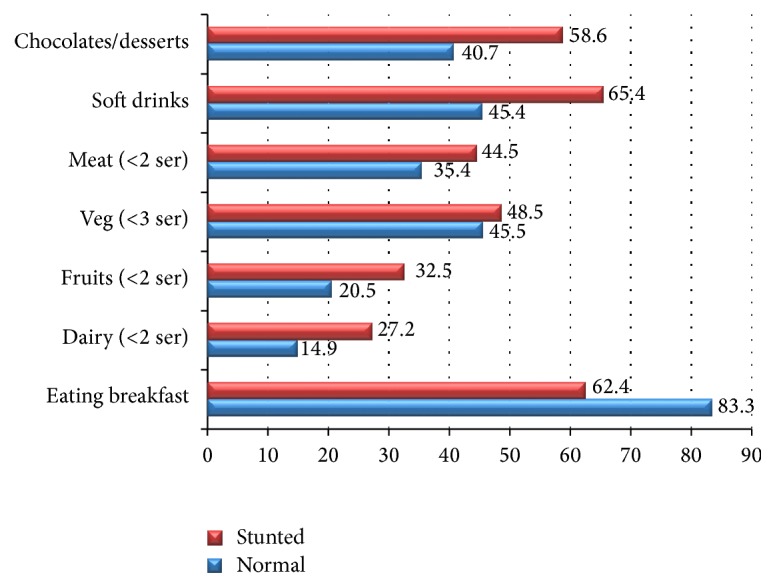
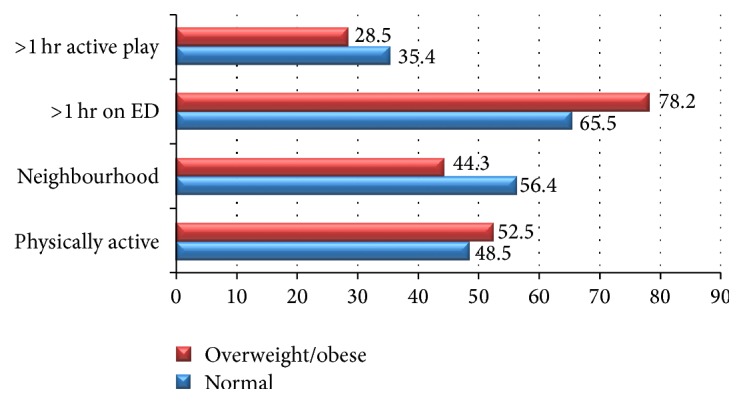
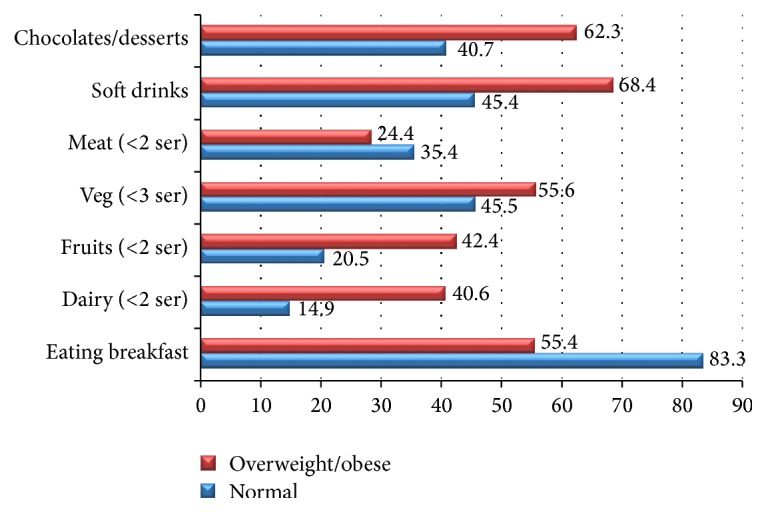
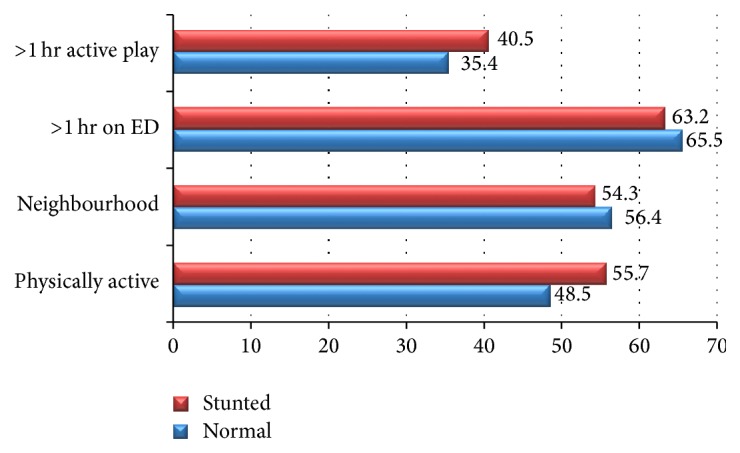
Hail region of Saudi Arabia (KSA) has the highest adult obesity rates in the entire kingdom and limited information is available about the prevalence and patterns of growth markers. Therefore, it is important to monitor the growth trends to implement effective public health preventive strategies for the region. This study aims to estimate the prevalence of growth profile patterns (stunting, wasting, underweight, and overweight) and its associations with nutrient intake and dietary patterns among children and adolescents. A cross-sectional survey was conducted involving 1420 children and adolescents (2-18 years), selected using a multistage stratified random-sampling technique representing both female and male schools from Hail region, KSA. Growth profile -scores were generated using 2006 and 2007 WHO growth standards. The overall prevalence of 4.73% moderate and 1.54% severe underweight; 6.65% moderate and 2.59% severe stunting; 6.34% moderate and 2.55% severe wasting was present in the study population. Stunting decreased as age progressed with concurrent increase in the prevalence of overweight and obesity. There was a significantly higher prevalence of overweight (18.55% versus 23.05%; < 0.001) and obesity (8.7% versus 13.85%; < 0.001) in adolescents than in school-age children with higher prevalence in females as compared to males. Both stunted and overweight/obesity groups had significantly lower mean intakes for critical micronutrients necessary for growth as compared to normal children.
沙特阿拉伯的哈伊勒地区是沙特全国成人肥胖率最高的地区,关于生长指标的患病率和模式的信息有限。因此,监测生长趋势对于在该地区实施有效的公共卫生预防策略很重要。本研究旨在估计儿童和青少年生长特征模式(发育迟缓、消瘦、体重不足和超重)的患病率及其与营养摄入和饮食模式的关联。采用多阶段分层随机抽样技术,对来自沙特阿拉伯哈伊勒地区的1420名2至18岁儿童和青少年(男女学校均有代表)进行了横断面调查。使用2006年和2007年世界卫生组织生长标准生成生长特征分数。研究人群中,中度体重不足的总体患病率为4.73%,重度体重不足为1.54%;中度发育迟缓为6.65%,重度发育迟缓为2.59%;中度消瘦为6.34%,重度消瘦为2.55%。随着年龄增长,发育迟缓现象减少,同时超重和肥胖的患病率上升。青少年中超重(18.55%对23.05%;<0.001)和肥胖(8.7%对13.85%;<0.001)的患病率明显高于学龄儿童,女性患病率高于男性。与正常儿童相比,发育迟缓和超重/肥胖组生长所需关键微量营养素的平均摄入量均显著较低。