Department of Earth System Science, University of California, Irvine, California 92697, USA.
Guangdong Province Key Laboratory for Coastal Ocean Variation and Disaster Prediction, Department of Oceanography, College of Ocean and Meteorology, Guangdong Ocean University, Zhanjiang 524088, China.
Nat Commun. 2017 Mar 20;8:14887. doi: 10.1038/ncomms14887.
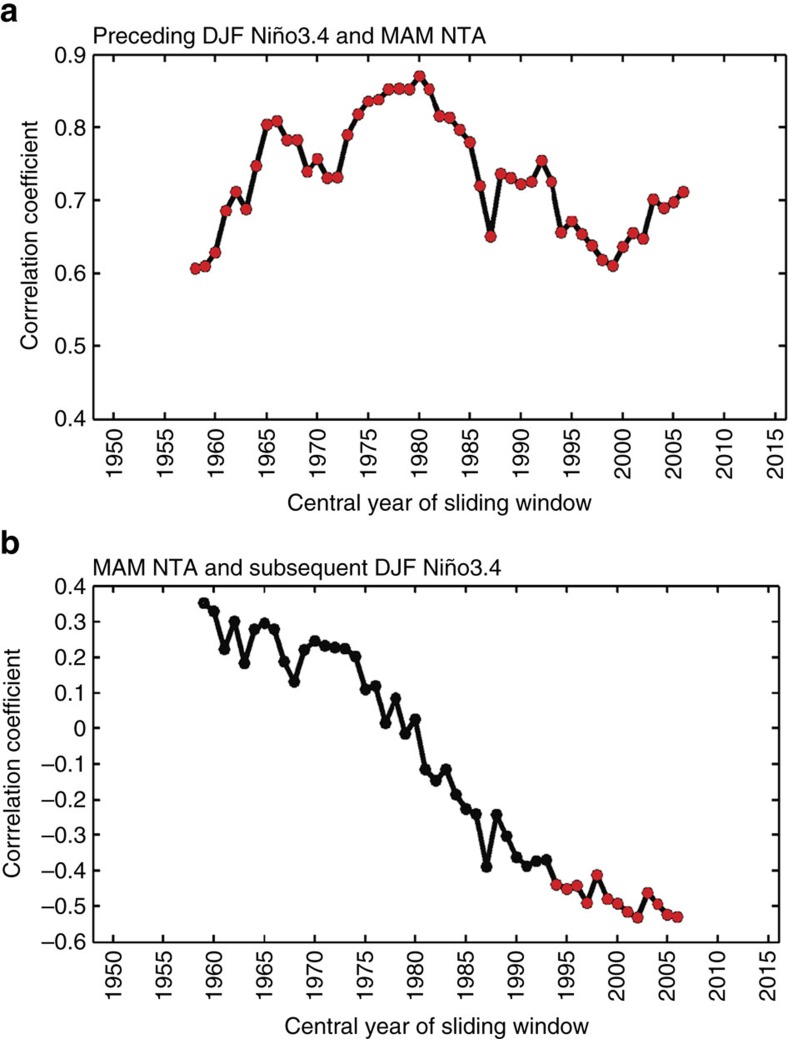
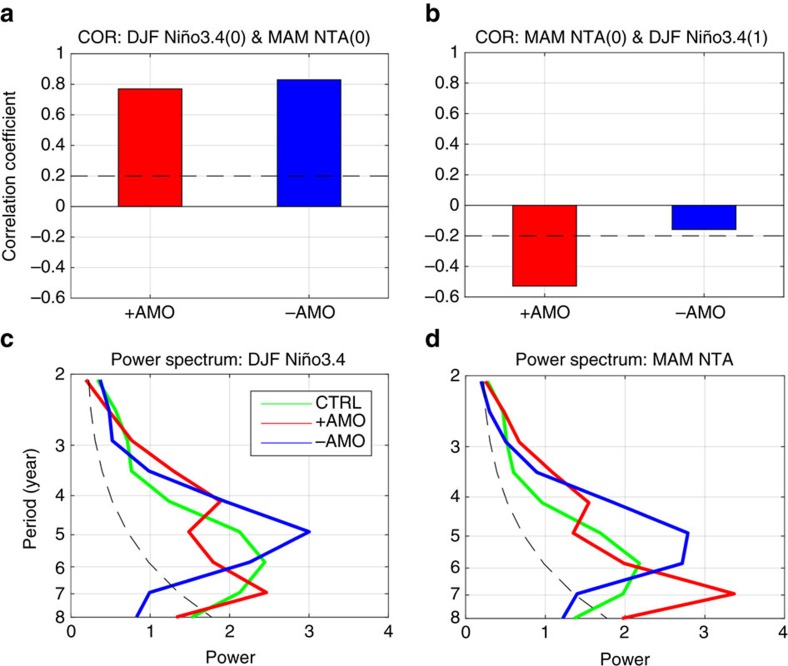
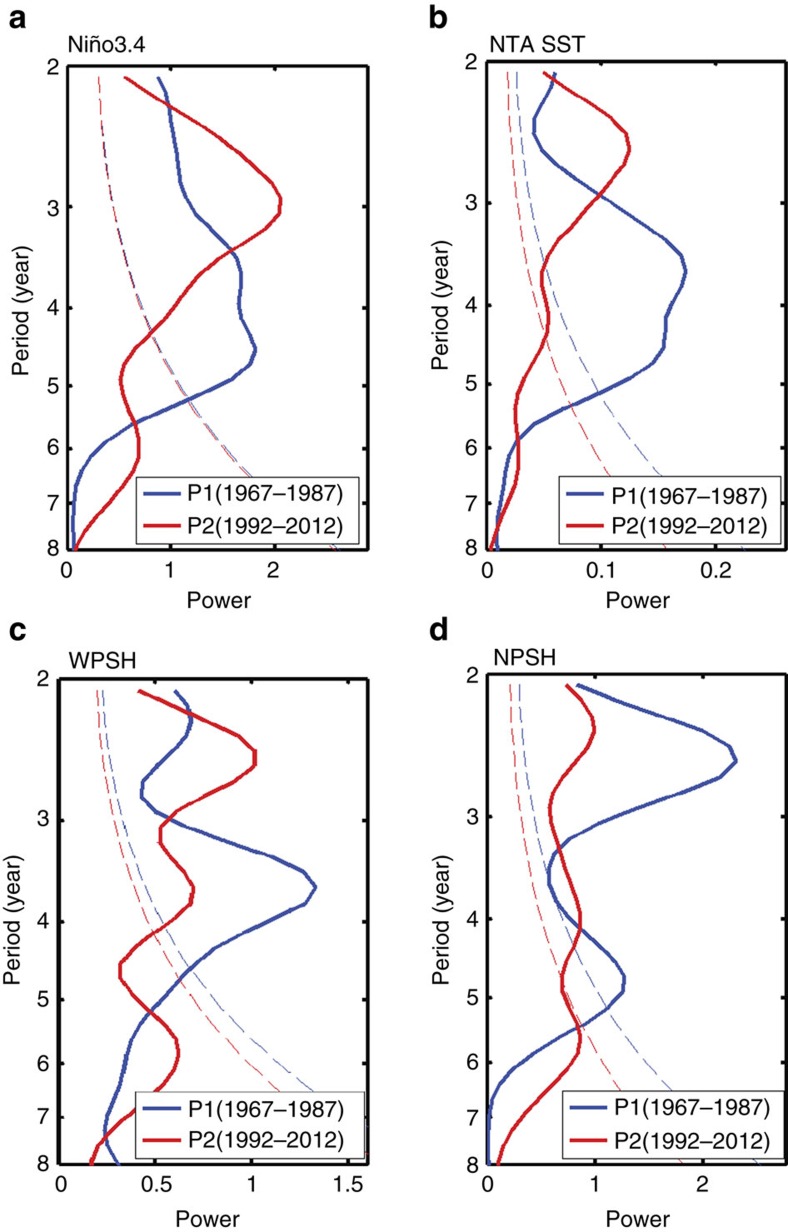
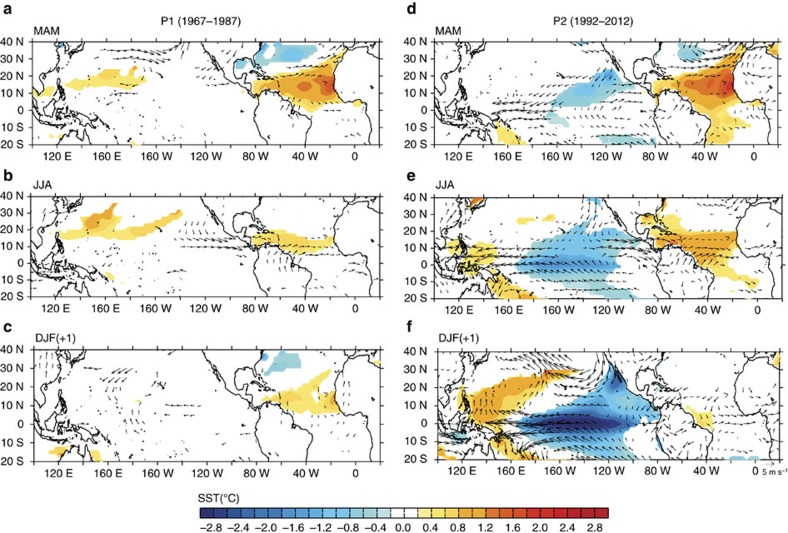
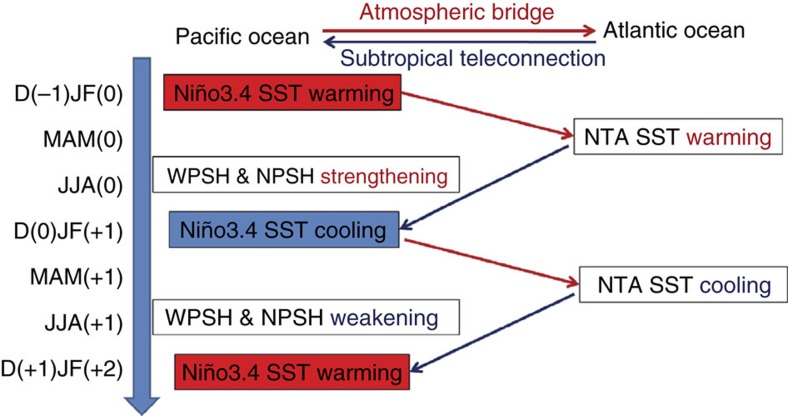
The El Niño-Southern Oscillation (ENSO) and the variability in the Pacific subtropical highs (PSHs) have major impacts on social and ecological systems. Here we present an Atlantic capacitor effect mechanism to suggest that the Atlantic is a key pacemaker of the biennial variability in the Pacific including that in ENSO and the PSHs during recent decades. The 'charging' (that is, ENSO imprinting the North Tropical Atlantic (NTA) sea surface temperature (SST) via an atmospheric bridge mechanism) and 'discharging' (that is, the NTA SST triggering the following ENSO via a subtropical teleconnection mechanism) processes alternate, generating the biennial rhythmic changes in the Pacific. Since the early 1990s, a warmer Atlantic due to the positive phase of Atlantic multidecadal oscillation and global warming trend has provided more favourable background state for the Atlantic capacitor effect, giving rise to enhanced biennial variability in the Pacific that may increase the occurrence frequency of severe natural hazard events.
厄尔尼诺-南方涛动(ENSO)和太平洋副热带高压(PSH)的变化对社会和生态系统有重大影响。本文提出了一种大西洋调谐器效应机制,表明大西洋是太平洋包括 ENSO 和 PSH 数十年间两年变率的关键起搏器。“充电”(即大气桥机制使 ENSO 在北热带大西洋(NTA)海表温度(SST)上留下印记)和“放电”(即 NTA SST 通过亚热带遥相关机制触发随后的 ENSO)过程交替出现,导致太平洋出现两年一次的有节奏变化。自 20 世纪 90 年代初以来,由于大西洋多年代际振荡的正相位和全球变暖趋势,大西洋变暖为大西洋调谐器效应提供了更有利的背景状态,导致太平洋两年变率增强,可能增加严重自然灾害事件的发生频率。