Majak Guri Baardstu, Reisæter Anna Varberg, Zucknick Manuela, Lorentzen Bjørg, Vangen Siri, Henriksen Tore, Michelsen Trond Melbye
Department of Obstetrics, Division of Gynecology and Obstetrics, Oslo University Hospital Rikshospitalet, Oslo, Norway.
Norwegian National Advisory Unit on Women´s Health, Oslo University Hospital, Rikshospitalet, Oslo, Norway.
PLoS One. 2017 Mar 20;12(3):e0173420. doi: 10.1371/journal.pone.0173420. eCollection 2017.
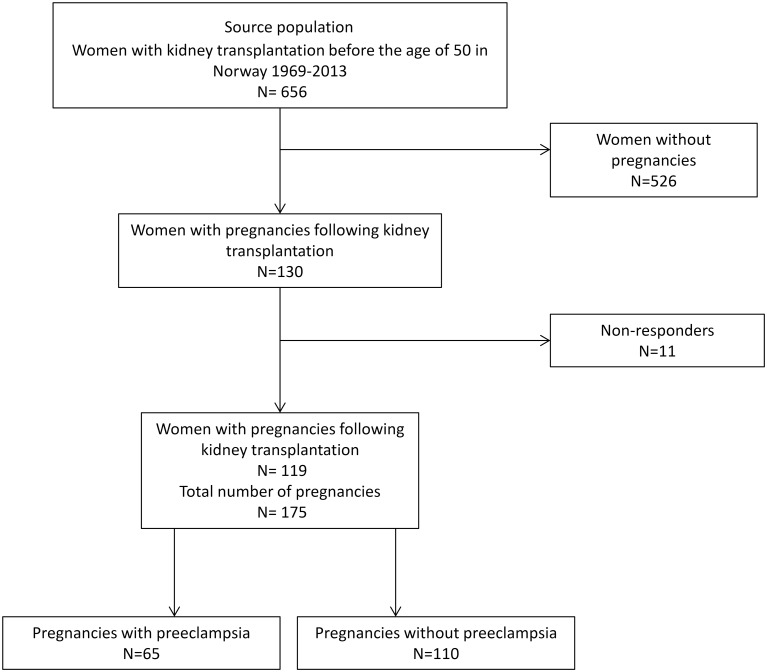
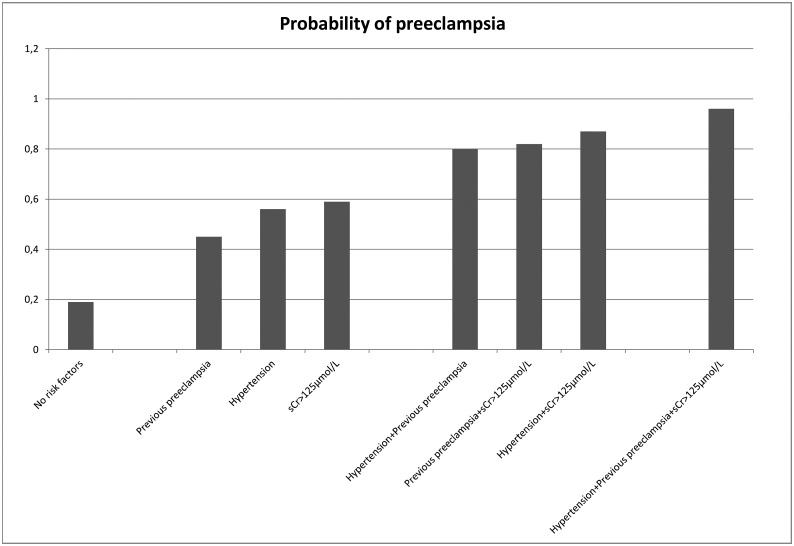
Women pregnant following kidney transplantation are at high risk of preeclampsia. Identifying the effects of preeclampsia on pregnancy outcome and allograft function in kidney transplanted women, and predicting which women will require more targeted follow-up and possible therapeutic intervention, could improve both maternal and neonatal outcome. In this retrospective cohort study of all pregnancies following kidney transplantation in Norway between 1969 and 2013, we used medical records to identify clinical characteristics predictive of preeclampsia. 175 pregnancies were included, in which preeclampsia was diagnosed in 65. Pregnancies with preeclampsia had significantly higher postpartum serum creatinine levels, higher risks of preterm delivery, caesarean delivery, and small for gestational age infants. In the final multivariate model chronic hypertension (aOR = 5.02 [95% CI, 2.47-10.18]), previous preeclampsia (aOR = 3.26 [95% CI, 1.43-7.43]), and elevated serum creatinine (≥125 μmol/L) at the start of pregnancy (aOR = 5.79 [95% CI, 1.91-17.59]) were prognostic factors for preeclampsia. Based on this model the risk was 19% when none of these factors were present, 45-59% risk when one was present, 80-87% risk when two were present, and 96% risk when all three were present. We suggest that the risk of preeclampsia in pregnancies in kidney transplanted women can be predicted with these variables, which are easily available at the start of pregnancy.
肾移植后怀孕的女性患先兆子痫的风险很高。明确先兆子痫对肾移植女性妊娠结局和移植肾功能的影响,并预测哪些女性需要更有针对性的随访及可能的治疗干预,可改善母婴结局。在这项对1969年至2013年挪威所有肾移植后妊娠进行的回顾性队列研究中,我们利用医疗记录来确定先兆子痫的临床预测特征。纳入了175例妊娠,其中65例被诊断为先兆子痫。患先兆子痫的妊娠产后血清肌酐水平显著更高,早产、剖宫产和小于胎龄儿的风险也更高。在最终的多变量模型中,慢性高血压(调整优势比[aOR]=5.02[95%置信区间(CI),2.47 - 10.18])、既往先兆子痫(aOR = 3.26[95%CI,1.43 - 7.43])以及妊娠开始时血清肌酐升高(≥125μmol/L)(aOR = 5.79[95%CI,1.91 - 17.59])是先兆子痫的预后因素。基于该模型,当这些因素均不存在时,风险为19%;当存在一个因素时,风险为45% - 59%;当存在两个因素时,风险为80% - 87%;当三个因素都存在时,风险为96%。我们认为,利用这些在妊娠开始时容易获取的变量,可以预测肾移植女性妊娠先兆子痫的风险。