Zhang Qunfeng, Liu Meiya, Ruan Jianyun
Tea Research Institute, Chinese Academy of Agricultural Sciences, Hangzhou, 310058, China.
Key Laboratory for Plant Biology and Resource Application of Tea, the Ministry of Agriculture, South Meiling Road 9, Hangzhou, Zhejiang, 310008, China.
BMC Plant Biol. 2017 Mar 20;17(1):64. doi: 10.1186/s12870-017-1012-8.
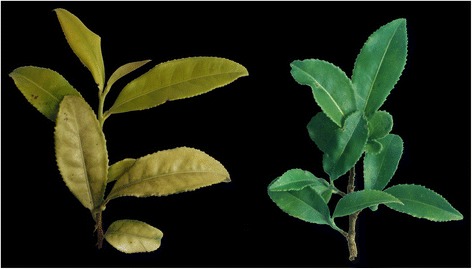
As the predominant secondary metabolic pathway in tea plants, flavonoid biosynthesis increases with increasing temperature and illumination. However, the concentration of most flavonoids decreases greatly in light-sensitive tea leaves when they are exposed to light, which further improves tea quality. To reveal the metabolism and potential functions of flavonoids in tea leaves, a natural light-sensitive tea mutant (Huangjinya) cultivated under different light conditions was subjected to metabolomics analysis.
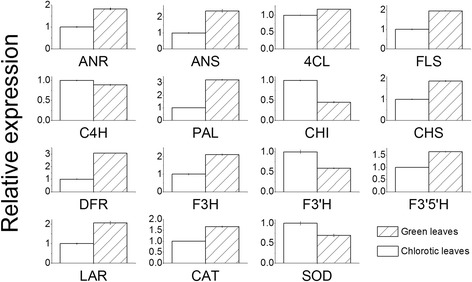
The results showed that chlorotic tea leaves accumulated large amounts of flavonoids with ortho-dihydroxylated B-rings (e.g., catechin gallate, quercetin and its glycosides etc.), whereas total flavonoids (e.g., myricetrin glycoside, epigallocatechin gallate etc.) were considerably reduced, suggesting that the flavonoid components generated from different metabolic branches played different roles in tea leaves. Furthermore, the intracellular localization of flavonoids and the expression pattern of genes involved in secondary metabolic pathways indicate a potential photoprotective function of dihydroxylated flavonoids in light-sensitive tea leaves.
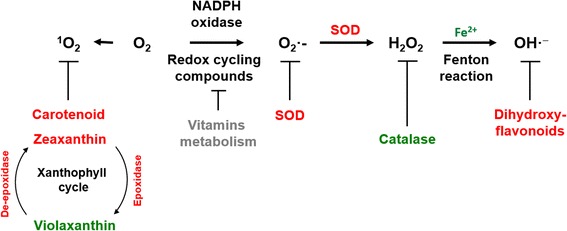
Our results suggest that reactive oxygen species (ROS) scavenging and the antioxidation effects of flavonoids help chlorotic tea plants survive under high light stress, providing new evidence to clarify the functional roles of flavonoids, which accumulate to high levels in tea plants. Moreover, flavonoids with ortho-dihydroxylated B-rings played a greater role in photo-protection to improve the acclimatization of tea plants.
作为茶树中主要的次生代谢途径,类黄酮生物合成随着温度和光照的增加而增加。然而,大多数类黄酮的浓度在光敏茶叶暴露于光照时会大幅下降,这进一步提升了茶叶品质。为揭示类黄酮在茶叶中的代谢及潜在功能,对在不同光照条件下培育的一种天然光敏茶突变体(黄金芽)进行了代谢组学分析。
结果表明,黄化茶叶积累了大量具有邻二羟基化B环的类黄酮(如儿茶素没食子酸酯、槲皮素及其糖苷等),而总类黄酮(如山奈酚苷、表没食子儿茶素没食子酸酯等)则大幅减少,这表明不同代谢分支产生的类黄酮成分在茶叶中发挥着不同作用。此外,类黄酮的细胞内定位以及参与次生代谢途径的基因表达模式表明,二羟基化类黄酮在光敏茶叶中具有潜在的光保护功能。
我们的结果表明,类黄酮的活性氧(ROS)清除和抗氧化作用有助于黄化茶树在高光胁迫下存活,为阐明在茶树中高水平积累的类黄酮的功能作用提供了新证据。此外,具有邻二羟基化B环的类黄酮在光保护中发挥了更大作用,以改善茶树的适应性。