Podolak Irene, Kisia Caroline, Omosa-Manyonyi Gloria, Cosby Jarold
Brock University, 213-2300 Upper Middle Road W., Oakville, ON, L6M 0T4, Canada.
Action Africa Help International, Fawe House, Ground floor, Chania Avenue, P.O. Box 76598-00508, Nairobi, Kenya.
BMC Health Serv Res. 2017 Mar 21;17(1):222. doi: 10.1186/s12913-017-2160-0.
Numerous health policy makers/researchers are concerned about the limitations of research being applied to support informed decision/policy making and the implementation of practical solutions. The aim of the Chaguo Letu project (which means our choice in Swahili) was to determine how local decision makers could apply a multimethod approach to make strategic decisions to effectively implement a Cervical Self-Sampling Program in Kenya.
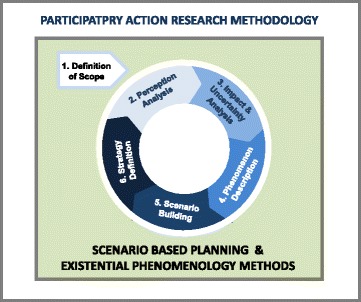
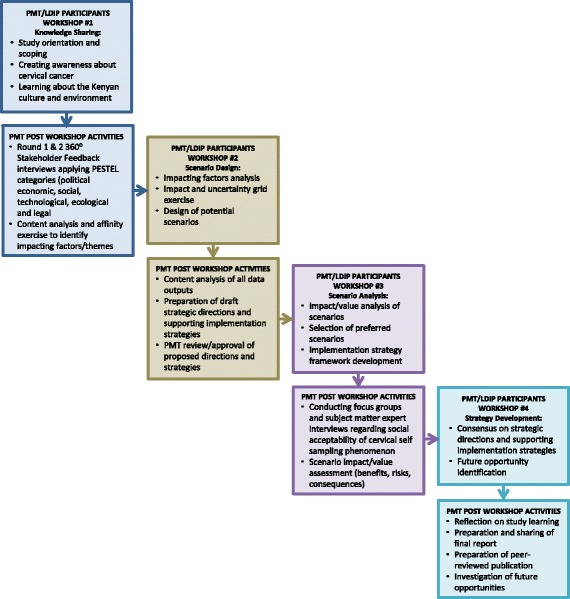
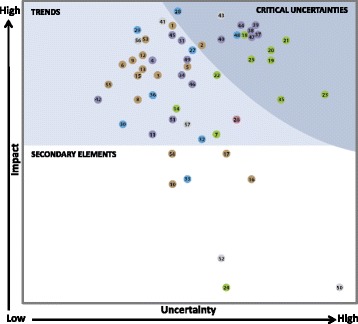
A multimethod approach, involving participatory action research, scenario based planning, and phenomenology, was applied in conjunction with two tools to identify relevant factors (negative or positive) that could impact Cervical Self-Sampling Program implementation. A total of 107 stakeholders participated in interviews, focus groups, workshops, and informal interactions. Content analysis, an affinity exercise, and impact analysis were used to analyze data and develop robust strategic directions and supporting implementation strategies.
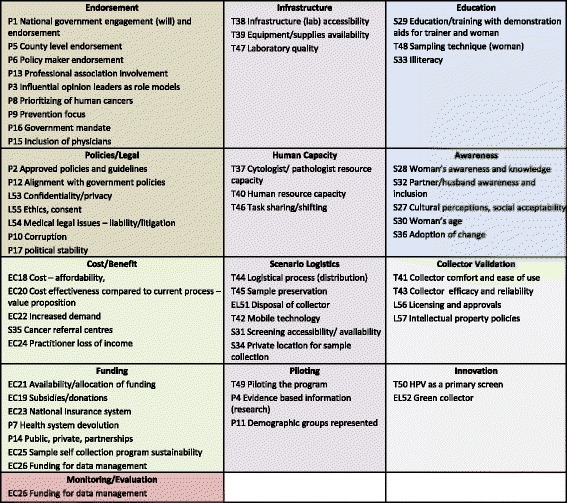
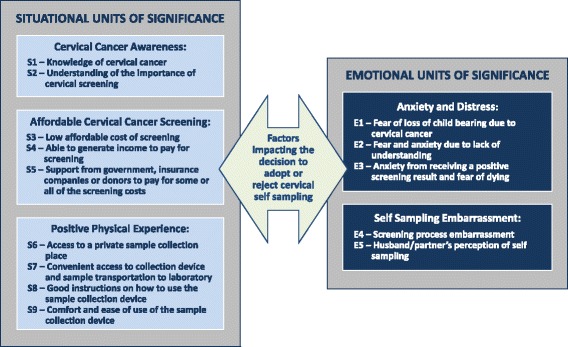
A total of 57 factors thought to impact the implementation of the Cervical Self-Sampling Program were identified and grouped into 13 thematic categories. These themes were instrumental in developing 10 strategic directions and 22 implementation strategies deemed necessary to implement a technically viable, politically supported, affordable, logistically feasible, socially acceptable, and transformative Program.
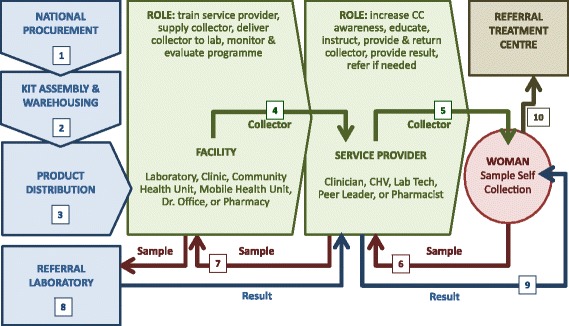
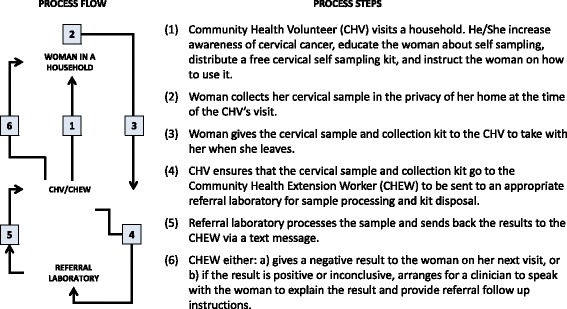
This study made three conclusions: 1) there is political will and a desire to improve cervical screening across Kenya, but in a period of dynamic change resources are constrained; 2) implementing the Program in urban/rural settings is logistically feasible, but the majority of Kenyan women could not afford screening without some form of a subsidy, and 3) self-sampling is perceived to be much more socially acceptable than the current Pap screening process. The Chaguo Letu study went beyond the traditional strategy development process of determining "what" needs to do done by describing in detail "how" the Program should be implemented to be relevant and accessible to all Kenyan women at risk of cervical cancer. This work could potentially facilitate communities of practice and knowledge sharing when addressing other types of health decisions in other low resource settings beyond Kenya.
众多卫生政策制定者/研究人员担心研究在支持明智决策/政策制定以及实际解决方案实施方面存在局限性。查果乐图项目(在斯瓦希里语中意为“我们的选择”)的目的是确定当地决策者如何运用多方法途径做出战略决策,以在肯尼亚有效实施宫颈自我采样计划。
采用了一种多方法途径,包括参与式行动研究、情景规划和现象学,并结合两种工具来识别可能影响宫颈自我采样计划实施的相关因素(负面或正面)。共有107名利益相关者参与了访谈、焦点小组、研讨会和非正式互动。使用内容分析、关联分析和影响分析来分析数据,并制定强有力的战略方向和支持性实施策略。
共识别出57个被认为会影响宫颈自我采样计划实施的因素,并将其归为13个主题类别。这些主题有助于制定10个战略方向和22个实施策略,这些策略被认为是实施一个技术上可行、政治上得到支持、负担得起、后勤上可行、社会上可接受且具有变革性的计划所必需的。
本研究得出了三个结论:1)肯尼亚有改善宫颈癌筛查的政治意愿和愿望,但在动态变化时期资源受到限制;2)在城市/农村地区实施该计划在后勤上是可行的,但如果没有某种形式的补贴,大多数肯尼亚女性负担不起筛查费用;3)自我采样在社会上被认为比目前的巴氏涂片筛查过程更容易接受。查果乐图研究超越了传统的战略制定过程,即确定“做什么”,详细描述了“如何”实施该计划,以使所有有宫颈癌风险的肯尼亚女性都能参与并从中受益。这项工作在肯尼亚以外的其他低资源环境中解决其他类型的健康决策时,可能会促进实践社区和知识共享。