Faculty of Dentistry, Universidade Federal de Minas Gerais, Belo Horizonte, Minas Gerais, Brazil.
University Hospital, Universidade Federal de Minas Gerais, Belo Horizonte, Minas Gerais, Brazil.
Microbiome. 2017 Mar 20;5(1):34. doi: 10.1186/s40168-017-0252-z.
Periodontitis results from the interaction between a subgingival biofilm and host immune response. Changes in biofilm composition are thought to disrupt homeostasis between the host and subgingival bacteria resulting in periodontal damage. Chronic systemic inflammatory disorders have been shown to affect the subgingival microbiota and clinical periodontal status. However, this relationship has not been examined in subjects with systemic lupus erythematosus (SLE). The objective of our study was to investigate the influence of SLE on the subgingival microbiota and its connection with periodontal disease and SLE activity.
We evaluated 52 patients with SLE compared to 52 subjects without SLE (control group). Subjects were classified as without periodontitis and with periodontitis. Oral microbiota composition was assessed by amplifying the V4 region of 16S rRNA gene from subgingival dental plaque DNA extracts. These amplicons were examined by Illumina MiSeq sequencing.
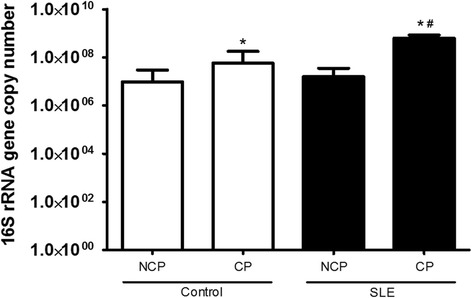
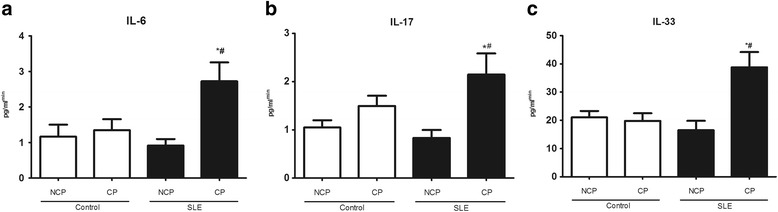
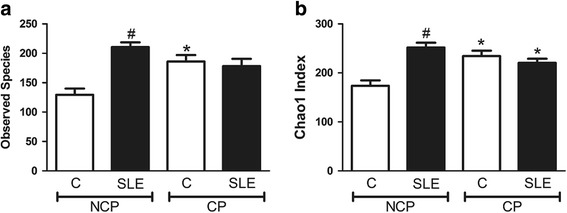
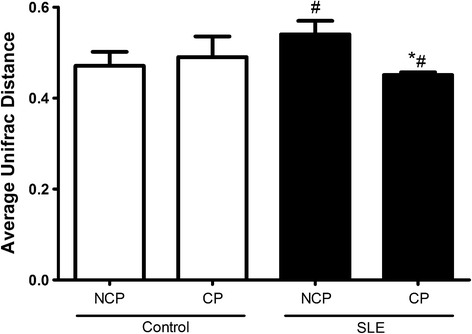
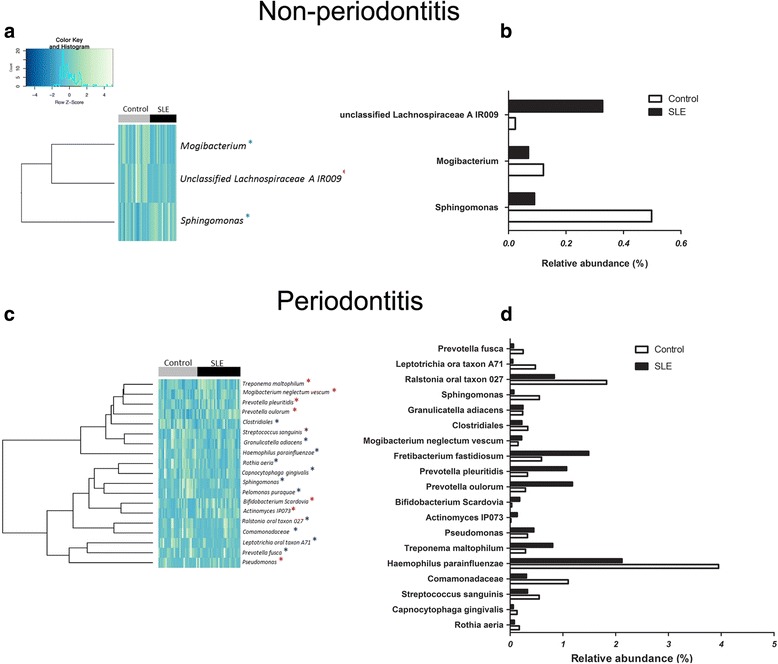
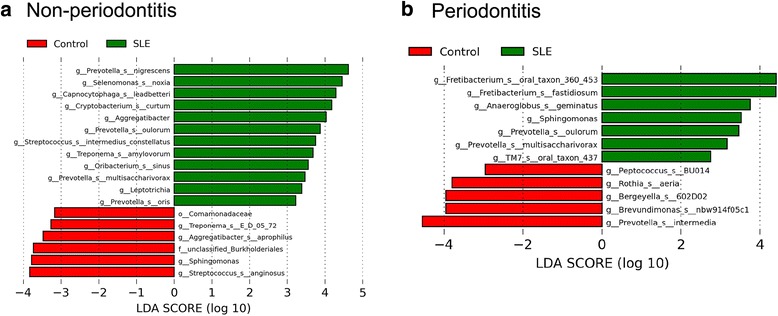
SLE patients exhibited higher prevalence of periodontitis which occurred at a younger age compared to subjects of the control group. More severe forms of periodontitis were found in SLE subjects that had higher bacterial loads and decreased microbial diversity. Bacterial species frequently detected in periodontal disease were observed in higher proportions in SLE patients, even in periodontal healthy sites such as Fretibacterium, Prevotella nigrescens, and Selenomonas. Changes in the oral microbiota were linked to increased local inflammation, as demonstrated by higher concentrations of IL-6, IL-17, and IL-33 in SLE patients with periodontitis.
SLE is associated with differences in the composition of the microbiota, independently of periodontal status.
牙周炎是由龈下生物膜与宿主免疫反应相互作用引起的。生物膜组成的变化被认为会破坏宿主与龈下细菌之间的平衡,导致牙周损伤。慢性系统性炎症性疾病已被证明会影响龈下微生物群和临床牙周状况。然而,这种关系尚未在系统性红斑狼疮 (SLE) 患者中进行研究。我们的研究目的是调查 SLE 对龈下微生物群的影响及其与牙周病和 SLE 活动的关系。
我们评估了 52 名 SLE 患者与 52 名无 SLE 的受试者(对照组)。受试者分为无牙周炎和有牙周炎。通过扩增龈下牙菌斑 DNA 提取物中 16S rRNA 基因的 V4 区来评估口腔微生物群组成。这些扩增子通过 Illumina MiSeq 测序进行检查。
SLE 患者的牙周炎患病率较高,且发病年龄较对照组年轻。SLE 受试者中发现了更严重形式的牙周炎,其细菌负荷更高,微生物多样性降低。在牙周病中经常检测到的细菌物种在 SLE 患者中观察到更高的比例,即使在牙周健康部位如 Fretibacterium、Prevotella nigrescens 和 Selenomonas 也是如此。口腔微生物群的变化与局部炎症增加有关,这表现在牙周炎 SLE 患者的 IL-6、IL-17 和 IL-33 浓度更高。
SLE 与微生物群组成的差异有关,与牙周状况无关。